
Red Sea Liveaboard: North vs South — Which Route Should You Book?
Most divers booking a Red Sea liveaboard know roughly what they want — wrecks, or sharks. The problem is that “north” and “south” don’t always map neatly onto what a given operator is actually selling you.
Routes vary, boats overlap, and the marketing copy rarely tells you the important stuff: when to go, what experience level you actually need, and what you’ll miss if you pick the wrong route.
This post cuts through that. North vs South, honest and specific — the sites, the season, the skill requirements, and a clear verdict on which one fits you.
The Quick Version
If you want to skip to the answer: book north for wrecks, history and more forgiving diving; book south for pelagics, sharks and open-water exposure. Both are excellent.
But they are genuinely different trips, and the wrong choice for your skill level or timing can cost you.
Read on for the full breakdown.
Northern Red Sea: The Best Wreck Dive on the Planet
Where You Depart From for a Red Sea liveaboard
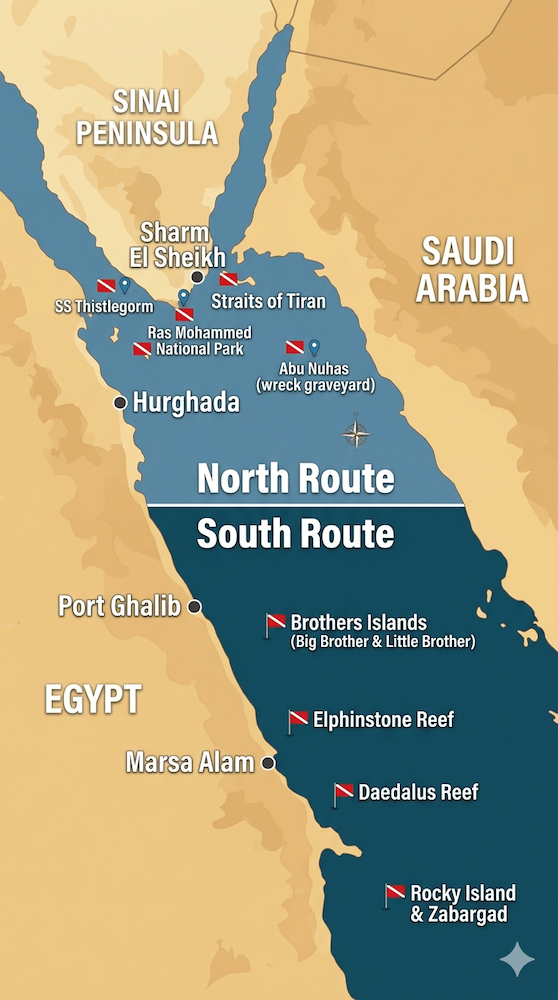
North itineraries almost always depart from Sharm El Sheikh or Hurghada. Sharm is the more common base for classic north routes — it puts you within striking distance of Ras Mohammed, the Straits of Tiran, and the Thistlegorm in a single liveaboard week.
I’ve done the north route out of Sharm on multiple occasions — on the Freedom 3 and Freedom 4 — and the logistics are straightforward. Fly into Sharm El Sheikh International, transfer to the marina, and you’re aboard by early evening.
The Key Dive Sites in the North
The SS Thistlegorm
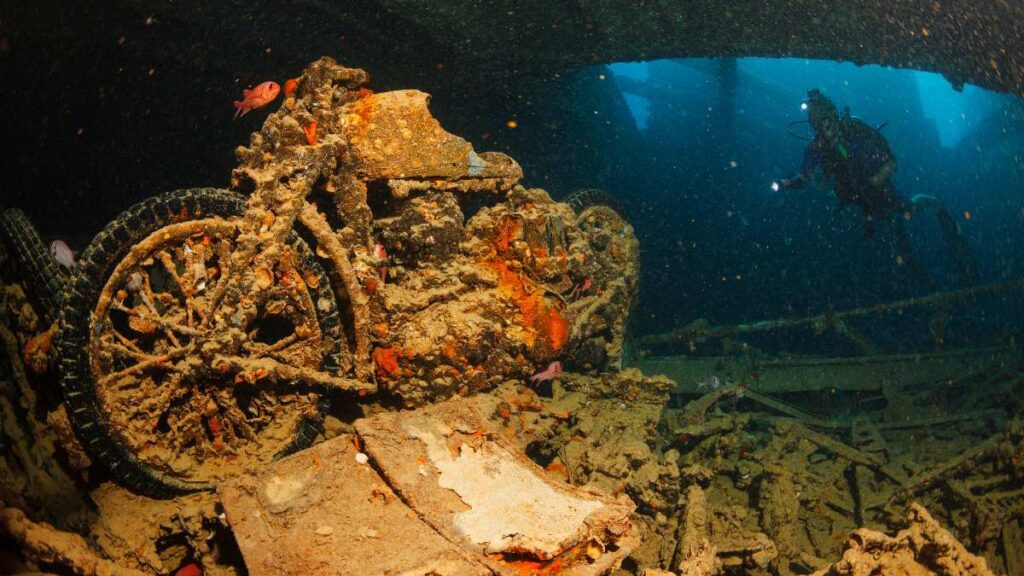
SS Thistlegorm is the headline act — and it earns it. A British WWII cargo vessel sunk in 1941, she sits at 30 metres and holds motorcycles, trucks, aircraft parts, rifles and artillery shells in her holds. I’ve dived her more multiple times and she’s never the same dive twice.
The penetration is accessible for intermediate divers, the fish life is excellent, and the history is genuinely moving. There’s nothing else like it.
The current is manageable on most days — you descent on the anchor line, take your time through the holds, and ascend using the same anchor line. I’ve taken newly certified Advanced divers on this wreck and they’ve handled it without issue.
Ras Mohammed National Park
Ras Mohammed is the other anchor of the north route. Shark Reef and Yolanda Reef are the headline dive sites — the convergence of two reefs with a steep wall, strong current, and the famous bathtubs from the Yolanda cargo wreck scattered on the slope below. Grey reef sharks, barracuda, and giant trevally are reliable. Visibility here in the cool months regularly hits 25–30 metres.
The Straits of Tiran
Tiran islands give you four atolls — Jackson, Woodhouse, Thomas and Gordon — in a channel between the Sinai and Saudi Arabia. Strong current, big pelagics, and wall dives that drop to serious depths. Jackson Reef has a freighter wreck perched on its northern tip.
Dolphins in the channel are common and border on routine if you’re lucky with your crossing timing.
Abu Nuhas
Abu Nuhas is the wreck graveyard — four ships scattered across a single reef system.
- The Giannis D is the showpiece: intact, deep enough to be interesting, shallow enough to be accessible.
- The Carnatic is older, more broken up, and covered in soft coral that makes her one of the most photogenic wrecks in the Red Sea.
Who is the North Route Right For during a red sea liveaboard trip?
North is the smarter choice for Advanced Open Water divers with 20–50 dives who want to advance their wreck diving experience without getting in over their heads. The current at Ras Mohammed and Tiran can be significant, but you’ll have a guide and the sites are well-managed by experienced operators.
It’s also the route for divers who care about the history. The Thistlegorm is not just a dive — it’s an important piece of history. And that is just one of many great wrecks in the Red Sea.
If that framing appeals to you, north is your answer.
Best Time for the North Route
The north is diveable year-round, but October through February is the sweet spot. Visibility sharpens up to 25–30 metres, the current is more predictable, water temperatures drop to around 22–24°C (manageable in a 5mm wetsuit), and the boats are less crowded than the summer peak.
July and August are popular — warmer water, more social atmosphere, visibility still decent at 15–20 metres. But if you have flexibility, aim for October or November. That’s the best version of the north route in my opinion.
👉 For a full month-by-month breakdown: Best Time to Dive the Red Sea
Sample North 7-Night Itinerary
South Red Sea: Pelagics, Sharks, and Blue water dives
Where You Depart From
South routes typically depart from Hurghada, Port Ghalib, or Marsa Alam. Port Ghalib and Marsa Alam are closer to the southern sites and increasingly popular departure points as the infrastructure has improved.
The open-water crossings to reach sites like Brothers and Daedalus are genuine — 6–8 hours in some cases, with exposed sea conditions that can be rough.
This is a material difference from north departures and worth factoring in if you’re prone to seasickness or prefer calmer surface intervals.
The Key Dive Sites in the North
Big Brother and Little Brother
Two isolated islands rising from deep water in the Egyptian open sea, both with steep walls that drop beyond recreational limits. Big Brother has two wrecks — the Numidia (1901) and the Aida (1957) — draped down the wall, broken and encrusted.
The diving here is serious: strong currents, downwellings, and the kind of blue-water exposure that concentrates pelagic life.
Hammerhead sharks are the draw at Brothers from May through October.
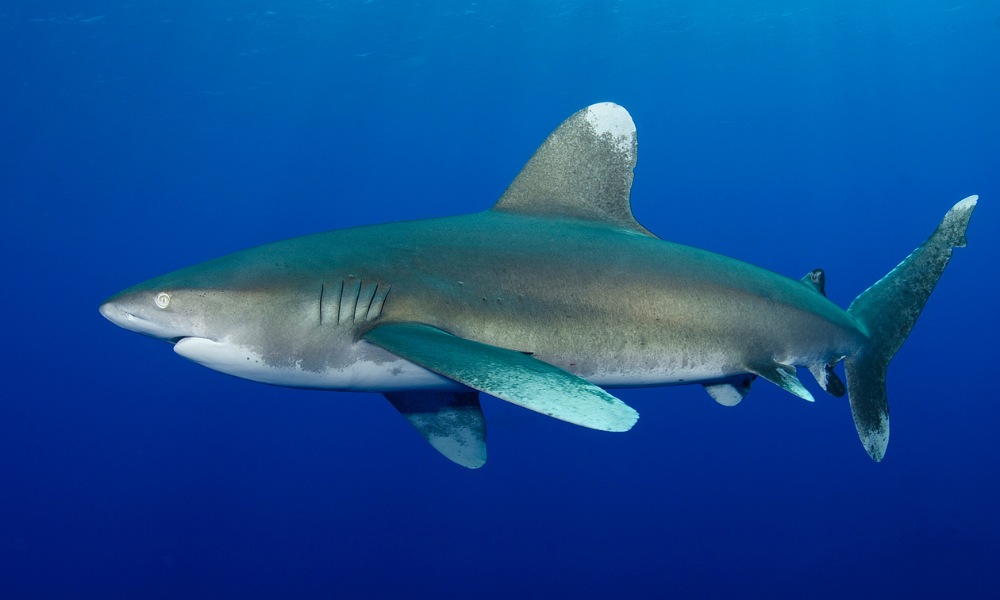
Oceanic whitetip sharks are present year-round and arguably more reliable at this site than anywhere else in the Red Sea.
These are not zoo animals drifting past — they’re in their environment and behave like it. Experienced guides manage these dives well, but the site demands respect and buoyancy control.
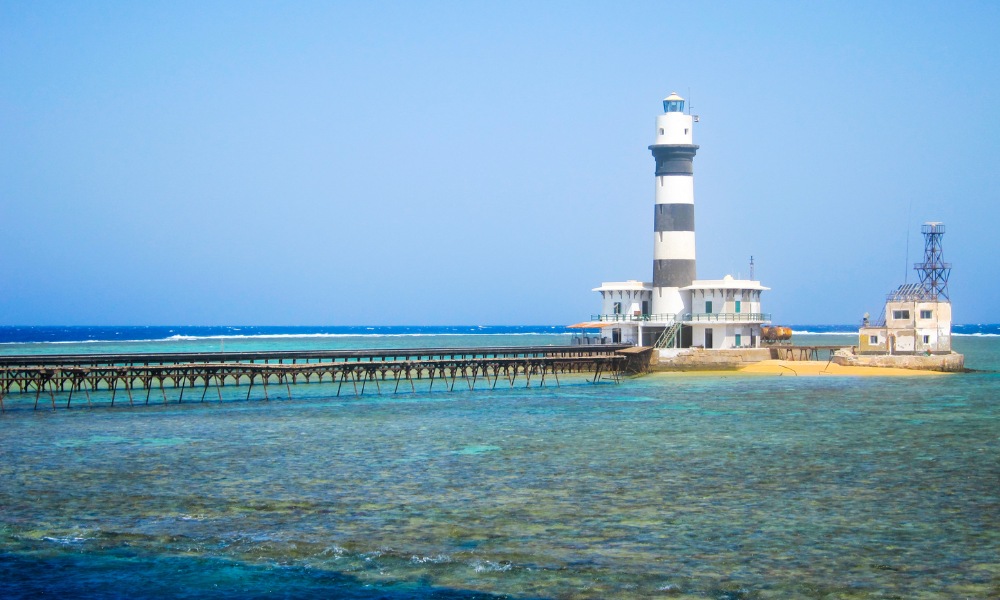
Daedalus Reef (also called Abu Kizan)
Daedalus is a remote, exposed reef in the open Red Sea that demands a longer passage to reach.
The reward is undisturbed pelagic life — thresher sharks have been recorded here, hammerheads are seasonal, and the sheer remoteness of the site means most divers feel the weight of the open ocean in a way that north diving doesn’t deliver.
The lighthouse keeper is the only permanent resident.
Elphinstone Reef
Elphinstone Reef sits closer to Marsa Alam and is more accessible within a south itinerary. The northern plateau is the site’s headline — a narrow ridge at around 25 metres that drops away on both sides, with a thermocline that brings cold, current-driven water carrying oceanic whitetips.
It’s manageable in calm conditions; in surge, it’s unforgiving. One of the most consistently dramatic dives in the Red Sea.
Rocky Island and Zabargad
round out the furthest-south options. Zabargad is an emerald island with a turbulent history — former penal colony, mining site — and the dive sites feature pristine hard coral gardens, turtles, and the kind of untouched reef structure that’s increasingly rare elsewhere.
Who the South Route Is Right For
South is the right call for divers with 50+ dives and solid current experience. The open-water crossings, the exposed sites, and the downwellings at Brothers particularly require a diver who can hold their depth, manage their buoyancy in surge, and stay calm if a current pushes them off a wall unexpectedly.
This is not a trip to push yourself beyond your limits on. The pelagic encounters at Brothers and Daedalus are among the best in the world — but only if you can hold your position, read the water, and not burn through your air in the first ten minutes from adrenaline.
If you want to learn more about how to improve your buoyancy, ascent and descents, be sure to check out our Scuba Academy Masterclass series.
Best Time for the South Route
May through October for hammerheads and pelagic concentration at Brothers and Daedalus. The water is warm (27–30°C), seas are generally calmer in the summer months, and visibility is good at 20–25 metres.
Elphinstone is diveable year-round, but the thermocline — which concentrates the oceanic whitetips — is most active and dramatic from September through February. If Elphinstone is your priority, lean towards a shoulder-season trip (September–October hits both windows).
Sample South 7-Night Itinerary
North vs South Comparison
What About Combined North-South Routes?
Some operators run 10–12 night itineraries that cover both. On paper, this sounds like the obvious answer. In practice, it’s a trade-off.
You spend more nights in transit between regions — the southern sites are genuinely remote — and you end up with fewer dives per site compared to a dedicated route.
If Brothers is the reason you’re going, a dedicated south trip will give you more time at the headline sites in the right conditions. Same applies north: a Thistlegorm-focused week delivers depth of experience that a combined route can’t.
My honest view: if you have to choose, choose based on where you are as a diver. If you’ve never dived the Red Sea, the north is the better first trip — more variety, more forgiving, and the Thistlegorm alone justifies the journey. Come back for the south.
And if you are on a budget, check out Diving the Red Sea on a Budget: Shore vs. Liveaboard
Which Route Should You Book?
Book North if:
- You’re an Advanced OW diver with 20–50 dives
- Wreck diving is your primary motivation
- This is your first Red Sea liveaboard
- You’re travelling October to February
- You want a more varied route (wrecks + reefs + current)
Book South if:
- You have 50+ dives and are comfortable in current
- Hammerheads or oceanic whitetips are specifically why you’re going
- You’re travelling May to October for pelagic season
- You want rawer, more exposed, open-ocean diving
- Already done Thistlegorm
Both routes are bookable through Divebooker — use the filters to select departure port, route type, and dates to find vessels that match what you’re after.
If you want our honest opinion on which are the best liveaboards, check out our Top Rated Red Sea Liveaboards guide.
Frequently Asked Question on a red sea liveaboard
Which is better for beginners — north or south Red Sea?
North, and it’s not close. The south Red Sea — particularly Brothers Islands and Daedalus — involves long open-water crossings, significant current, and dive sites that require solid buoyancy and experience in exposed conditions.
North routes feature more forgiving sites alongside the headline dives, and even the Thistlegorm is manageable for Advanced Open Water divers with 20+ logged dives. If you’re early in your diving, start in the north.
Do you need Advanced Open Water for a Red Sea liveaboard?
For north routes, Advanced Open Water is effectively the minimum — most operators require it for sites like the Thistlegorm (30m) and the deeper sections of Ras Mohammed.
For south routes, Advanced Open Water is a floor, not a ceiling — many operators recommend significantly more experience, particularly for Brothers and Daedalus. Check your chosen vessel’s requirements before booking.
What's the best month to see hammerhead sharks in the Red Sea?
The peak window for hammerheads at Brothers Islands and Daedalus Reef is May through September, with June to August considered the most consistent.
Water visibility is good, seas are calmer for the open-water crossings, and the pelagic concentration is at its highest. Outside this window, encounters become less predictable.
How do I choose a Red Sea liveaboard operator?
Key factors: departure port (affects which sites you reach), route (north/south/combined), vessel size (smaller boats mean fewer divers per site), and required experience level.
Divebooker lists Red Sea liveaboards with all of these filters and covers operators across Sharm, Hurghada, and Port Ghalib. Read the trip itinerary carefully!