
What day trips cover, and what they miss
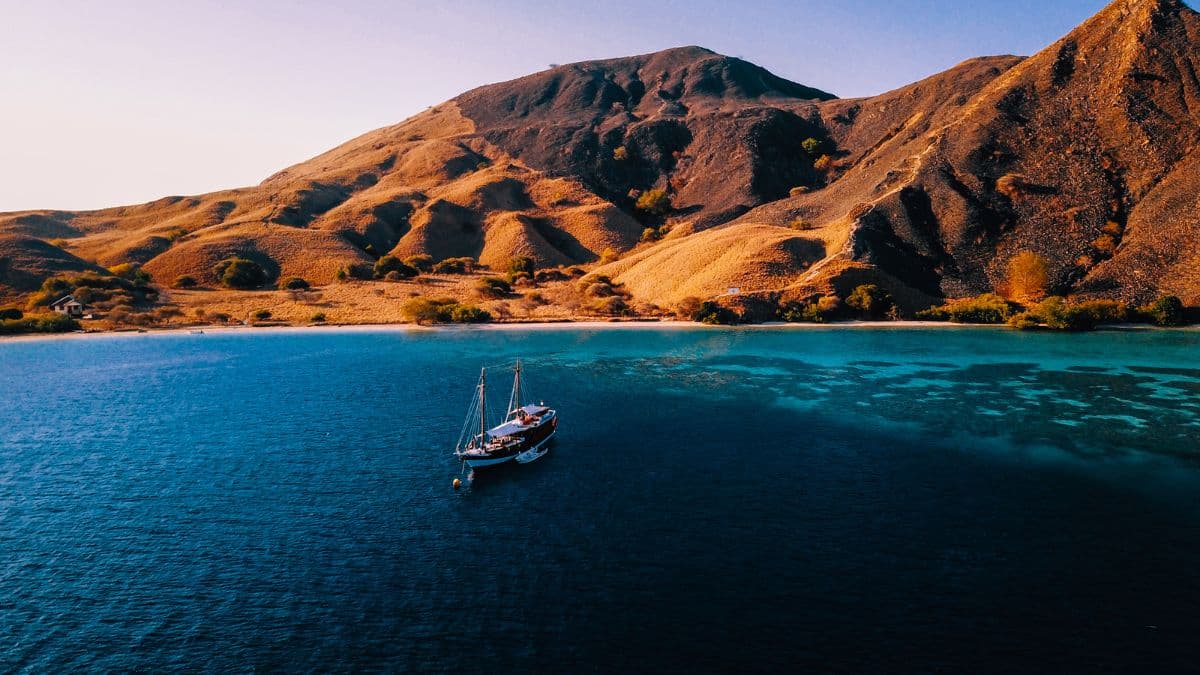
Labuan Bajo is a well-serviced diving base. Day boats run several times a day to the main sites inside the park: Batu Bolong, Manta Point (Karang Makassar), Pink Beach and several shallower reefs. For a diver with limited time or a tight budget, day trips work, and the diving is good.
What they miss are the sites that need overnight positioning, an early entry before the current builds, or a full day's boat ride south to Horseshoe Bay and Cannibal Rock on Rinca. Most of Raja Ampat's best sites are too remote for day trips, so the liveaboard question answers itself there. In Komodo it does not.
If you are still deciding between Raja Ampat and Komodo, read that comparison first.
Four sites that need a liveaboard
Day trips work for the accessible north. These four sites are where a boat earns its price.
| Site | Why a liveaboard helps |
|---|---|
| Castle Rock (north) | A submerged pinnacle where strong upwellings concentrate the fish. A boat anchored overnight can dive it at first light, before conditions change and the day boats arrive |
| Cannibal Rock (Horseshoe Bay, Rinca) | Four to five hours south of Labuan Bajo by speedboat, which leaves little dive time on a day trip. Liveaboards usually stop in Horseshoe Bay for several dives and anchor there overnight |
| Sangeang Api | An active volcano off the northeast coast of Sumbawa, with sulphur vents, unusual marine life and black sand slopes. It rarely appears on day-trip itineraries |
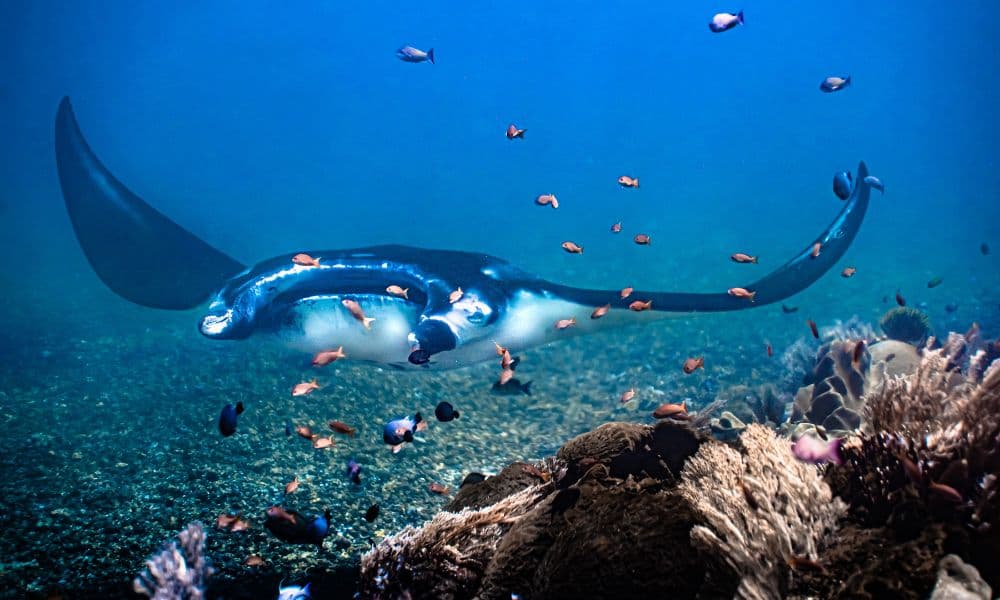
| Manta Alley (south) | Day trips run there when conditions allow, but a boat can wait for the right current window instead of following a departure schedule back to Labuan Bajo |
Ready to look at boats?
Best time: April to November
The diving runs broadly year-round, but what you dive changes by month.
April to November is the dry season and the main window for most Komodo liveaboards. The southern sites (Manta Alley, Horseshoe Bay, Cannibal Rock) are at their most accessible: the water is clearer in the south and the currents are more predictable. Manta Alley peaks from July to September, with consistent aggregations, though some outside sources put its best months from January to March.
December to March is the wet season. The northern sites (Castle Rock, Crystal Rock, Batu Bolong) can still be very good, but southern routes depend more on the weather, and some liveaboards adjust their itineraries.
Cold water: pack a 5 mm suit
Komodo's thermoclines are sharper than most divers expect. Surface temperatures of 27–29 °C can drop to 18–20 °C within minutes of descending at some sites, particularly in the south during peak upwelling. A 5 mm wetsuit is the minimum for serious Komodo diving. Divers who arrive in 3 mm suits find out fast.
Cold water means upwelling, and upwelling means nutrients and fish. Castle Rock and Shotgun are defined by current and cold water. You are not there despite the conditions; you are there because of them.
Getting to Labuan Bajo
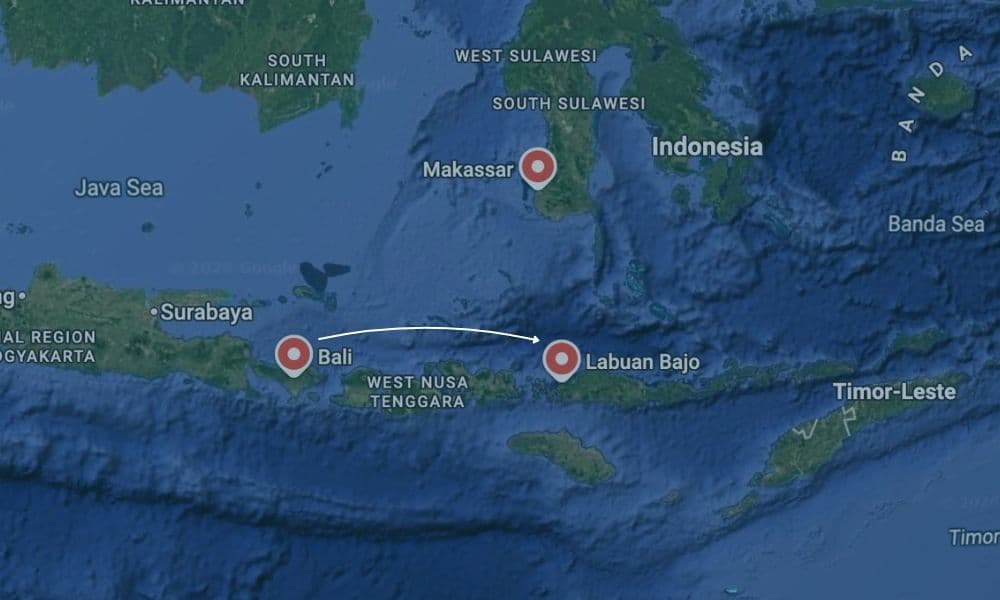
All Komodo liveaboards leave from and return to Labuan Bajo, on Flores (airport code LBJ). Domestic flights connect from Bali (DPS) and Jakarta (CGK). Bali is the usual routing, at about 1.5 hours.
Unlike Sorong for Raja Ampat, Labuan Bajo is a dive destination in its own right. Book a buffer night before departure to absorb a delayed domestic flight. The town is worth the extra day, with good restaurants and a working promenade.
What a Komodo liveaboard costs
Daily rates typically include accommodation, full board, tanks, weights and a dive guide. Nitrox and gear rental are surcharges on most boats, though Pindito includes nitrox in its rate.
Komodo's add-ons are less structured than Raja Ampat's PIN system, but they add up. Add all three to the day rate before you compare boats. Amounts as of May 2026:
| Extra | Typical amount | Notes |
|---|---|---|
| National marine park fee | About 200–250 USD per person per trip | Paid on board, on most itineraries |
| Harbour or port fees | 60–80 USD per person | Depends on the operator |
| Fuel surcharge | 200–400 USD per person | Some operators, Pindito included, charge it. It varies with fuel prices, so confirm before booking whether it is fixed or variable |
Experience you need
Most Komodo liveaboards accept Open Water divers for the milder reef sites. Advanced Open Water is strongly recommended, and for some sites (Castle Rock, Shotgun and Batu Bolong in strong current) it is required.
The currents are powerful and variable. They run hard, they switch direction, and they carry real consequences for divers without solid current experience. Controlled ascents and descents are part of that: see our ascents and descents lesson. This is not the place to learn to drift dive.
Komodo suits a first liveaboard only if your experience includes meaningful current diving. If your logged dives are all from sheltered reefs, build that skill first.
Four boats to compare
Over 50 boats operate in Komodo on Divebooker. These four are the ones to evaluate first. Budget boats start under USD 280 a day, mid-range runs USD 280–400 and premium starts at USD 500. Prices, discounts and ratings are Divebooker's as of May 2026, and each rating rests on one to three reviews.
| Boat | From, per day | Guests | What stands out |
|---|---|---|---|
| EcoPro Duyung Baru (opens Divebooker) | USD 249 (50% off) | 6, in 3 cabins | The smallest group here. Rated 4.8 from 2 verified reviews. Free Wi-Fi, full board, nitrox at a surcharge |
| Blue Lotus (opens Divebooker) | USD 261 (40% off) | 12, in 5 cabins | Built in 2024 for the national park by Lotus Liveaboards. Rated 5.0 from 1 review. A camera station with separate gear rinse tanks |
| Cheng Ho (opens Divebooker) | USD 280 | 26, in 14 cabins | A large vessel with up to 4 dives a day and nitrox at a surcharge. Rated 4.5 from 3 verified reviews |
| Pindito (opens Divebooker) | USD 533 | 16 | Nitrox included, the only boat here that does. Flexible, weather-responsive scheduling. Rated 4.8 from 1 review |
Pick EcoPro Duyung Baru for a small group and Blue Lotus for a new boat at a budget price. Cheng Ho, run by Phinisi Cruises Sea Safari (the same fleet as Sea Safari 8 in Raja Ampat), suits a dive club or group that wants a known operator and reliable departures. Pindito has four Zodiac tenders (three active, one standby), so its itinerary can chase conditions. Factor its fuel surcharge into the real cost.
Questions
Do I need a liveaboard for Komodo diving?
Not necessarily. Labuan Bajo supports good day-trip diving to many of the main sites. A liveaboard is worth it for the southern sites (Cannibal Rock, Horseshoe Bay, Manta Alley) without long day-trip transits, or to dive Castle Rock and Crystal Rock at first light before the day boats arrive. If you are diving for more than four days, a liveaboard usually gives better diving per dollar than a string of day trips.
How much do Komodo liveaboards cost?
Budget boats start around USD 249–280 a day per person, mid-range runs USD 280–400 and premium starts at USD 500 (as of May 2026). On top of the day rate, add the national park fee (200–250 USD), harbour fees (60–80 USD) and a possible fuel surcharge (200–400 USD, depending on the operator).
What experience level do I need for a Komodo liveaboard?
Open Water is the minimum for the milder reef sites. Advanced Open Water is strongly recommended, and required for the current-dependent pinnacle dives (Castle Rock, Shotgun, Batu Bolong). Komodo's currents are strong, variable and fast. If you have not dived significant current before, build that experience first.
What is the best time for Komodo liveaboard diving?
April to November, the dry season, is the main window for most itineraries. Manta Alley peaks from July to September in our guides, though some sources put it from January to March. The northern sites can be good year-round, weather permitting. The wet season (December to March) affects southern routes but does not close the northern sites.
How do I get to Labuan Bajo for a Komodo liveaboard?
Fly to Labuan Bajo (LBJ) via Bali or Jakarta on domestic Indonesian carriers. The Bali connection takes about 1.5 hours and is the usual routing. Book at least one buffer night in Labuan Bajo before your departure to absorb any delays.