
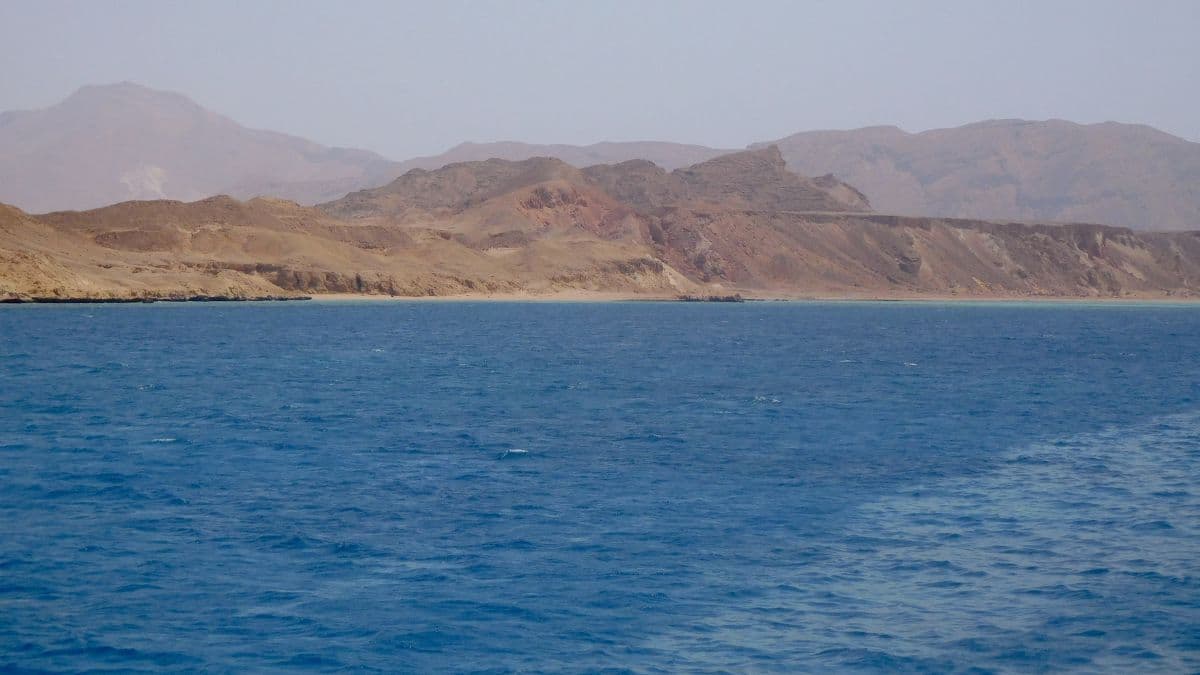
The Straits of Tiran is a narrow passage between the Sinai Peninsula and Saudi Arabia with four named reefs, all reachable on a day trip from Sharm El Sheikh. Jackson Reef is the one for hammerheads, and the current decides every dive.
Most divers who come to Sharm know Ras Mohammed and the Thistlegorm. Fewer build a dedicated day around Tiran. That is a mistake.
Why the current makes the diving
Everything flowing in and out of the Gulf of Aqaba, a deep, nutrient-rich body of water, passes through this one channel. That makes the current strong, steady and productive. Strong current means upwellings, upwellings mean plankton, plankton means fish, and fish mean sharks.
The marine life here is a function of the geography, which is why Tiran produces pelagic encounters when similar-looking sites elsewhere do not. Each reef sits in a different current exposure and depth profile, so the four dives are not interchangeable. For the wider picture, see Red Sea diving and the Sharm El Sheikh base.
The four reefs
Most day trips visit two or three. Build the day around Jackson, and after that the operator and the conditions set the order.
| Reef | Depth range | Best for |
|---|---|---|
| Jackson | 5–40 m and deeper | Hammerheads, wall diving, pelagics |
| Woodhouse | 10–35 m | Drift diving, reef fish, barracuda schools |
| Thomas | 10–35 m | Healthy coral, white-tip reef sharks, photography |
| Gordon | 8–30 m | A wreck and reef in one dive, fewer crowds |
Levels. Jackson needs Advanced Open Water, whose limit is 30 m (PADI), and its wall drops well below that. Woodhouse, Thomas and Gordon are more accessible, but their depth ranges go beyond the 18 m Open Water limit, and two of them beyond 30 m. Dive only the depths your certification allows.
Jackson Reef: the hammerhead reef
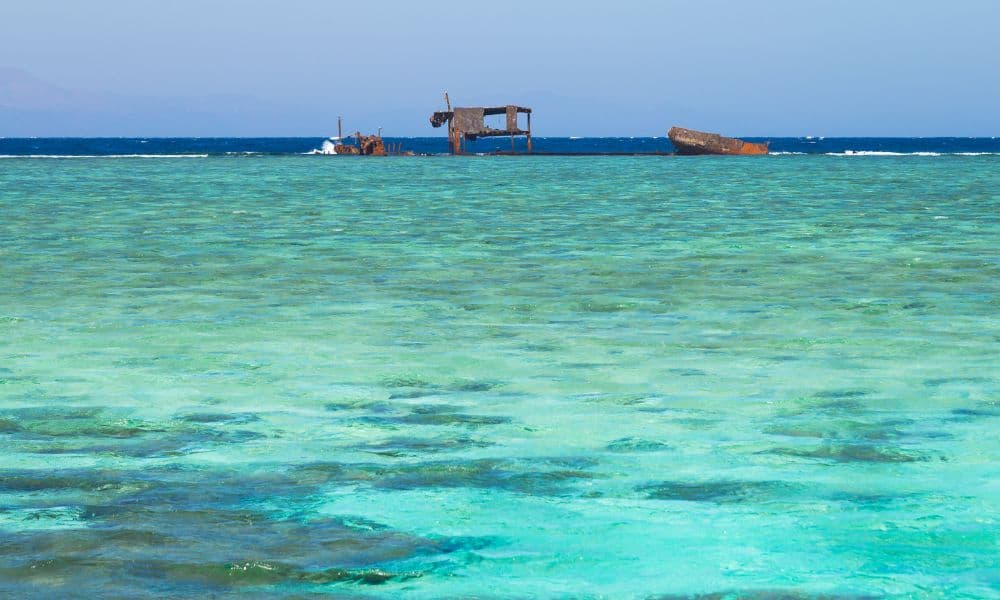
Jackson is the northernmost reef and the most exposed to the Gulf of Aqaba current. It is also where the hammerheads are. The reef rises steeply on the north face, with a wall that drops to significant depth. The wreck of the Lara, a Cypriot freighter that ran aground in 1985, sits rusting on the northern tip and is visible from the dive boat before you enter. It is a navigation reference as much as a sight.
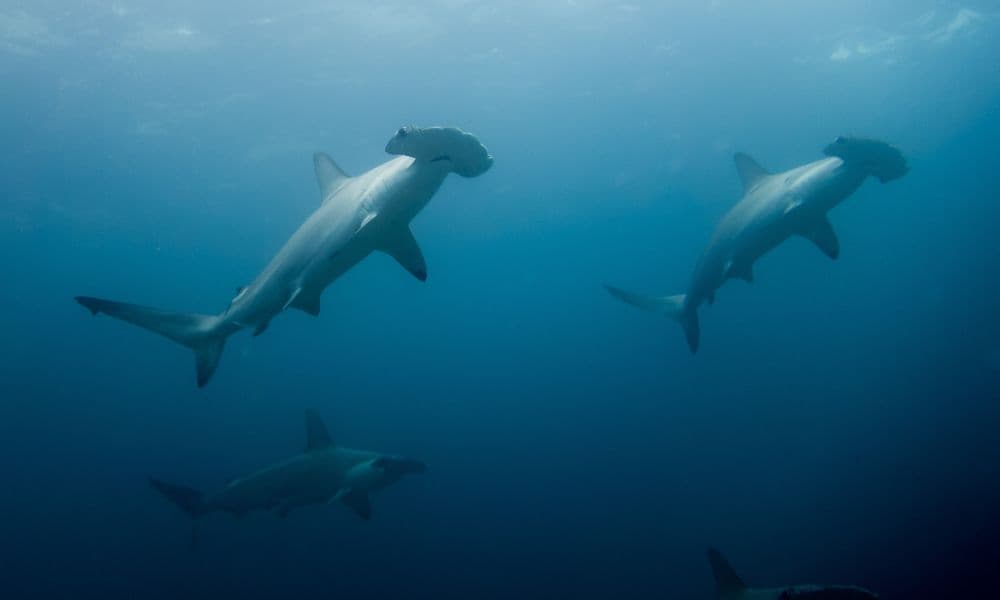
The hammerheads are most reliable early in the morning, in the blue water to the north and northeast of the reef. They are scalloped hammerheads, typically in pairs or small groups, and the encounter is drift-based: you hold your position in the current and watch the blue. The hammerhead zone is 18–25 m. The northern and eastern faces of the wall carry a lot of soft coral. The IUCN Shark Specialist Group lists Jackson Reef as an Important Shark and Ray Area for scalloped hammerheads. Its factsheet records most sightings on the northeast open-sea side of the reef.
Current at Jackson can be strong and can change direction. Listen carefully to the briefing on current patterns before you get in, and follow the guide's entry point advice.
Woodhouse Reef: the drift
Woodhouse lies south of Jackson and runs roughly north to south. It is primarily a drift dive along the eastern wall, with good coral and an impressive fish count. Large schools of barracuda, trevally and snapper are consistent, along with resident napoleon wrasse.
The western side is more sheltered than Jackson, so the reef is more flexible in variable conditions, and it is often the second reef on a day trip when Jackson opens. The action is on the eastern wall in current, so do not get pushed onto the shallow western side and miss the better diving.
Thomas Reef: the coral wall
Thomas is the smallest of the four and the most tightly structured. The walls are among the healthiest in the Straits, with good hard coral, sea fans and soft coral on the deeper sections. It is less exposed to current than Jackson, which suits divers who want the reef without the full drift commitment.
It is also where you are most likely to see white-tip reef sharks resting on the sand between the reef structures. They are not the pelagics of Jackson, but they are reliable and unhurried.
Gordon Reef: the wreck addition
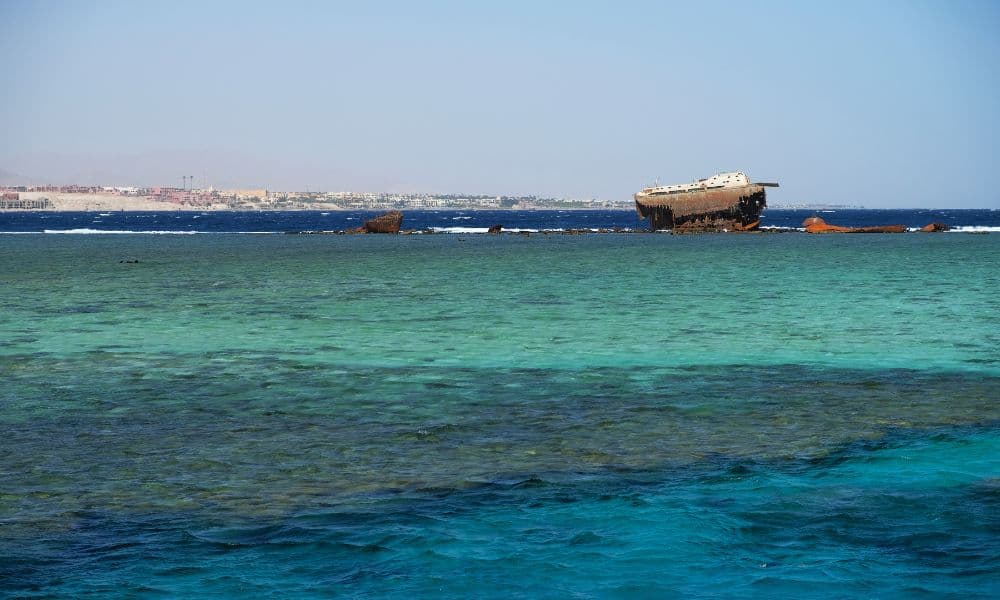
Gordon is the southernmost Tiran reef, and it includes the wreck of the Louilla, a Panamanian cargo ship that grounded on the reef flat in 1981. The wreck lies in shallow water on the reef top, accessible but sun-bleached and coral-overgrown, so it is a background feature rather than the focal point.
Gordon's eastern walls offer good diving, and the reef sees fewer divers than Jackson or Woodhouse because it is the furthest from Sharm. On a half-day or afternoon trip Gordon sometimes comes first. On a full day you will most likely start at Jackson and work south, qualifications allowing.
Current, entry and what to expect
All four reefs share one trait: current. It is not always strong, but it is always present, and it changes direction with tide and wind. That is why Tiran operators brief site-specific conditions on the day rather than follow a fixed plan.
- Entry points matter. The guide chooses the entry point from the current direction, so that you drift along the reef and not across it or into it. Follow it exactly. Getting in 20 m from the planned spot can mean a completely different dive.
- SMB. The surface can be choppy, especially on the exposed northern reefs. Know how to deploy your SMB competently before this trip. Chop is not the place to practise it while the boat tries to find you. DAN lists a surface marker buoy as equipment divers should take on most dives (DAN).
- Depth. Current accelerates downward on the north-facing walls, so it is easy to drift deeper than planned. Set your maximum depth before the dive and monitor it actively. The best encounters at Jackson happen between 18 and 25 m, and there is no need to go deeper.
- Buoyancy. Strong current rewards neutral buoyancy. Divers who drag on the bottom or kick against the drift disturb sediment and spoil the dive for everyone behind them. If your buoyancy needs work, tell the operator before you book.
When to dive the Straits of Tiran
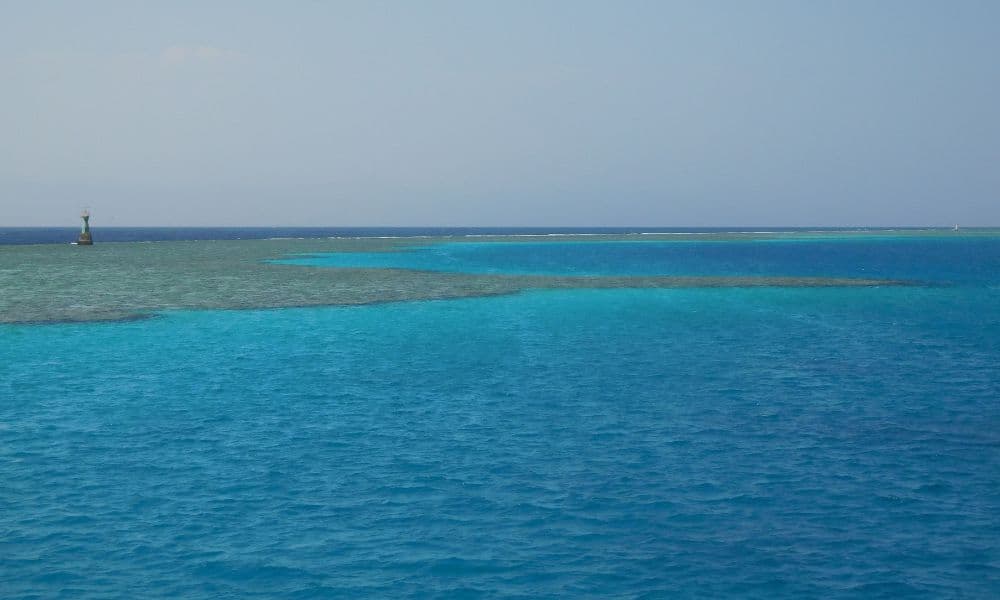
October to January is the window for hammerheads. Sources disagree on that window: our season records put it at October to January, and outside sources report summer sightings at Jackson from May.
| Months | What to expect |
|---|---|
| October to January | The premium window. Hammerhead activity at Jackson peaks, water is 22–26 °C and visibility is at its seasonal best, 20–30 m on a good day. A 5 mm suit is appropriate |
| February to May | Excellent shoulder season. Conditions stay good and the reef fish are at their most active. Hammerheads are unlikely, with only occasional sightings in February and May in our records |
| June to September | Warm water, 28 °C and above, so shorter wetsuits are fine, but pelagic activity decreases. Thomas and Woodhouse stay excellent all year, while Jackson is less rewarding outside the peak if hammerheads are why you are going |
For the whole northern Red Sea, see the best time to dive the Red Sea. Not sure whether the north or the south suits you? Compare the north and south itineraries.
Getting to the Straits of Tiran
Tiran is a day-trip or liveaboard destination, because there is no dive infrastructure on the reefs. Most divers go on a day trip from Sharm El Sheikh. Most Sharm operators run dedicated Tiran days covering two or three reefs, typically leaving at 7–8 am and back by late afternoon. The crossing takes roughly 45–60 minutes each way, depending on the vessel and sea state.
Take the early departure. Arriving at Jackson before the other boats is the difference between a quality hammerhead window and a crowded site.
Tiran also features on north-circuit liveaboard itineraries out of Sharm, usually combined with Ras Mohammed, the Thistlegorm and Abu Nuhas. For a dedicated Tiran visit, with several dives per reef and early-morning slots, a liveaboard is significantly better. The Sharm El Sheikh dive guide covers the operators.
What level do you need?
Jackson Reef needs Advanced Open Water as a practical minimum. Blue-water drift, strong and variable current and open-water conditions go beyond what Open Water training prepares you for. The hammerhead zone means holding position in current with no visual reference below you, so handling your ascents and descents is crucial.
Thomas, Woodhouse and Gordon are more accessible. Open Water divers with at least 20–30 dives and some current experience can handle the shallower, calmer sections, staying at or above 18 m. The key variable is current experience: dive within what you have done before, not what you think you can manage.
Ready to look at boats?
Questions
Are there hammerhead sharks at the Straits of Tiran?
Yes. Scalloped hammerheads are regularly sighted at Jackson Reef, the northernmost of the four reefs. The best window is October to January, on early-morning dives on the north and northeast side in the blue water at 18–25 m. Sightings are not guaranteed, but they are frequent enough that serious shark divers plan for Jackson. Outside sources report summer sightings too.
Can you see all four reefs in one day?
In practice, most full-day Tiran trips cover two or three reefs with two to three dives. Covering all four well in a day is a stretch, because you would be rushing each site. Prioritise Jackson and Woodhouse on your first Tiran day trip, and add Thomas and Gordon if you return.
Is the Straits of Tiran suitable for beginners?
Thomas and Woodhouse are accessible to Open Water divers with some current experience, on the shallower parts at or above 18 m. Jackson Reef is not: the conditions and open-water environment need Advanced Open Water as a practical minimum. If it is your first time diving in current, discuss the conditions with your operator before booking the Jackson dive.
What is the best reef in the Straits of Tiran?
Jackson, for pelagics and hammerhead potential. Woodhouse is the one for drift, and Thomas has the sea fans and hard coral on its walls. If you can only do one, do Jackson. For a two-dive day, do Jackson and Woodhouse.
Do you need a liveaboard for the Straits of Tiran?
No, because day trips from Sharm El Sheikh run year-round. A liveaboard does give you the early-morning advantage at Jackson, before other boats arrive, more dives per reef, and the chance to combine Tiran with Ras Mohammed and the Thistlegorm. For a Tiran visit aimed at hammerheads, it is meaningfully better.