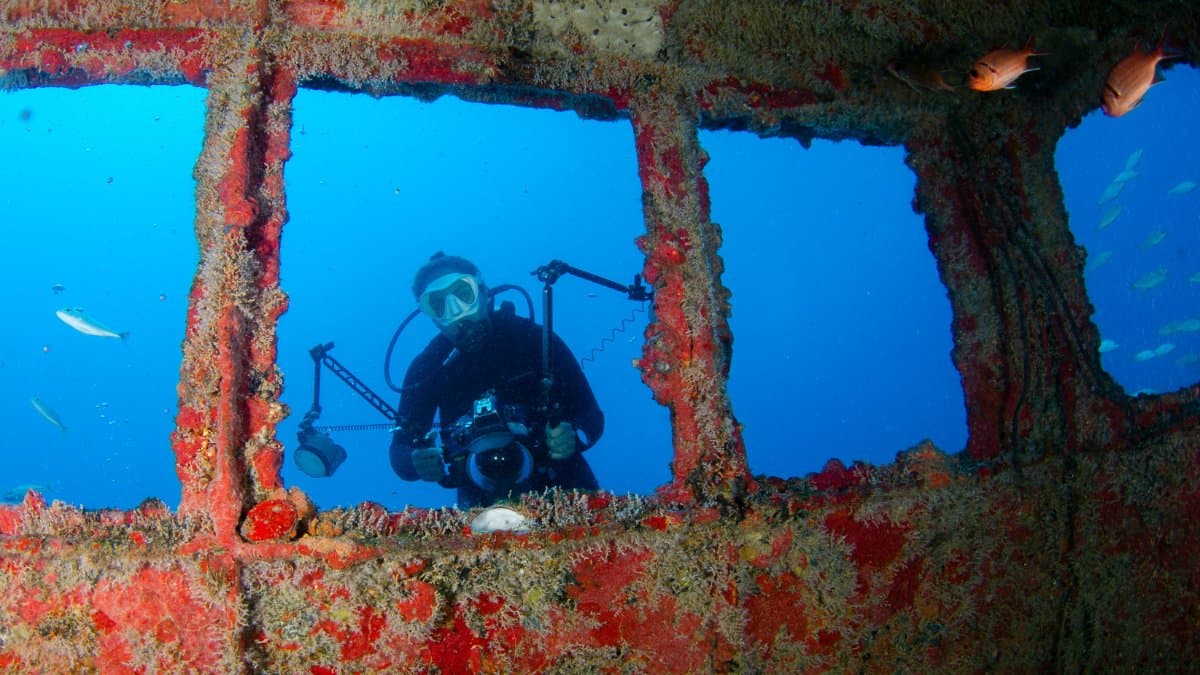
The shipping lane between Europe, Asia and Africa has moved cargo through here for over a century. Warm, clear water and low wave action keep many of the wrecks in good condition.
I've dived the best of them: Thistlegorm, Abu Nuhas, Yolanda, and they're each a completely different experience.
Manie Eksteen, PADI Staff Instructor
The six wrecks at a glance
Abu Nuhas is the place to start, and the Thistlegorm is the one to save until you have wreck experience.
| Wreck | Depth | Level | Departs |
|---|---|---|---|
| SS Thistlegorm | 16–32 m | Advanced Open Water, ideally Wreck Speciality. Stay above 30 m | Sharm El Sheikh or Hurghada |
| Abu Nuhas (four wrecks) | 15–32 m | Advanced Open Water. Open Water divers stay above 18 m, Advanced divers above 30 m | Sharm El Sheikh or Hurghada |
| Yolanda | 18–28 m | Advanced Open Water | Sharm El Sheikh |
| Salem Express | 15–28 m | Advanced Open Water | Hurghada or Safaga |
| Rosalie Moller | 28–50 m, upper structure only | Deep Diver (40 m) or technical training. Advanced Open Water's 30 m limit reaches only the top of the wreck, and the keel is beyond the 40 m recreational limit | Sharm El Sheikh or Hurghada |
| Dunraven | 18–28 m | Advanced Open Water. The swim-throughs need wreck training and a guide | Sharm El Sheikh |
Depths show the whole site. Dive within the limits of your certification: 18 m (60 ft) for Open Water, 30 m (100 ft) for Advanced Open Water (PADI).
Our advice: Advanced Open Water at minimum, no deep penetrations, and no deeper than 30 m on any wreck, except the Rosalie Moller, which needs Deep Diver or technical training. A hold is an overhead space, so enter one only with a guide, and if you are not wreck qualified, stay out of anything tighter than the large open holds.
Before you dive a Red Sea wreck
Wreck diving is not just another dive, and the Red Sea's best wrecks will quickly expose any gaps in your diving.
- Buoyancy first. If you can't hold neutral buoyancy without thinking about it, you will kick up silt, touch the structure and limit where your guide can take you. Do a dedicated buoyancy workshop before your first serious wreck dive if there is any doubt. It makes the difference between a surface-level wreck experience and getting inside the holds. See Mastering Scuba Diving Buoyancy.
- Finning technique. A frog kick is the wreck diver's default: it produces no downwash, keeps sediment settled and lets you move slowly in tight spaces. If you only flutter kick, you will stir up the visibility for everyone behind you. Practise before the trip.
- Know the history. The divers who get the most out of the Thistlegorm already know what they are looking at: a WWII supply ship intercepted by Heinkel bombers in 1941, with motorbikes, trucks, rifles and train carriages still in the holds. It helps to read the history the night before.
- Air consumption and turning points. On penetration dives, know your thirds rule and agree turning points with your buddy before you get in. At a site like Abu Nuhas, with four wrecks on one reef, it is easy to extend the dive further than your air management allows. Penetration of any kind, even shallow hold access, needs both divers on the same plan. Holds and swim-throughs are overhead spaces: without wreck training, enter only with a guide, and stay out of everything tighter than the large open holds.
- Your own torch. Rental torches are fine for navigation, but inside a hold or at depth you want your own reliable torch, one whose battery status you know. It is non-negotiable for any penetration. Check it, with fresh batteries, before you get in.
SS Thistlegorm: not your first wreck
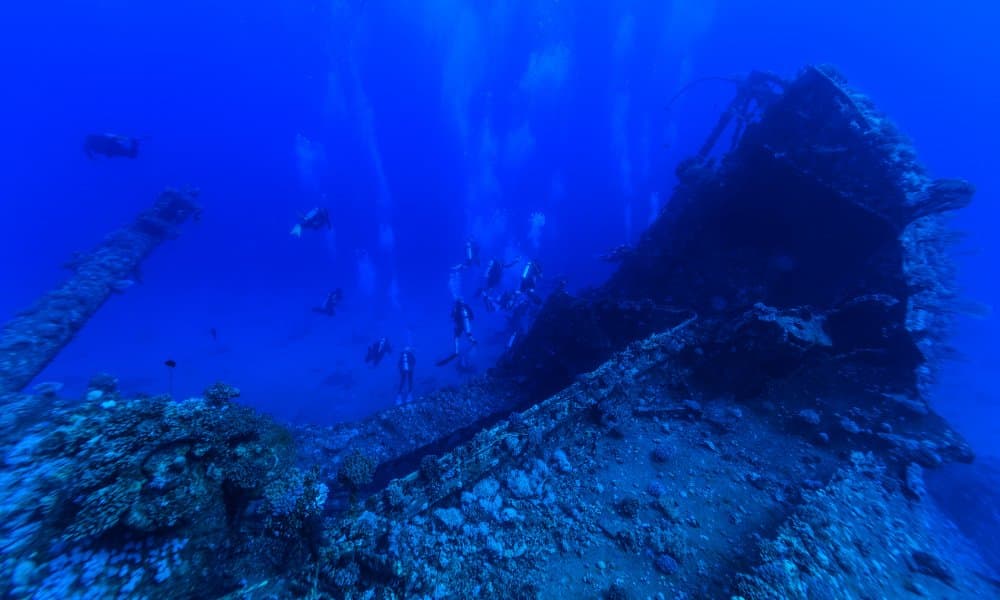
A British WWII supply ship, 128 metres long, sunk in October 1941 by German bombers while anchored in the Strait of Gubal. She went down with her cargo intact, and the cargo is why divers come to dive her.
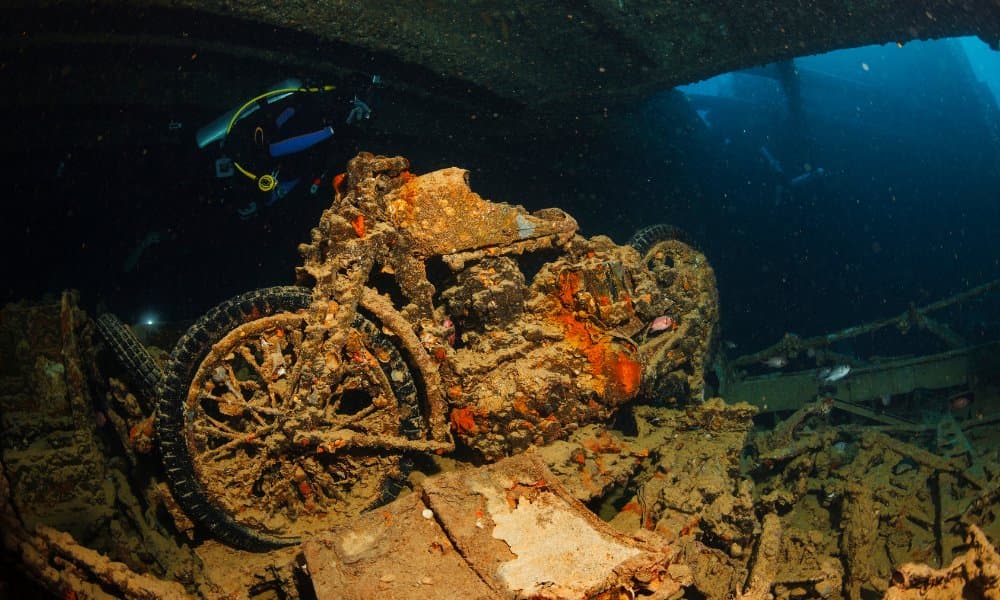
Hold 4 is the one people remember: BSA motorcycles, Bedford trucks, Universal Carriers and a steam locomotive on the deck. Hold 2 has rifles and ammunition still in wooden crates. The structure is largely intact after more than 80 years underwater.
Do not dive the Thistlegorm as your first wreck. If this is your first Red Sea wreck trip, start somewhere calmer and build your wreck skills before you get here, if the itinerary allows.
At peak time the site is busy: multiple boats, divers in the holds, limited visibility windows. Get the early slot. The first boat on site has a completely different dive from a midday dive with 40 other divers in the water. The history is the point, so know what you are looking at before you get in the water.
Full guide: SS Thistlegorm, the complete diving guide
Abu Nuhas: four wrecks on one reef
Abu Nuhas is the starting point for Red Sea wreck diving. The wrecks are not more impressive than the Thistlegorm, but the conditions are better, the site is more flexible and you have four different wrecks to work through on a single reef.
It is a shallow reef at the mouth of the Gulf of Suez, in the Strait of Gubal, that has claimed ships for over a century. The four main wrecks sit in relatively shallow, calm water with good visibility and none of the current complexity of some south-circuit sites. They are positioned so that navigation is intuitive, and each has its own character.
- Giannis D is the most intact and the most visually impressive. A Greek cargo ship that went down in 1983, she sits upright at 28 metres with the superstructure accessible and schools of glassfish in the holds.
- Carnatic is the oldest (1869) and the most coral-encrusted. She has been down long enough that the reef has colonised her completely.
- Chrisoula K sits in shallower water and is excellent for a second dive.
- Kimon M is the deepest and the least dived: its stern lies at about 32 m, past the Advanced Open Water limit, so stay above 30 m.
Dive Abu Nuhas before the Thistlegorm if conditions and itinerary allow. Get your wreck technique solid here, then go to the Thistlegorm knowing what you are doing. If you can't, get some wreck experience first, and have your buoyancy, finning technique and air consumption dialled in.
Full guide: Abu Nuhas shipwrecks, four wrecks on one Red Sea reef
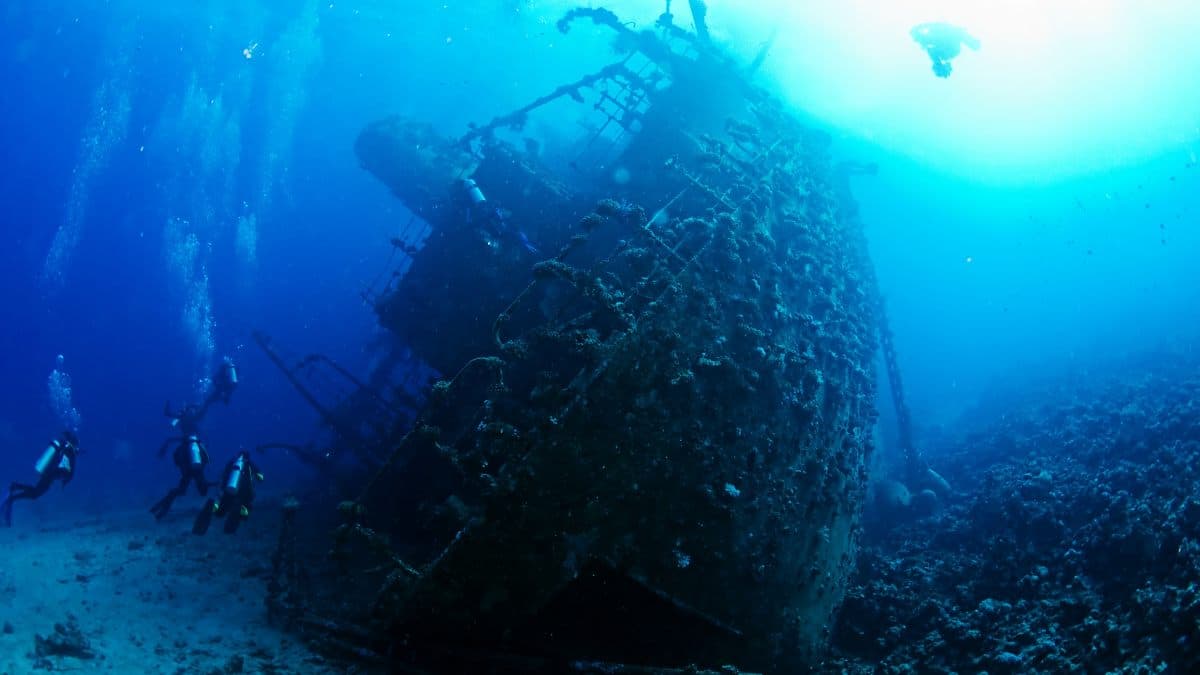
Yolanda: the combination dive
Yolanda is famous for its cargo: bathroom fittings, including toilets, bathtubs and porcelain tiles, scattered across the reef slope at Ras Mohammed after the ship broke up on the reef in 1980. Divers posing next to a toilet at 25 metres have made it a much-photographed wreck dive.
The wreck itself isn't the reason to be here. It is quite broken up, the structure is scattered rather than intact, and it wouldn't justify the dive on its own. It works because you don't dive Yolanda in isolation. It is the end point of a drift along Shark Reef, a reef wall in the Egyptian Red Sea.
The drift through Shark Reef, followed by the cargo field at the end, makes a good combination dive. Go for the full Shark Reef experience. The cargo field is the bonus, not the headline.
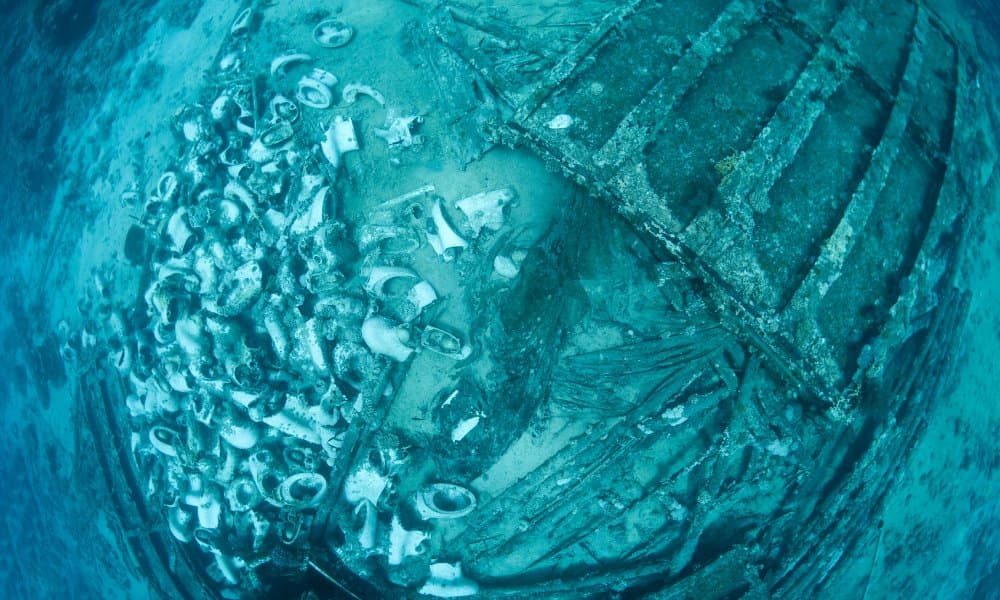
Salem Express: a dive with weight
The Salem Express is a passenger and cargo ferry that sank in December 1991 in a storm, killing over 400 people. She rests on her starboard side at 28 metres, largely intact, and is one of the more sobering wreck dives in the Red Sea.
This is not a recreational holiday dive for most people, and it can feel spooky if wrecks are not your thing. The wreck is a tomb for the more than 400 people who died, so stay outside it.
Divers who choose it typically do so with that context fully understood. If you go, go quietly. The structure is striking and the marine life on the outside is excellent, but the site demands a different attitude from the cargo wrecks of Abu Nuhas. If you have a lust for rust and history, put it on your list.
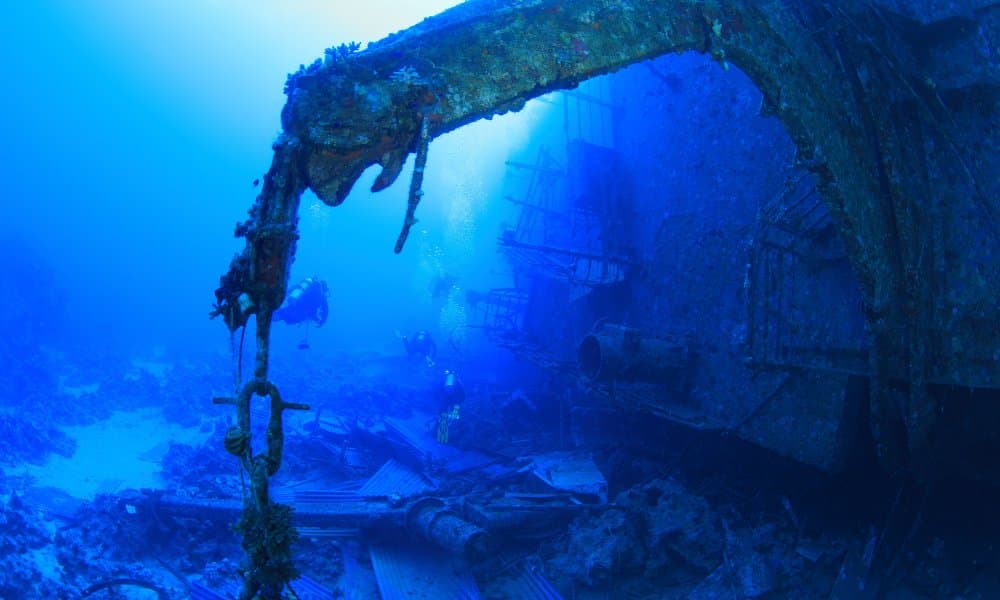
Rosalie Moller: deeper and quieter
Another WWII cargo ship, sunk by German bombers in 1941 near the Thistlegorm. She gets a fraction of the diver traffic, partly because she is less spectacular and partly because anyone on a Thistlegorm boat tends to dive the Thistlegorm twice rather than explore the area.
The keel lies at 50 metres, beyond the 40-metre recreational limit, and the shallowest accessible sections are around 28 metres. The 30-metre limit for Advanced Open Water divers reaches only the top of the wreck, so she asks for more: Deep Diver training (40 metres) or technical training, and even then you stay on the upper structure. It is covered in soft coral and the wreck is interesting, just not as dramatic as her famous neighbour. She suits divers who want a quieter experience and hold higher certification levels.
I would not recommend doing this dive on just Advanced open water, and on a single cylinder. Operators do, I would not. Just my opinion.
Manie Eksteen, PADI Staff Instructor
Dunraven: Victorian and coral-covered
A British merchant steam vessel that ran aground in 1876, the Dunraven sits upside down in two sections on the reef at Sha'ab Mahmoud. She is one of the older wrecks in the Red Sea and is deeply encrusted with coral: parts of the hull look more like natural reef than shipwreck.
The upside-down orientation makes navigation interesting. You are looking up at what was the deck and down at what was the keel. The swim-throughs in the stern section are well known, but a swim-through is an overhead space: do them only with wreck training and a guide.
She is less visited than the Thistlegorm and Abu Nuhas, and a good addition to a north-circuit itinerary if you have the time.
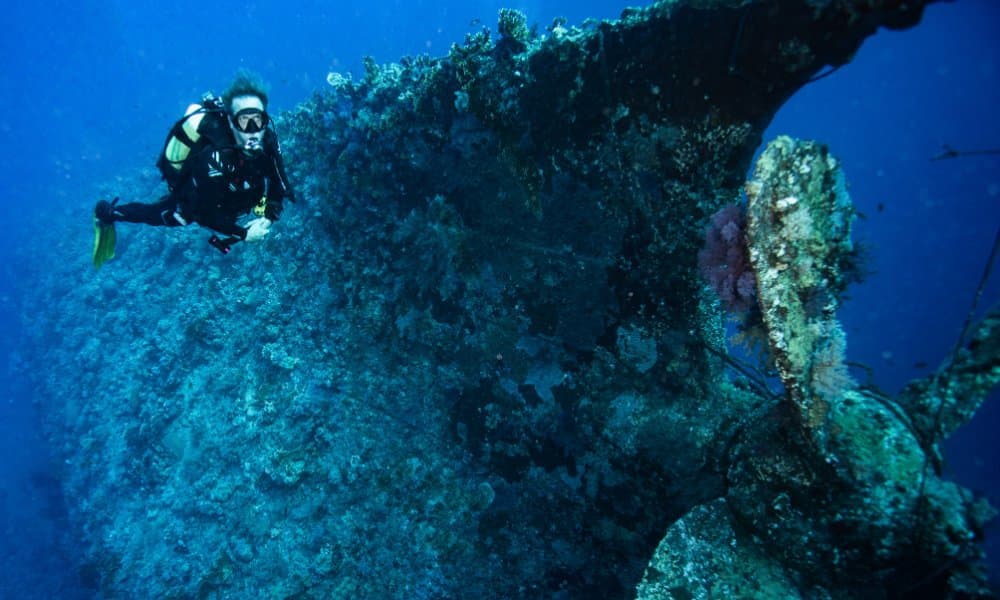
Getting the most from the wrecks
Sequence matters. Abu Nuhas, then Dunraven, then the Thistlegorm builds your wreck skills before you reach the Thistlegorm. It all depends on boat schedule, itinerary and conditions.
Get in early. The best Red Sea wreck dives happen at first light, before the crowds arrive. On the Thistlegorm, the difference between a 7am dive and an 11am dive is visibility, crowding and ambient light in the holds. Choose liveaboards that prioritise early slots on the headline sites.
Book a northern Red Sea liveaboard
A northern Red Sea liveaboard is the most efficient way to dive several wrecks in one trip. A 4 to 7-night itinerary out of Sharm El Sheikh or Hurghada typically covers the Thistlegorm, Abu Nuhas and the Ras Mohammed sites, including Yolanda, in one week. For the wider picture, start with diving the Red Sea in Egypt.
Filter by departure port (Sharm or Hurghada), trip length and wreck itinerary type. When comparing listings, check:
- the maximum number of divers on board
- the guide-to-diver ratio (ask if it isn't listed)
- whether nitrox is included or costs extra
- the specific wreck sites listed
- the cancellation policy, because weather cancellations happen on south itineraries
Still deciding on an itinerary? Read the Red Sea north vs south guide before booking. To pick your month, use the month-by-month guide.
Ready to look at boats?
Questions
What is the best wreck dive in the Red Sea?
The SS Thistlegorm is the headline wreck: a WWII cargo ship with motorcycles, trucks and ammunition still in the holds at 16–32 metres.
Abu Nuhas is the better all-round choice for most divers, with four accessible wrecks in excellent conditions on a single reef.
Do I need special certification for Red Sea wreck diving?
Open Water divers stay above 18 m (60 ft), and Advanced Open Water divers above 30 m (100 ft). Every wreck on this list has parts deeper than 18 m, so the Thistlegorm, Abu Nuhas, the Yolanda, the Salem Express and the Dunraven are Advanced Open Water dives, and the Thistlegorm is best with Wreck Speciality too. The Rosalie Moller asks for more than Advanced Open Water: go with Deep Diver (40 m) or technical training, and stay on the upper structure, because its keel is beyond the 40 m recreational limit. Stay outside the Salem Express: it is a grave for the more than 400 people who died on board.
Our advice: Advanced Open Water at minimum, no deep penetrations, and no deeper than 30 m on any wreck, except the Rosalie Moller, which needs Deep Diver or technical training. A hold is an overhead space, so enter one only with a guide, and if you are not wreck qualified, stay out of anything tighter than the large open holds.
What is the best Red Sea wreck for beginners?
Abu Nuhas, specifically the Giannis D and the Chrisoula K. Conditions are calm, navigation is intuitive, and there are four wrecks to work through as your skills develop. The wrecks sit at 15–32 m, so it is an Advanced Open Water site: Open Water divers stay above 18 m, and Advanced divers stay above 30 m, which matters at the Kimon M's stern. Build your wreck technique here before committing to the Thistlegorm.
How is the Thistlegorm best dived?
Early in the morning, on a liveaboard that prioritises the first boat on site. Go in with the history already in your head, and know which hold has what cargo before the briefing. Dive it after you have done some wreck diving, not as your first. On the second dive you have time to look at the cargo properly, instead of the surface-level overview most day-trip divers get. Enter a hold only with a guide.
Can you dive Red Sea wrecks on a day trip?
Yes. Day trips to the Thistlegorm and Abu Nuhas run from Sharm El Sheikh and Hurghada. A liveaboard gives you the early-morning slot on the Thistlegorm, multiple dives per site and several wrecks in one trip, so for a dedicated wreck trip it is significantly better value. Skip the day trips.
Is Abu Nuhas better than the Thistlegorm?
Different, not better. Abu Nuhas has better conditions, more flexibility and is more forgiving for divers building wreck experience. The Thistlegorm is more dramatic and more historically significant. If you can only do one, do the Thistlegorm. If you can do both, do Abu Nuhas first.