
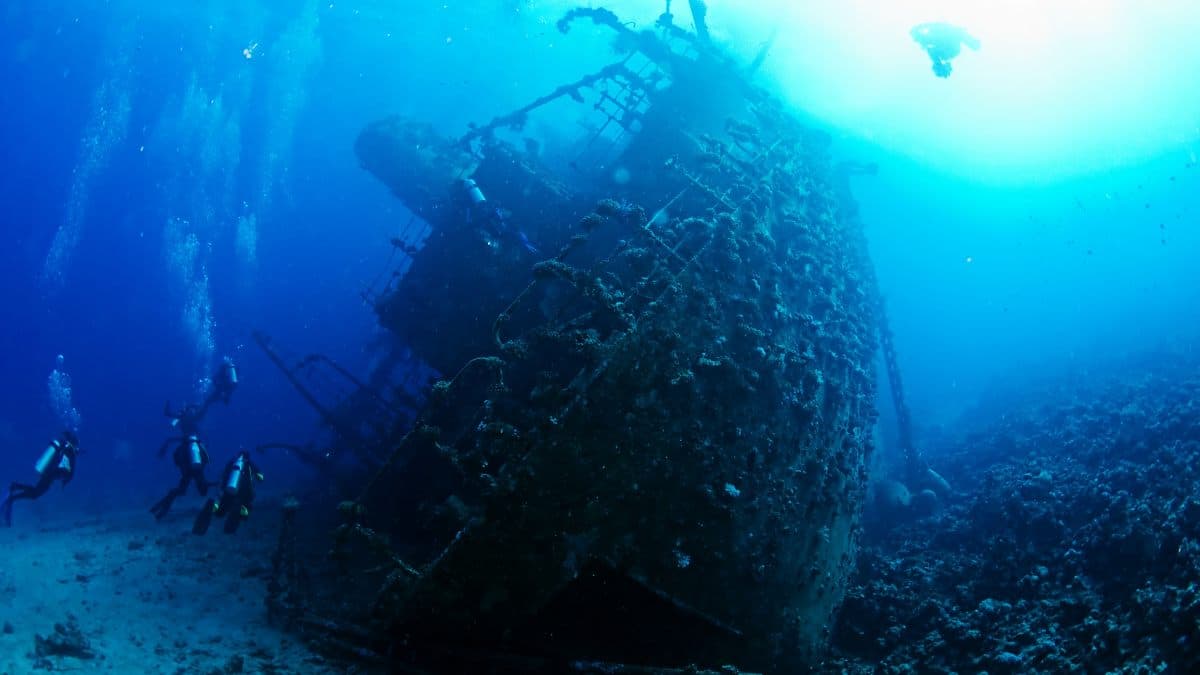
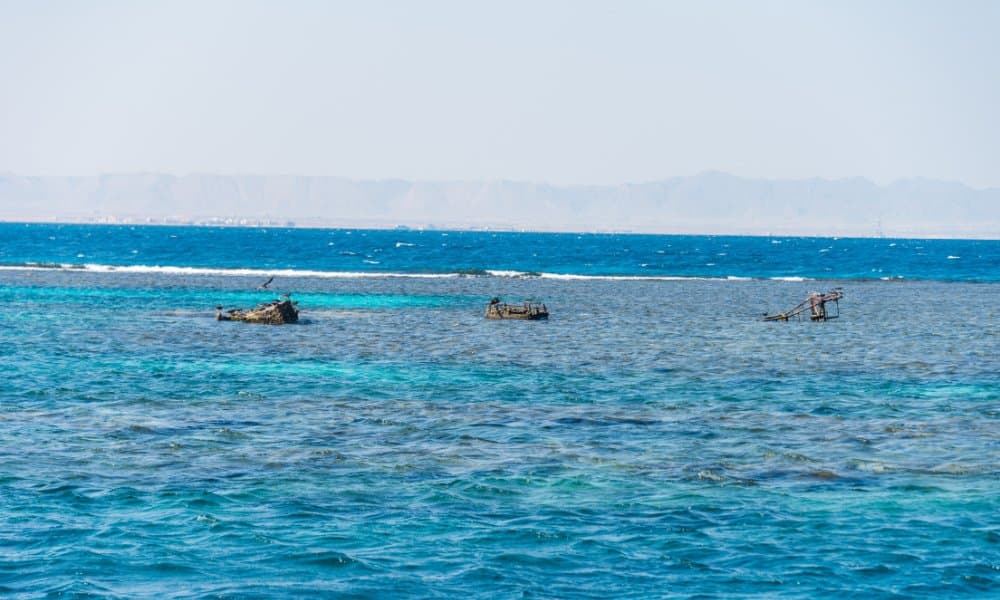
Abu Nuhas is four shipwrecks on one shallow reef in the northern Red Sea. Almost everyone dives it from a liveaboard out of Sharm El Sheikh.
The reef sits just below the surface in the Strait of Gubal, in the path of ships between the Suez Canal and the southern Red Sea. Before GPS and reliable charts, they hit it with depressing regularity.
I've dived Abu Nuhas multiple times on north itinerary liveaboards departing Sharm El Sheikh, and it belongs on any Red Sea wreck diver's list alongside Thistlegorm.
Manie Eksteen, PADI Staff Instructor
Four wrecks within a short swim
Most wreck destinations give you one wreck, sometimes two. Abu Nuhas gives you four, all within a reasonable swim of each other and on the same northern itinerary.
The wrecks are at different stages of decay. The Carnatic, down since 1869, is broken up and encrusted, essentially a reef now. The Giannis D, sunk in 1983, still holds its structure. That range lets a group match the diving to its experience.
Compared with the Thistlegorm, the Abu Nuhas wrecks are shallower, the coral is more established and there is less diver traffic. You can often have a wreck almost to yourself. The Thistlegorm is larger and more dramatic, with the story of a wartime cargo. Most north itineraries include both, the Thistlegorm usually on night one and Abu Nuhas later in the trip.
I personally enjoyed Abu Nuhas the most. It was quiet, we had the wrecks to ourselves and the conditions were more favourable.
Manie Eksteen, PADI Staff Instructor
The four wrecks
The Giannis D and Chrisoula K see the most divers, the Carnatic carries the most coral, and the Kimon M is the quiet one.
| Wreck | Depth | Best for | Penetration |
|---|---|---|---|
| Giannis D | 6–27 m | Intact structure, soft corals, glassfish in the holds | Holds and superstructure, with wreck training and a guide; the engine room is more advanced |
| Chrisoula K | 8–28 m | The bow-down photo, grouper, batfish | Limited; sections have collapsed |
| Carnatic | 6–27 m | Coral, copper ingots | None; too deteriorated, exterior only |
| Kimon M | 10–32 m | Solitude, moray eels | Limited, in some sections |
Levels. Open Water divers stay at or above 18 m, which on every wreck here means the upper structure. Below that is Advanced Open Water depth (30 m limit, PADI). Three of the wrecks bottom out at 27–28 m, but the Kimon M's stern lies at about 32 m, so on the Kimon M stay above 30 m. Going inside any of these wrecks, holds included, is overhead diving and takes wreck training and a guide. On a first wreck dive, stay outside.
Giannis D: the headline wreck
Most divers stop at Abu Nuhas for this one. The Giannis D is a 100 m Greek cargo ship that went down in 1983 carrying timber. The timber is long gone, eaten by marine organisms, but the ship still holds its structure.
The bow sits at about 20 m, the stern at 27 m, and the superstructure rises to within 6–7 m of the surface. The holds are large, with plenty of light and several exits, but they are still inside the wreck, so go in only with wreck training and a guide. The deeper engine room needs more care still.
Pink and orange sea fans cover the upper structure, lionfish hover in the dark corners, and glassfish fill the holds while trevally and jacks hunt through them. Clear water and a torch are what you want here.
Chrisoula K: the photographers' wreck
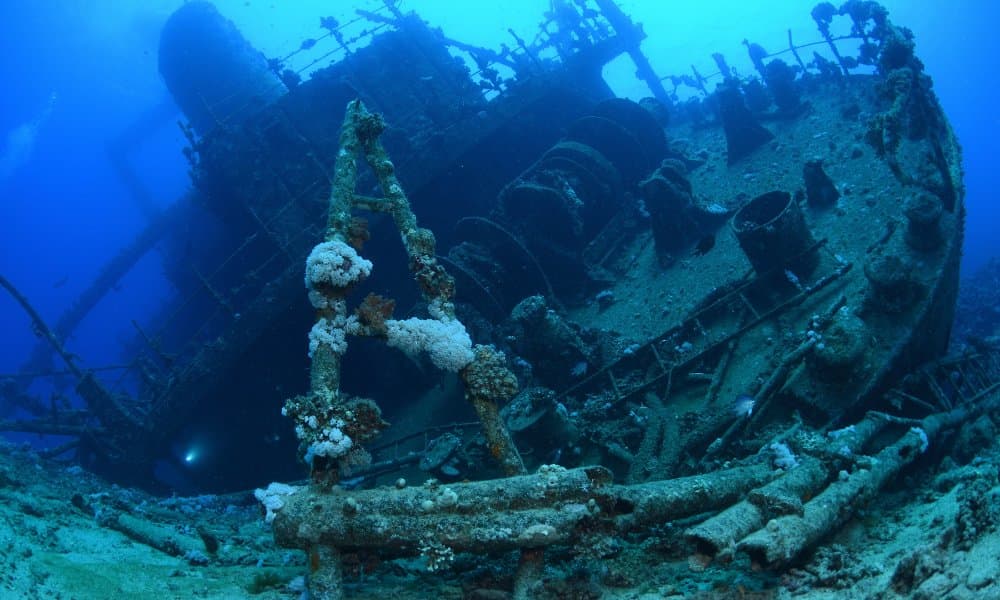
The Chrisoula K is a Greek freighter that hit the reef in 1981, also called "Marcus" and the "wreck of tiles". The stern is at about 28 m, slightly deeper than the Giannis D.
The draw is one shot: the bow pointing down at roughly 45 degrees, framed against blue water with the anchor chain still in place. If you carry a camera, this is the wreck for it. Visibility is often 20 m or more on a clear day.
Sections have collapsed, so there is less to penetrate than on the Giannis D. Large grouper are resident, and batfish school around the stern.
Carnatic: the coral wreck
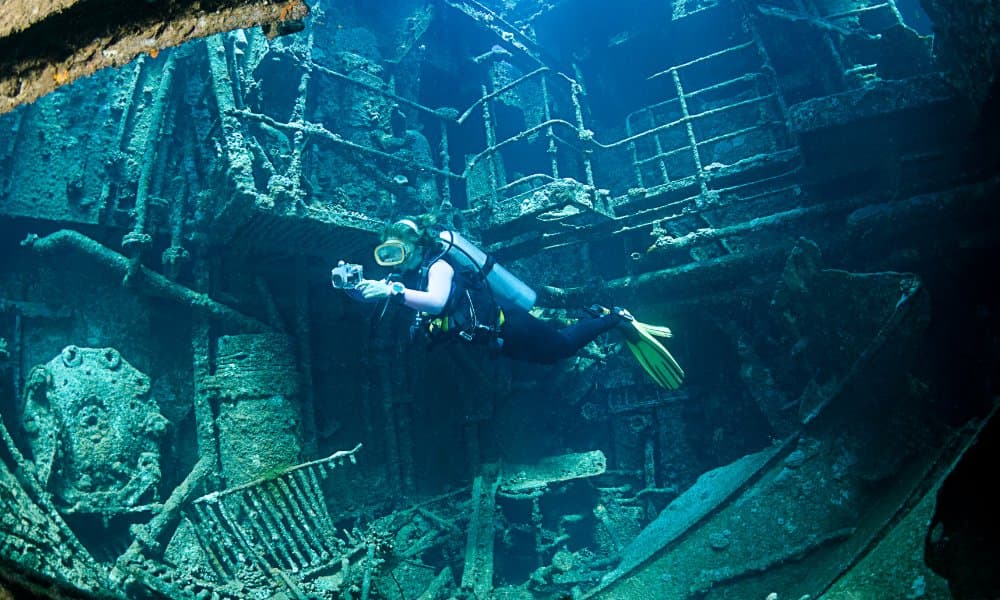
The Carnatic is the oldest of the four. She was a British P&O mail and passenger steamer that went down in 1869 carrying copper ingots and a consignment of champagne. Some bottles were reportedly recovered intact decades later.
After more than 150 years on the reef she is broken into sections and heavily encrusted. You do not dive her for structure. You dive her for coral: purple and orange sea fans cover every surface, with glass sponges and hard coral filling the gaps.
The copper ingots are still there, fused into the reef, with a blue-green patina. They are worth looking for.
Kimon M: the quiet one
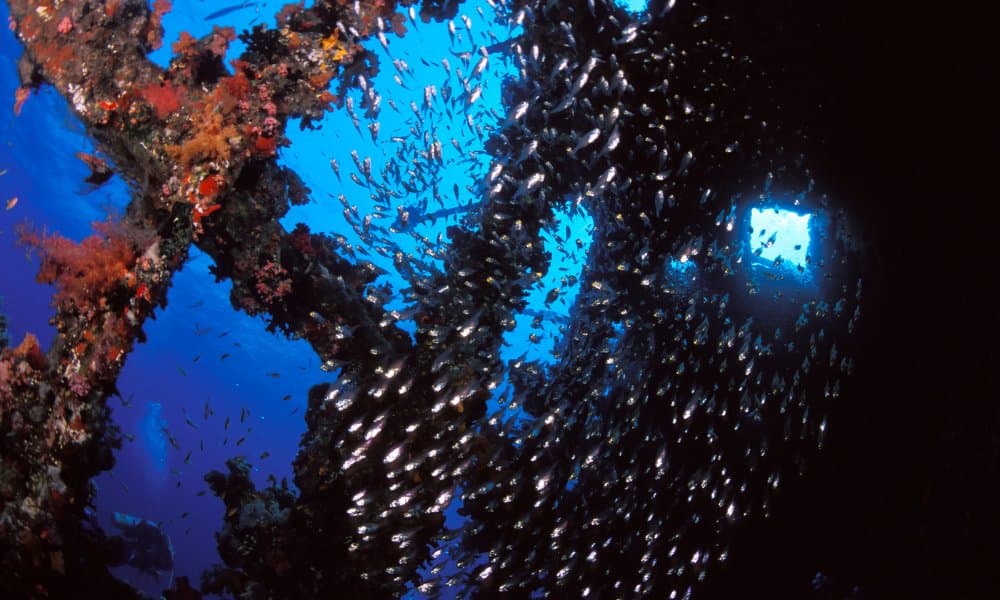
The Kimon M is a Greek cement carrier that sank in 1978. It lies at the western end of the reef, slightly apart from the other three, and sees far fewer divers as a result. Its stern lies on the seabed at about 32 m, past the 30 m Advanced Open Water limit, so stay above 30 m on this wreck.
The structure is reasonably intact, and parts of the holds can be entered by divers with wreck training and a guide. Marine life is good, especially around the engine room, which is home to a large resident moray population.
The draw is solitude more than spectacle. It is not the first choice if you have one day at Abu Nuhas, but it is worth adding on a liveaboard that gives the site more time.
How to dive Abu Nuhas
Abu Nuhas is dived almost only from a liveaboard, on a northern Red Sea itinerary out of Sharm El Sheikh. The reef lies just north of Shadwan Island, west to south-west of Sharm across the Strait of Gubal, so it works as a natural overnight passage. Compare the north and south itineraries before you choose a boat.
Most north itineraries stop here for one or two nights, which gives two to four dives across the four wrecks. The usual rotation is the Giannis D and Chrisoula K on the first visit, then the Carnatic and sometimes the Kimon M on the second.
Look for boats that list Abu Nuhas on the itinerary rather than as an optional add-on, and confirm it when you book. Some boats treat it as a weather-dependent stop.
Day trips from Hurghada are possible, because the reef is around 50 km away. But a day trip gives you time for two wrecks at most, and the transit takes a big part of the day.
When to go
The northern Red Sea can be dived all year, and October to April is the window for wrecks.
| Months | Water | What to expect |
|---|---|---|
| October to April | 22–26 °C | Peak season. Visibility is at its best, often 20 m or more, and overnight passages are most stable |
| May to September | 26–29 °C | Still good conditions, with slightly lower visibility. Wind can make passages less comfortable on smaller boats |
A 3 mm wetsuit covers summer diving. From November to March, 5 mm is more comfortable, especially for several dives a day.
For the whole year, see the Red Sea month by month. For more wrecks, see the Red Sea wrecks guide. To pick a boat, start with the best Red Sea liveaboards.
Ready to look at boats?
Questions
How many wrecks are at Abu Nuhas?
Four: the Giannis D (1983), the Chrisoula K (1981), the Kimon M (1978) and the Carnatic (1869). All four lie on the same reef, between about 6 and 32 m, and are usually dived across two to four dives. The Giannis D and Chrisoula K see the most divers, and the Carnatic carries the most coral.
Is Abu Nuhas suitable for beginner divers?
Partly. Open Water divers can dive the wreck exteriors, particularly the Carnatic and the Chrisoula K, in good conditions, as long as they stay at or above 18 m. Going inside any of these wrecks, the Giannis D's holds included, takes wreck training and a guide. On a first wreck dive, stay outside.
How does Abu Nuhas compare to the SS Thistlegorm?
They are different dives. The Thistlegorm is larger and more dramatic. Abu Nuhas gives you four wrecks instead of one, shallower diving, less diver traffic and more established coral. Most north itineraries include both.
Do liveaboards always include Abu Nuhas?
Most northern Red Sea itineraries do, but not all. Confirm that the itinerary names it, because some boats treat it as a weather-dependent stop.
Can you dive Abu Nuhas on a day trip?
Technically yes, from Hurghada, around 50 km away. But a day trip gives you time for two wrecks at most, and the transit takes a big part of the day. A liveaboard that spends a night at the site is the right way to dive it properly.