
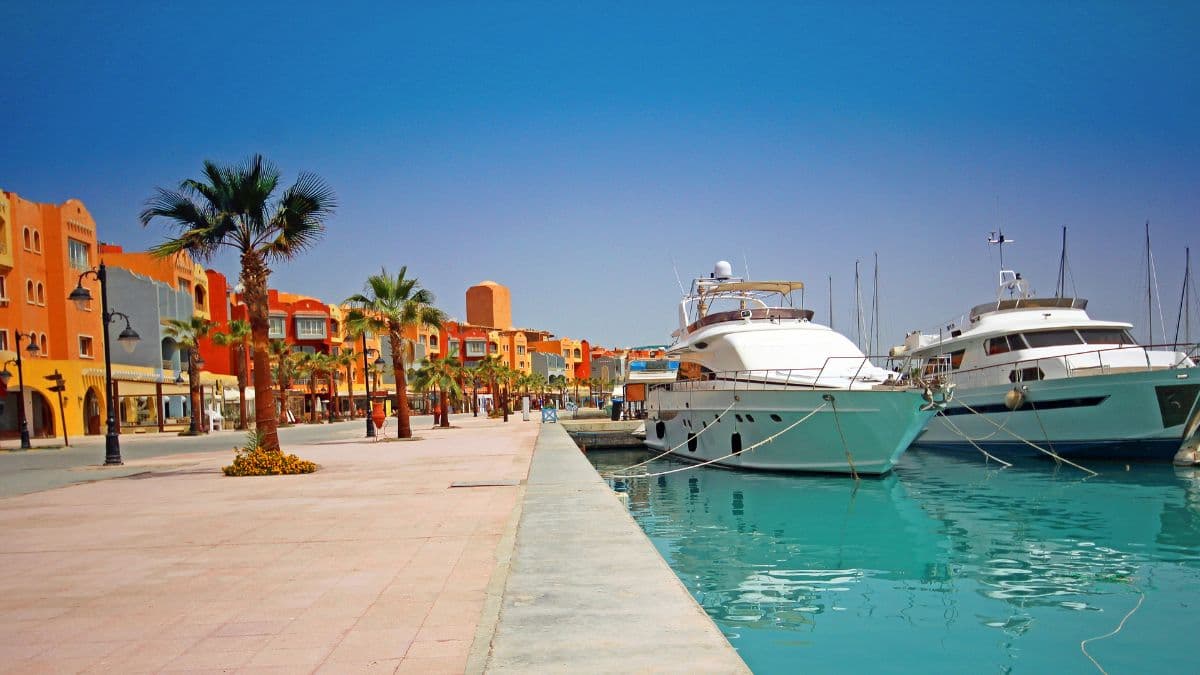
Hurghada is the base for Abu Nuhas and for liveaboards that can go north or south. It gives you more direct access to the north circuit's offshore wrecks than Sharm El Sheikh does.
It is not the most glamorous dive town in Egypt. Sharm has the better beach-resort infrastructure and more refined day-trip operations for the southern Sinai sites. But if you choose a base around Red Sea diving, Hurghada's position and its many dive centres make it a more versatile starting point than most divers give it credit for.
What makes Hurghada a dive base
Hurghada's main advantage is position. The city is on the western shore of the Red Sea, roughly opposite the Sinai Peninsula. The Strait of Gubal, where Abu Nuhas, the Rosalie Moller and the surrounding wreck fields lie, is a manageable crossing by dive boat, and it is closer than from any other major Egyptian dive hub.
Hurghada International Airport has year-round international flights from across Europe. The dive centres range from resort-based operations to independent technical diving specialists, so you have real options on boat quality, group size and site flexibility. For Red Sea diving overall, Hurghada works as the logistics centre for the north.
The inshore reefs around the Giftun Islands give solid recreational diving that guides to the offshore sites rarely mention. They are better than their reputation.
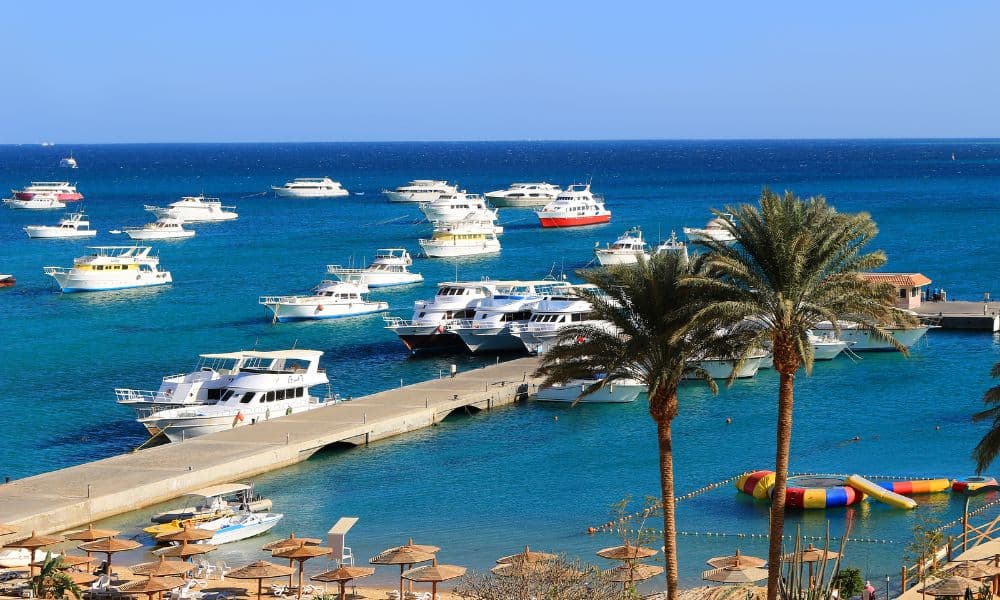
The dive sites around Hurghada
| Site | Best for | Notes |
|---|---|---|
| Abu Nuhas | Four wrecks on one reef | A day trip, but a day fits two wrecks at most |
| Thistlegorm | A WWII wreck | Better from Sharm, or on a liveaboard |
| Giftun Islands | Hard coral and reef fish | 10 km offshore, the usual day-trip default |
| Shaab Abu Ramada | Fish life | A short crossing from Hurghada |
| Erg Soma | Macro and photography | Coral pinnacles at moderate depth |
Abu Nuhas
Abu Nuhas is the main reason to base in Hurghada if wreck diving is your goal. Four wrecks lie on one reef in the Strait of Gubal: the Giannis D, the Chrisoula K, the Carnatic and the Kimon M. A Hurghada day trip can reach them in good conditions, though a day gives you time for two wrecks at most.
The Giannis D is the most intact, with the superstructure accessible and glassfish filling the holds. The Carnatic, from 1869, is the oldest and the most coral-colonised: she has been underwater long enough that telling reef from ship takes a second look. The Chrisoula K is excellent for a second dive. For depths, levels and the best months, read Abu Nuhas: four wrecks on one reef.
Thistlegorm
The Thistlegorm can be dived on a day trip from Hurghada, as the wreck lies in the Strait of Gubal, roughly equidistant from Hurghada and Sharm. But the crossing from Hurghada is longer, which means a later arrival and less chance of the early-morning slot that makes the wreck worthwhile.
If the Thistlegorm is a priority, Sharm is the better base for day trips. From Hurghada, dive it on a north-circuit liveaboard instead: you get the early slot and several dives, and you do not lose time to the crossing. See the SS Thistlegorm guide.
Giftun Islands
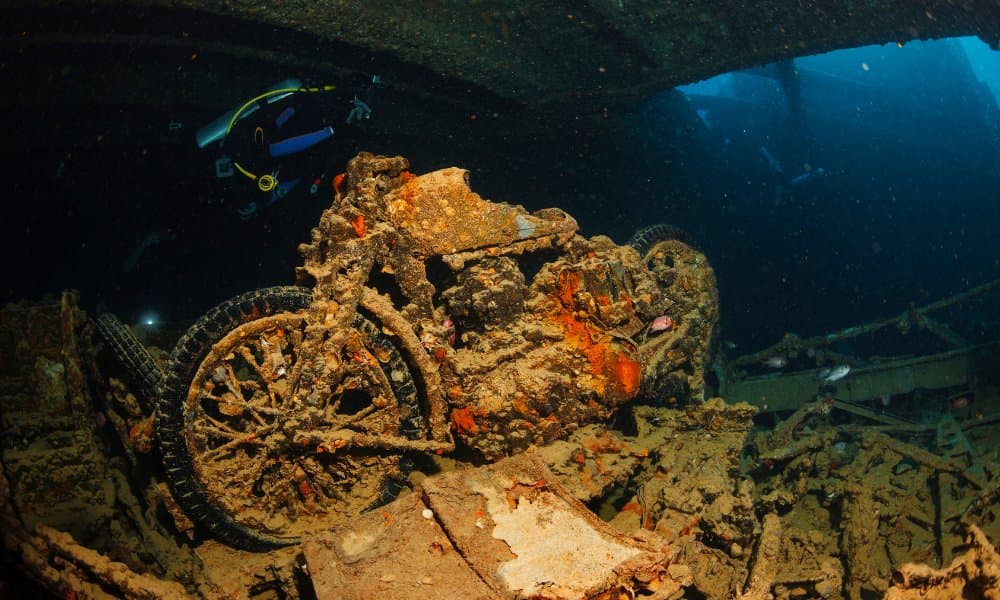
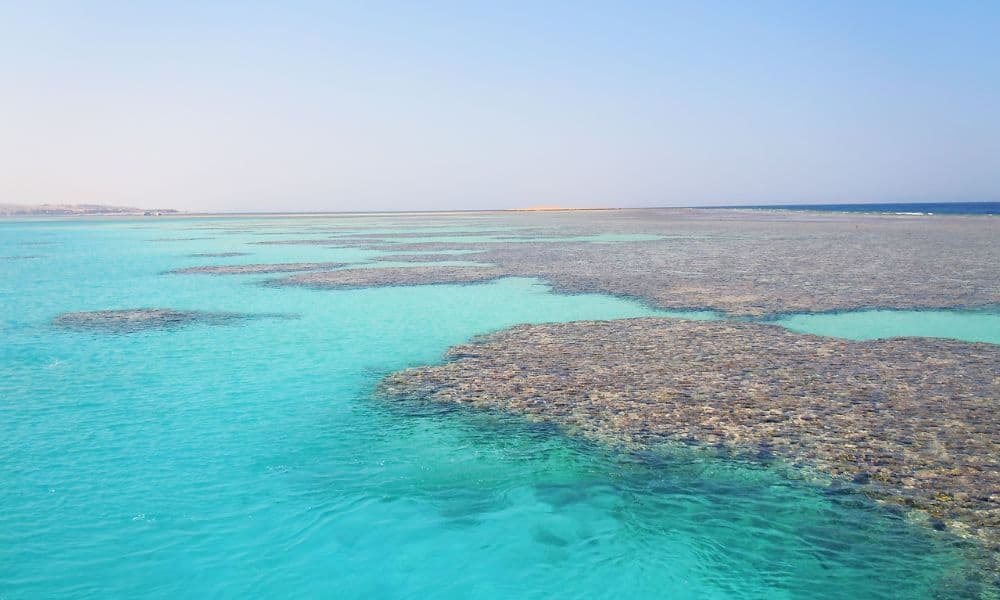
The Giftun Islands, 10 km offshore, are what most Hurghada day trips default to, and rightly. The reefs around Big Giftun and Small Giftun have healthy hard coral gardens, good fish life across the range of Red Sea reef species, and calm, clear water on most days.
They are not headline sites, but they are reliable and accessible. For a diver doing 10–14 days in Hurghada, the Giftun reefs provide the volume of diving between the offshore excursions. Visibility regularly reaches 15–20 m.
Shaab Abu Ramada
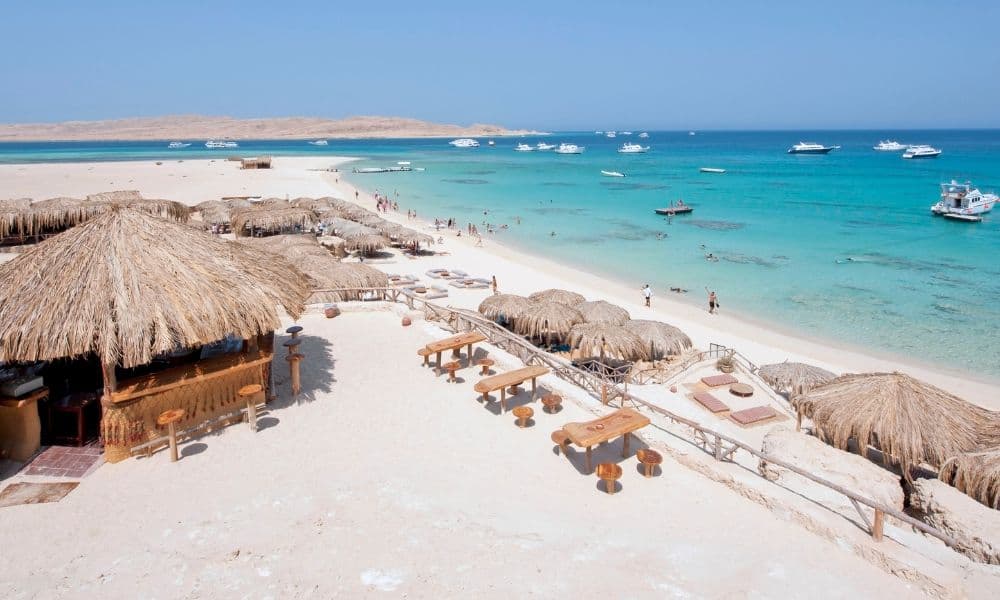
Shaab Abu Ramada is a short crossing from Hurghada and is known for its fish life: large schools of glassfish, barracuda and jacks. The octopus population is also notable, and patient divers spend a dive following one across the reef. It is not dramatic diving. It is quality reef diving with high fish counts.
Erg Soma
Erg Soma suits macro divers. The site is a series of coral pinnacles at moderate depth, with good invertebrate life, nudibranchs and the slow, deliberate diving that rewards photographers. Not every Hurghada diver is here for the big animals, and for those who are not, Erg Soma is worth a place on the itinerary.
Hurghada or Sharm El Sheikh?
The two are not the same experience, and the right choice depends on what you will dive. For divers focused purely on wrecks, Hurghada wins. For reef, current and the Sinai sites, Sharm El Sheikh wins.
Choose Hurghada if:
- Abu Nuhas is a main goal. It is a direct day trip, with no complications.
- You are doing a north-circuit liveaboard. Hurghada boats typically have better departure timing for the Strait of Gubal wrecks.
- You want flexibility between north and south on a liveaboard. Hurghada boats cover both.
- You are flying direct from Europe on a charter route. Hurghada's airport handles more direct European routes than Sharm in peak season.
Choose Sharm El Sheikh if:
- The Thistlegorm is your headline dive. Sharm is closer, and the early-morning slot is easier to reach.
- You want the Straits of Tiran and Ras Mohammed on day trips. Sharm is significantly better placed for both.
- You want the full Sinai circuit. Day trips to the Blue Hole in Dahab, Ras Mohammed and Tiran all radiate from Sharm more efficiently.
- You prefer a more developed resort town.
On a north-circuit liveaboard, the departure port matters less than the itinerary.
Liveaboards from Hurghada
Hurghada is one of Egypt's two main liveaboard departure points, alongside Port Ghalib. North-circuit boats on the Thistlegorm, Abu Nuhas and Ras Mohammed route typically leave from Hurghada or Sharm, depending on the operator. South-circuit boats for Brothers Islands, Elphinstone and Daedalus increasingly leave from Port Ghalib, though some still use Hurghada as their northern terminus.
A 7-night north-circuit liveaboard from Hurghada typically covers Abu Nuhas (several dives), the Thistlegorm (early morning), Ras Mohammed and Shark Reef, and the Straits of Tiran. That is the most efficient way to cover the northern Red Sea's best diving.
Ready to look at boats?
Getting there
Hurghada International Airport (HRG) has direct flights from the UK, Germany and other European markets, especially in peak winter season. You can also fly to Cairo and transfer, which adds 4–5 hours. Most Hurghada operators include airport pickup in a diving package.
- Book centres with their own boats. Avoid third-party day-trip aggregators: you get better quality control and more flexibility on site selection. UK government travel advice says safety standards of Red Sea resort diving operators and boats vary considerably (GOV.UK).
- Confirm what an Abu Nuhas day trip includes. Some operators combine it with Giftun stops, and others run a dedicated wreck day. The dedicated day is better value if you have already done the inshore reefs.
When to go
March to May and September to November are the peak diving months in our season records.
| Months | What to expect |
|---|---|
| March to May and September to November | The peak months in our season records, with offshore visibility of 20–30 m. November is particularly strong, with pleasant air temperatures and calm seas for the Strait of Gubal crossings |
| December to February | Good diving and the coolest water, 22–26 °C, but winter wind can limit offshore access |
| June to August | Warm water, 26–30 °C, and reliable reef diving. The European summer brings more tourists and busier offshore sites. Abu Nuhas is accessible all year, while Thistlegorm day trips depend more on the weather in summer |
Questions
Is scuba diving in Hurghada good?
Yes. Hurghada is one of Egypt's two main dive hubs, with direct access to Abu Nuhas, the Giftun Island reefs and easy liveaboard access to the wider northern Red Sea circuit. It is strongest for wreck divers and for anyone planning a north-circuit liveaboard, or a south one.
Is Hurghada or Sharm El Sheikh better for diving?
It depends on what you are diving. Hurghada is better placed for Abu Nuhas and north-circuit liveaboards. Sharm El Sheikh is better for Thistlegorm day trips, the Straits of Tiran, Ras Mohammed and the full Sinai circuit. On a north-circuit liveaboard, either base works, because the itinerary matters more than the departure town.
Can you dive the Thistlegorm from Hurghada?
Yes, on a day trip, but the crossing is longer than from Sharm, which means a later arrival and less chance of the early-morning advantage that makes the wreck worth doing. For a dedicated Thistlegorm dive, Sharm El Sheikh is the better base. From Hurghada, the wreck is best dived on a liveaboard itinerary.
What certification do you need to dive in Hurghada?
Open Water divers can dive the Giftun Islands and the inshore reef sites within their 18 m limit. Abu Nuhas and the offshore wrecks go deeper, so Advanced Open Water, with its 30 m limit (PADI), is recommended. Going inside any wreck, the Thistlegorm holds included, is overhead diving and takes wreck training and a guide. Dive within your certification, and the operator will brief you on what is accessible at each level.
When is the best time to dive Hurghada?
March to May and September to November, in our season records, with offshore visibility of 20–30 m. November is particularly strong. December to February is good too, with the coolest water at 22–26 °C, but winter wind can limit offshore access. Summer is warm and accessible, but busier, with less reliable offshore conditions.
Are there sharks in Hurghada?
Reef sharks are present on the offshore sites: white-tip and occasionally grey reef sharks on the Giftun reefs and surrounding areas. The bigger pelagic sharks, oceanic whitetips and hammerheads, are at Brothers, Elphinstone and Daedalus, which are south-circuit destinations rather than Hurghada day trips. The Straits of Tiran, reached from Sharm, is the closest hammerhead site.