
Diving the Dahab Blue Hole is one of my all time favorites. Let’s look at why.
The Dahab Blue Hole has two reputations. The first is one of the most spectacular shore dives in the world — a circular sinkhole 60 metres in diameter, ringed by coral, plunging to over 100 metres in the middle of the Red Sea.
The second is “the world’s most dangerous dive site” — a title it has earned through a documented history of fatalities that no responsible guide can pretend doesn’t exist.
This guide covers both. The Blue Hole is genuinely extraordinary for recreational divers who dive it correctly. It is genuinely dangerous for those who don’t understand exactly what makes it so.
As a diving instructor, I’m more interested in you having both pieces of information than in writing something that only tells you what you want to hear.
What Is the Dahab Blue Hole?
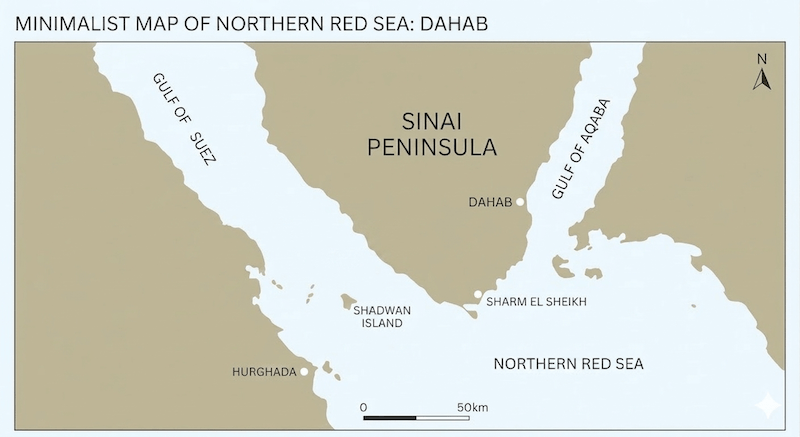
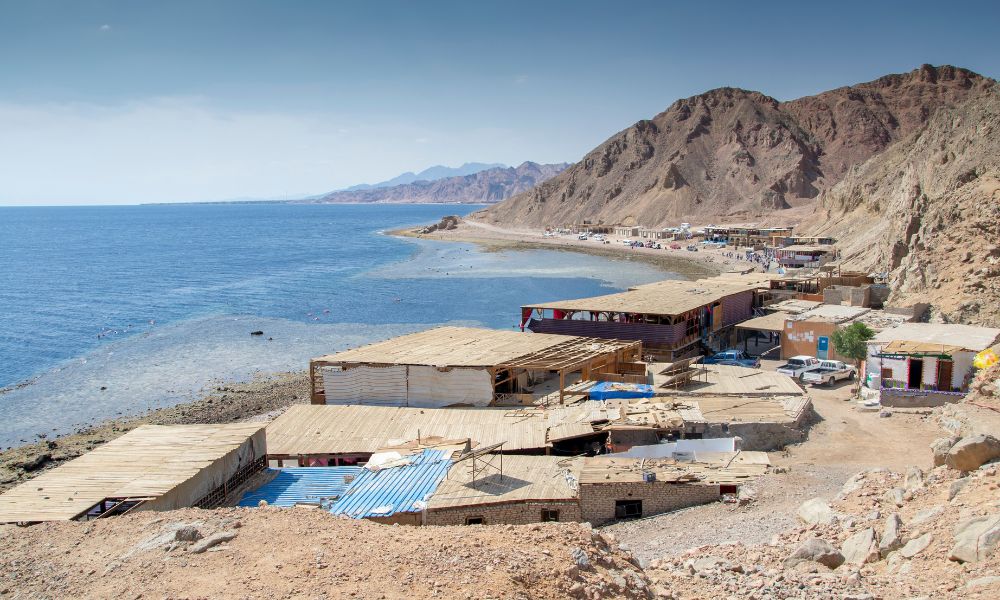
The Blue Hole is a submarine sinkhole on the Red Sea coast of the Sinai Peninsula, around 8km north of Dahab town. It sits right on the shoreline — you walk down stone steps and enter directly from the shore. No boat required.
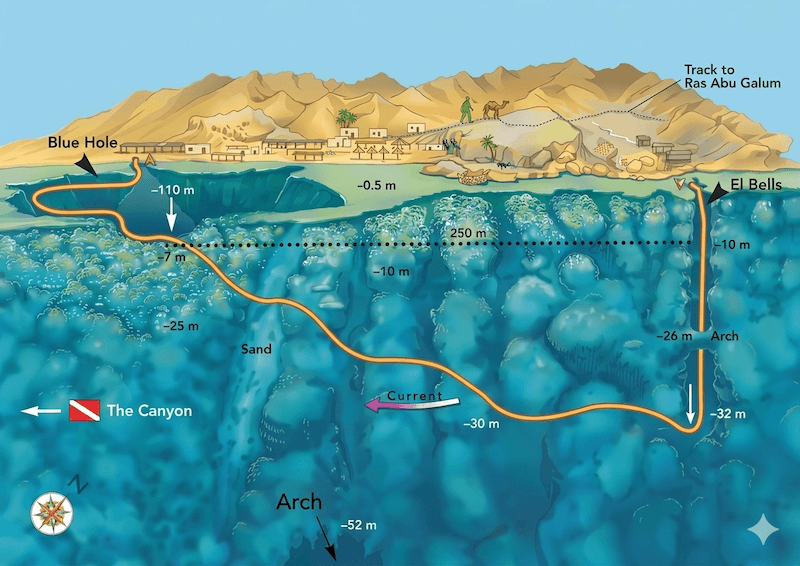
The hole itself is roughly circular, about 60 metres across at the surface, and it drops to approximately 130 metres at its deepest point. The inner walls are covered in coral growth down to the limits of recreational diving depth. The outer reef drops away steeply from the saddle at the northern rim — this is where the site connects to the open Red Sea, and where the famous (infamous) Arch sits.
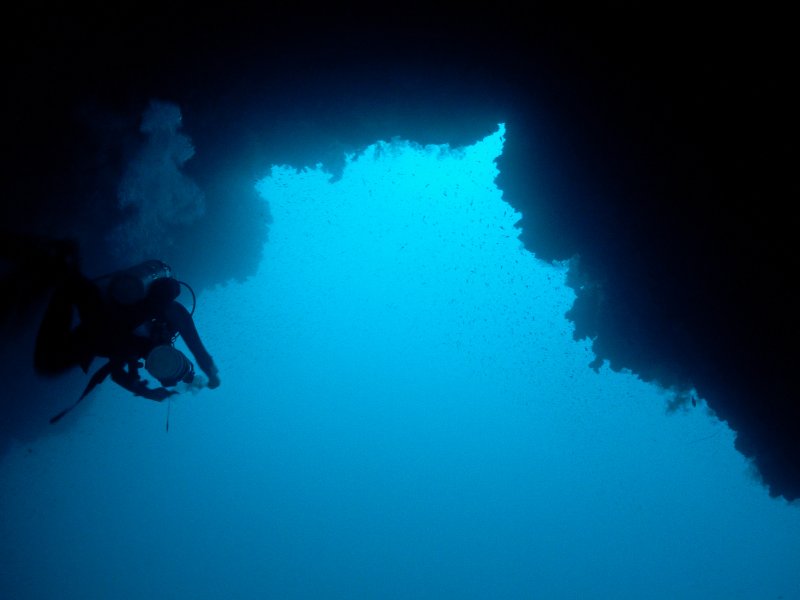
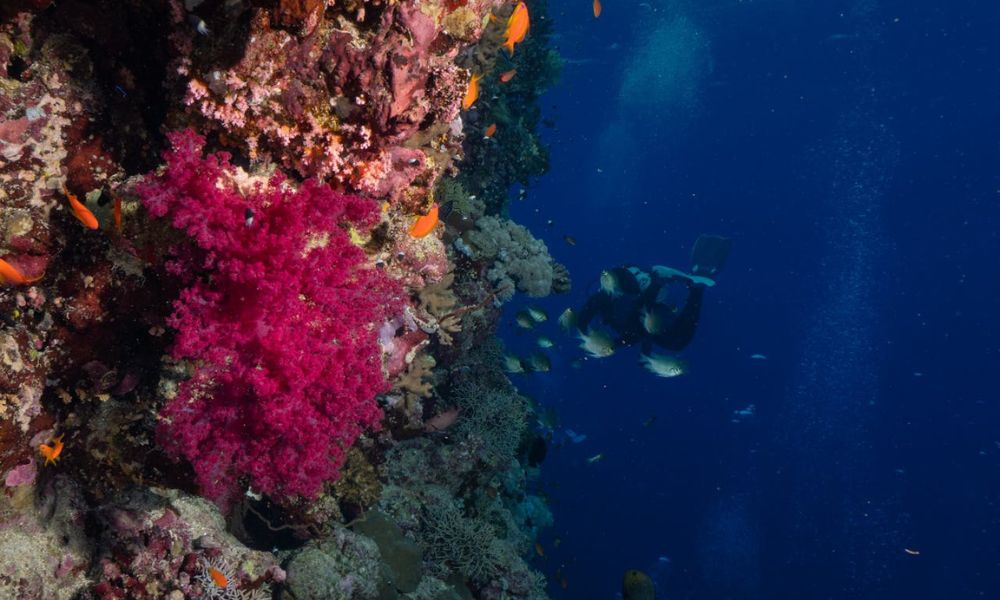
At recreational diving depths — 18 to 40 metres — the Blue Hole is a genuinely beautiful dive. The coral is healthy, the fish life is rich, and the sensation of floating above a dark blue void that drops far below you is unlike anything else in the Red Sea. On a good visibility day (which is most days in Dahab), the combination of colour and depth is stunning.
What to Expect Diving Dahab Blue Hole – Recreational
The standard Blue Hole recreational dive has two good options.
The inner rim dive takes you down the inside wall of the sinkhole to 18–30 metres, circling the perimeter before ascending through the water column in the centre. This is the straightforward, beautiful, beginner-friendly version of the dive. Visibility is typically 20+ metres. The coral wall is the show — sea fans, table corals, and the fish life that comes with a healthy reef structure. You end the dive at the saddle, the shallow rocky area at the northern rim, and exit up the steps.
The Bells entry is the more interesting option for experienced divers. Bells is a separate entry point about 100 metres north of the Blue Hole — a narrow chimney that drops from the surface to around 25 metres, opening into the reef wall. You enter at Bells, descend the chimney, work the outer reef wall south, pass through the saddle, and enter the Blue Hole from the outside. This gives you two different dive environments in one — the open reef wall on the way in, the enclosed sinkhole on the way out. It’s the version most dive centres recommend for divers who’ve done a few dives and want more than the inner rim alone.
Both options are excellent recreational dives. Neither requires going below 40 metres. Neither involves the Arch.
I would recommend doing it over 2 days and do both, they are both awesome!
My personal favorite is the Bells – well because I love closed spaces and incredible to descent down a rock chimney (you dont if you dont want to).
The Arch: The Honest Version
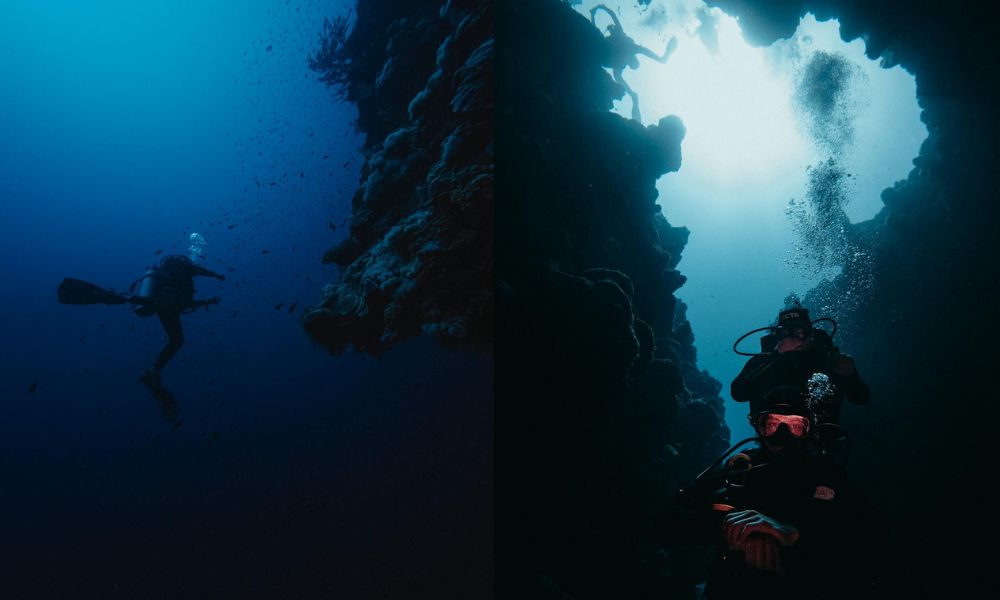
The Arch is a tunnel at approximately 56 metres depth that passes through the reef wall from inside the Blue Hole to the open Red Sea. It’s around 26 metres long. When you emerge on the other side, you’re on the outer reef wall in open water, and you ascend from there.
At 56 metres the dive is beyond recreational diving limits (18 metres for Open Water, 40 metres for Advanced). It requires either technical diving training with appropriate gas planning, or decompression training. It cannot be safely done on a single tank of air. This is not an opinion — it is a physics and physiology fact. Those that went against it now lies at the bottom of the hole.
The fatalities at the Blue Hole are overwhelmingly concentrated at the Arch. The pattern is consistent and documented: a recreational diver, often with limited deep experience, attempts the Arch on a standard tank. They reach the tunnel, the nitrogen narcosis hits — the “Martini effect” at this depth is real and significant — and the disorientation causes them to go deeper instead of through. Or they attempt the crossing, consume their gas faster than planned, and surface without enough air to make a safe ascent.
The Arch is not uniquely deadly because the site is particularly hostile. It is deadly because it sits at a depth that creates a specific trap: visible to recreational divers, reachable on a single tank, but requiring technical gas management to exit safely.
That gap between “looks reachable” and “is safely reachable” has killed over 150 divers since records began.
The Arch is a Technical Dive and for good reason
If you want to dive the Arch, get TEC40 or equivalent technical certification, plan the dive with the appropriate gas, and go with a qualified technical guide. Dahab has excellent technical diving instruction — several centres specialise specifically in Arch preparation. Done properly, with technical training and the right gas mix, the Arch is a manageable dive. Done on a single recreational tank, it is a known killer.
What Dahab’s Blue Hole Is Like as a Shore Dive Base
Setting the Arch aside, the Blue Hole area is one of the best shore diving setups in the world. The facilities are good — multiple dive centres operate from the site, there are restaurants and cafes right on the water, and the entry and exit are as easy as shore diving gets.
The combination of the Blue Hole inner rim, the Bells entry drift, and the Canyon (a separate site 500 metres south — a long crack in the reef with swim-throughs and excellent marine life) gives experienced shore divers a full day of diving without a boat. In calm conditions the outer reef wall between sites is driveable on a single tank.
Dahab itself is an easy base for a diving holiday. The town is relaxed, accommodation ranges from budget backpacker to comfortable mid-range, and the dive centre density means competitive pricing. Red Sea coastal transport connects Dahab to Sharm El Sheikh (around 90 minutes by bus or taxi), making a combined Sharm liveaboard plus Dahab shore diving trip entirely practical.
Because from Sharm you also have access to day trips or mini liveaboard trips to sites like SS Thistlegorm and Ras Mohammed.
When to Dive Dahab Blue Hole
The Red Sea coast at Dahab is diveable year-round. Wind is the main variable — Dahab sits in a wind corridor and the Gulf of Aqaba can push swell through periodically, particularly in winter. When it’s windy, shore entries at the Blue Hole can be rough.
March to May and September to November are the best windows — calm seas, warm water (24–27°C), good visibility, and manageable crowds. These shoulder seasons give you Dahab at its best.
June to August is hot and the site gets crowded with summer tourists, many of whom are not divers. The diving is still good; the atmosphere is less so.
December to February is cooler (water around 22°C, a 5mm wetsuit is appropriate) and the winds are less predictable.
Calm days give excellent diving; windy days push conditions at the entry. Worth monitoring forecasts if you travel in winter.
My favorite time – November. Less crowds and shoulder season.
Dive Centres and Getting There
Dahab has a well-established dive centre scene. Most centres around the Blue Hole cater to mixed ability groups. For the Bells entry drift specifically, confirm your guide knows the site well — this is not a navigation challenge, but a guide who runs it regularly will add genuine value in terms of timing the entry and reading conditions.
For technical divers interested in the Arch, several specialist technical centres in Dahab offer Arch preparation courses and guided dives. Do not attempt the Arch with a recreational guide. The gas planning alone requires technical instruction.
Getting there: Dahab is around 90km north of Sharm El Sheikh along the Gulf of Aqaba coast. By bus or shared taxi from Sharm it’s 90 minutes to two hours. By private transfer, around 90 minutes. Many divers combine a Sharm-based liveaboard with a day trip or overnight in Dahab — it’s a practical combination and worthwhile if your schedule allows.

My final thoughts on Diving Dahab Blue Hole
I spent a total of 2 months living in Dahab staying in town, diving all of the shore dives and the Blue Hole is still one of my favorites.
I was there during October/November and there were hardly any tourist early mornings at the hole. Having this beautiful site to yourself is truly something special.
No doubt that this dive site should be on your Red Sea list and would highly recommend you spend a day or two in Dahab enjoying the laid back lifestyle of the Bedouin community before jumping on a liveaboard or as your last 2 days before heading back.
One of my favorite things to do between dives were to just kick back, relax and drink some locally brewed tea.
If you ever make it out there, I would love to know your experience – message me online.
Frequently Asked Questions Diving Dahab Blue Hole
How deep is the Dahab Blue Hole?
The Blue Hole reaches approximately 130 metres at its deepest. For recreational diving, the inner rim is dived to 18–30 metres and the Bells entry to around 25 metres. The Arch — the tunnel through the reef wall — sits at 56 metres, which is beyond recreational diving limits and requires technical training and appropriate gas to dive safely.
Is the Dahab Blue Hole safe to dive?
As a recreational dive on the inner rim or via Bells, yes — it’s one of the best shore dives in the Red Sea with good facilities, clear water, and excellent coral.
The Blue Hole’s reputation for danger is specifically associated with recreational divers attempting the Arch at 56 metres on a single tank.
Dive within your certification limits and the Blue Hole is a straightforward, beautiful multi level dive with predictable conditions.
Why is the Blue Hole so dangerous?
The danger is the Arch, not the site as a whole. The Arch sits at 56 metres — beyond recreational limits — but is visible and reachable from inside the sinkhole, which creates a trap for underprepared divers. Nitrogen narcosis at that depth significantly impairs judgment. Multiple divers have made poor decisions inside the tunnel and not survived.
The site is not uniquely hostile; the Arch is uniquely dangerous for recreational divers without technical training.
Can beginners dive the Dahab Blue Hole?
The inner rim dive is suitable for Open Water certified divers with basic buoyancy — the depths are within recreational limits and the entry/exit is simple.
The Bells drift is better suited to Advanced Open Water or equivalent.
The Arch is technical diving and requires technical certification regardless of experience level.
Do I need to book a dive centre or can I dive independently?
Shore diving without a guide is possible and practiced by many experienced divers at the Blue Hole.
However, for your first visit, diving with a local guide adds value — they know the entry timing, the current patterns, and the conditions that change daily.
For the Bells drift especially, a guide on the first dive is a sensible investment.
Is Dahab worth combining with a Red Sea liveaboard?
Yes 100%, if your schedule allows. A north Red Sea liveaboard from Sharm El Sheikh covers Thistlegorm, Ras Mohammed, and Abu Nuhas. Adding a day or two in Dahab before or after gives you excellent shore diving in a completely different environment. The Bells + Blue Hole + Canyon combination makes a very full day of diving.
Plenty of liveaboard operators in Sharm can connect you with Dahab transfers.