
Hanifaru Bay is best from July to September, and you book it four to six months ahead. Only permitted operators can enter, so you cannot simply turn up.
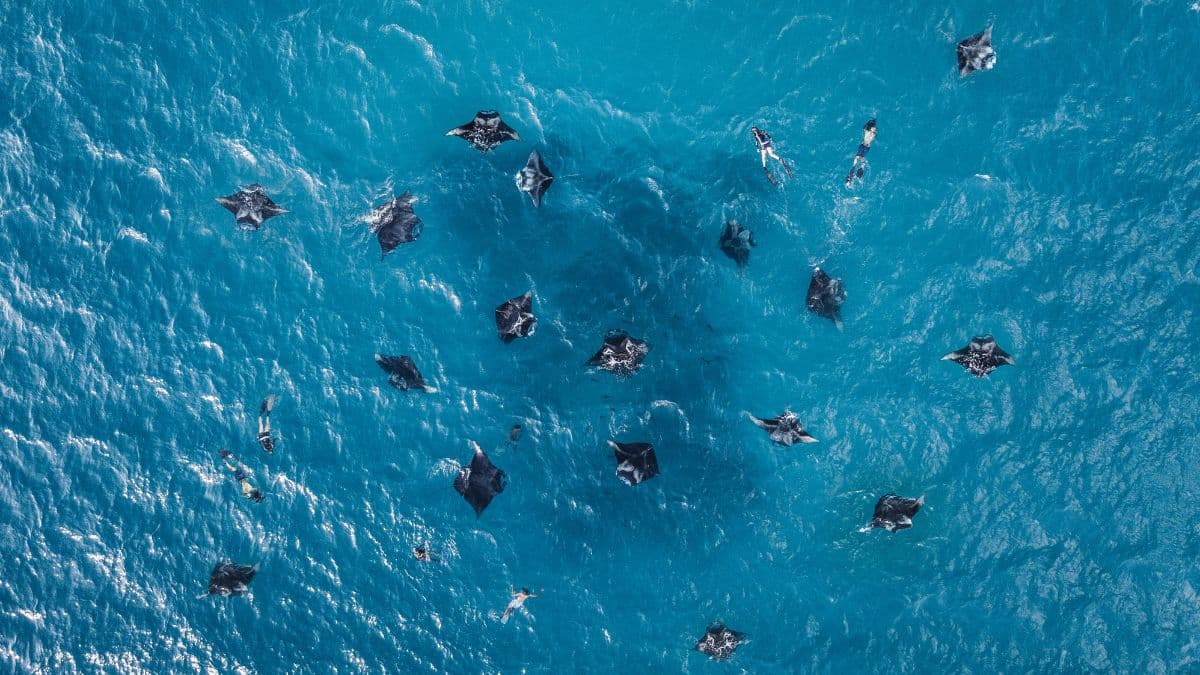
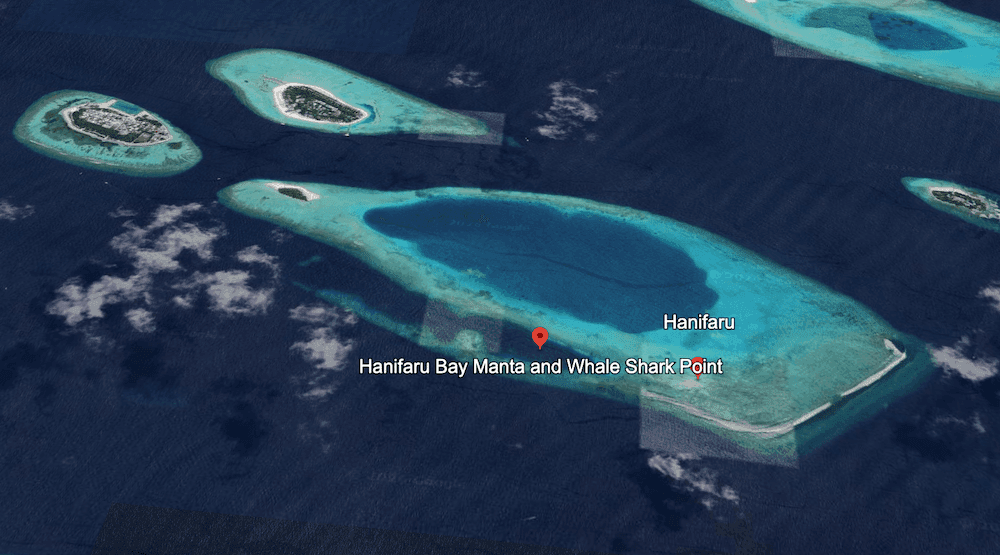
The bay is small and shallow, inside the Baa Atoll UNESCO Biosphere Reserve in the northern Maldives. When current-driven plankton fills it, reef manta rays (Mobula alfredi) arrive to feed, and on a productive day 100–200 of them are in the water at once.
The shape of Baa Atoll does the work. Water pushing through the outer reef channels funnels into the bay and carries the zooplankton the mantas eat.
When that lines up with peak plankton production in the southwest monsoon, the mantas arrive in numbers. The feeding events are predictable enough to plan a trip around.
When to go: June to November, peak July to September
The season follows the southwest monsoon. The rougher seas come with the plankton that draws the mantas, so don't write the monsoon off.
| Month | Aggregations | Notes |
|---|---|---|
| January | Off | Quiet. Cleaning-station mantas carry on in other atolls |
| February | Off | Quiet. Cleaning-station mantas carry on in other atolls |
| March | Off | Quiet. Cleaning-station mantas carry on in other atolls |
| April | Off | Quiet. Cleaning-station mantas carry on in other atolls |
| May | Starting | Quiet for most of the month, though early aggregations are possible from mid-May |
| June | Building | Mantas arriving, smaller aggregations |
| July | Peak | Strong and consistent |
| August | Peak | The best month for big counts |
| September | Peak | Still strong, with whale sharks active at the same time |
| October | Tapering | Still productive as the season turns |
| NovemberNow | Closing | Variable, but some aggregations still happen |
| December | Off | Quiet. Cleaning-station mantas carry on in other atolls |
From December to April the bay is quiet for big aggregations. Cleaning-station mantas carry on across the central atolls all year, but the Hanifaru feeding is seasonal. If you are choosing a December trip, see the best liveaboard destinations in December.
Visibility drops on high-plankton days. That is a good sign: the food is there, so the mantas are too.
For the full Maldives picture, see the Maldives diving guide and the best time to dive the Maldives. With good timing, the same trip can include whale sharks at South Ari Atoll.
What a feeding aggregation looks like
On an average peak-season visit, expect 20–50 mantas. On a productive day it is 100–200. Counts change with the current, the tide and the plankton, so treat them as a guide, not a promise.
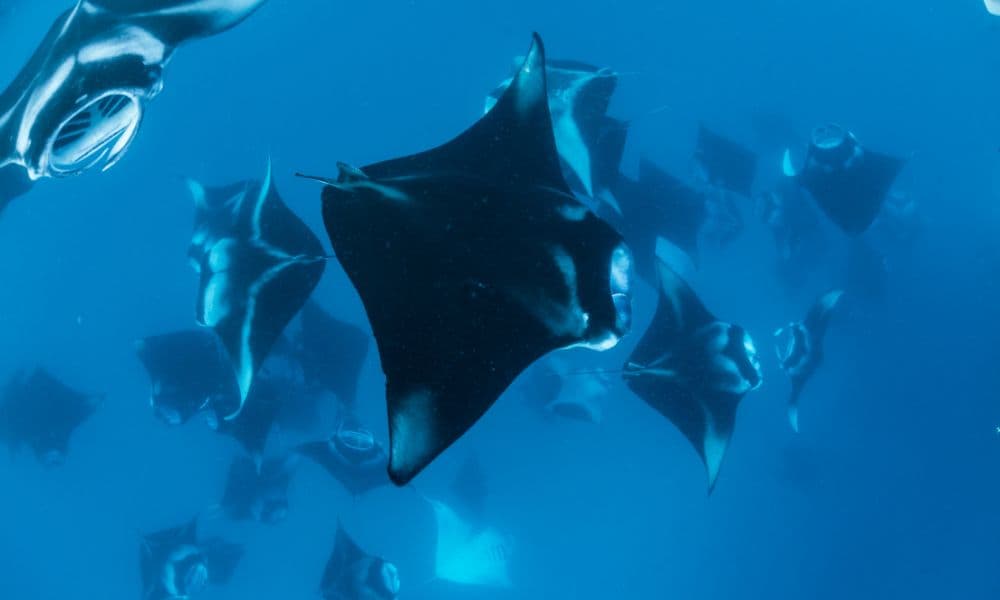
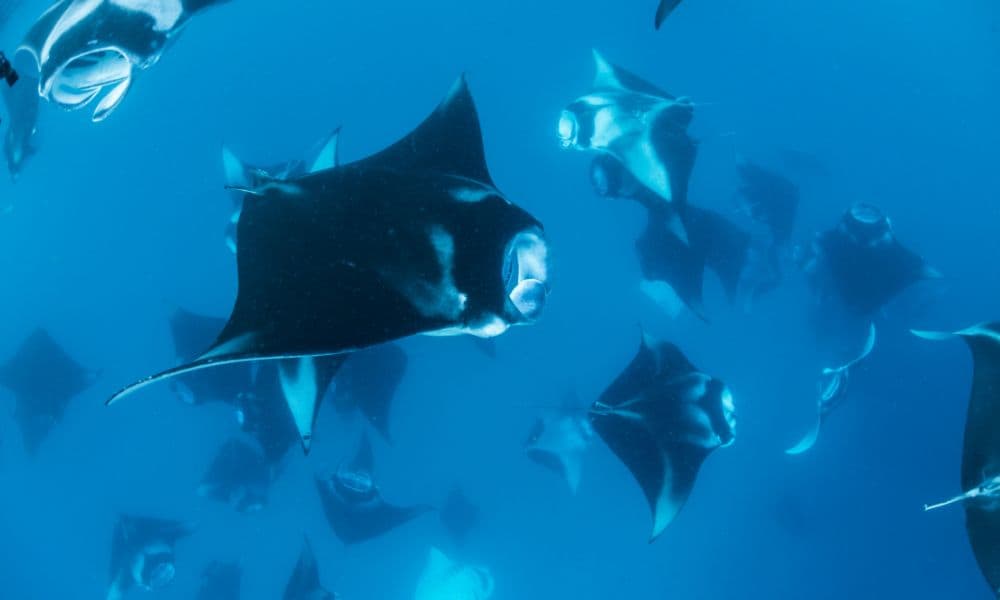
The mantas here do not behave like the ones at a cleaning station. They are not circling the reef waiting for cleaner fish. They feed actively, mouths open and cephalic fins unfurled, moving through the water in coordinated patterns that follow the plankton.
The best-known version is cyclone feeding. Mantas form a spinning column, each following the one in front and rolling through the densest plankton at the centre.
A single cyclone can hold 20–40 mantas. When several form at once, the water is simply full of rays.
Snorkel the bay, dive the reefs around it
The bay is snorkel-only: scuba is not allowed. The feeding happens in the top 0 to 8 metres, where the plankton concentrates, and a snorkeller at the surface is in the middle of it.
Bubbles from scuba equipment have been seen to disturb the feeding and disperse the aggregations. Permitted operators run Hanifaru as a snorkelling excursion.
If the aggregation is why you came, go in with snorkel gear and let the mantas set the depth.
The diving is on the reefs around the bay. Baa Atoll sites such as Dharavandhoo Corner, for hammerheads, and the outer atoll walls are where the deeper diving shows. A liveaboard based in Baa usually combines snorkelling at Hanifaru with dives on the surrounding reefs.
Rules, fee and who can take you in
Hanifaru Bay sits inside a protected biosphere reserve. The Maldivian government requires every operator entering the bay to hold a valid permit, and it caps how many people are in the water at once.
The bay has been a marine protected area since 2009. Scuba diving and fishing are banned, visitor numbers are capped and time in the bay is limited (CMS, PADI).
That is good for the mantas. It also means you will not share a peak-day aggregation with unlimited tourist groups.
The practical result: not every boat that sails through Baa Atoll can enter. Before you book, confirm that the operator holds a current Baa Atoll entry permit and lists Hanifaru Bay on the itinerary.
The rules in the bay.
- Snorkel only. Scuba is not allowed.
- Each session is limited to 45 minutes.
- You go in with a licensed guide, in groups of up to 10 snorkellers per guide.
- Keep at least 3 m from mantas and whale sharks. Do not touch, feed or chase them, and use no flash.
The fee. Everyone who enters pays a bay entry fee. Boats that list it charge USD 25 to 45 per person, paid on board, on top of the trip price (as of 3 November 2026). Day trips and resort excursions set their own prices, so ask whether the fee is included.
Liveaboard, day trip or resort: how you get in
You can reach Hanifaru on a liveaboard, on a day trip from Dharavandhoo Island, the nearest inhabited island with an airport in Baa Atoll, or on an excursion from a resort in the atoll. Entry is through a licensed operator in every case.
| Way in | What you get | Cost to know |
|---|---|---|
| Maldives liveaboard | A regulated snorkel entry on itineraries that list Hanifaru, mostly July to October, with dives on the reefs around it | The bay fee, USD 25 to 45 per person, paid on board |
| Day trip from Dharavandhoo | A guided snorkel from the island, reached by domestic flight from Malé | Ask the operator what the bay fee and transfer cost |
| Resort excursion | A guided snorkel from a resort in the atoll | Ask the resort, because prices vary |
A liveaboard makes the most sense if you also want to dive.
- Diving as well. Baa's reefs are where the scuba is, and a liveaboard combines them with the snorkel.
- A fallback. If the bay is not producing, a liveaboard can move on to the reef and channel dives. A day-trip visitor has few alternatives.
Ask the boat two things before you book: how many entries into the bay the itinerary includes (some list one, when conditions allow), and whether the boat itself goes in or you transfer to a smaller boat with a licensed guide.
Ready to look at boats?
Book four to six months ahead
For July to October, book a liveaboard with a confirmed Hanifaru itinerary at least 4 to 6 months ahead. The best boats sell out completely. Last-minute space is rare, and it usually reflects a cancellation rather than unsold inventory.
Browse liveaboards on Divebooker (opens Divebooker)
What level you need
You do not need a dive certification to see the aggregation, because the bay is snorkel-only. The bay is shallow, with a gentle, consistent current during feeding. It is one of the more accessible wildlife encounters in the Maldives.
The dive sites around Baa Atoll ask for more. Advanced Open Water is appropriate for the channel and outer reef diving.
The hammerhead dives at Dharavandhoo Corner are early-morning blue-water dives with some current. Open Water divers should stay on the shallower reef systems.
Questions
When is the best time to visit Hanifaru Bay for manta rays?
July to September, with August and September the strongest. October is still productive as the season turns. The southwest monsoon drives the plankton blooms that trigger the aggregations. On the best days in peak season, 100–200 mantas have been documented feeding at once.
Can you scuba dive at Hanifaru Bay?
No. Hanifaru Bay is snorkel-only, and scuba is not allowed in the bay. The mantas feed in the top 0–8 metres, and scuba bubbles can disturb the feeding and break up aggregations.
For the reef and channel diving around Baa Atoll, scuba is appropriate. A liveaboard itinerary usually combines snorkelling in the bay with diving on the reefs.
Do you need a permit to visit Hanifaru Bay?
Operators need a permit; individual visitors do not arrange one themselves. Confirm that your liveaboard or day-trip operator holds a valid Baa Atoll entry permit and lists Hanifaru Bay access before you book. Not all Maldives boats are permitted.
How many manta rays can you see at Hanifaru Bay?
On an average peak-season visit, 20–50. On a productive day, 100–200. Counts change with the current, the tide and the plankton.
Can you visit Hanifaru Bay without a liveaboard?
Yes. Day trips run from Dharavandhoo Island in Baa Atoll, reached by domestic flight from Malé, and some resorts in the atoll run excursions. A liveaboard adds a fallback if the bay is not producing, and dives on the reefs around it.
How far is Hanifaru Bay from Malé?
Baa Atoll is more than 100 kilometres north of Malé. You reach it by seaplane, in roughly half an hour, or by domestic flight to Dharavandhoo Airport followed by a short boat transfer. Liveaboards leaving Malé reach Baa Atoll after an overnight passage.
What does it cost to enter Hanifaru Bay?
Everyone who enters pays a bay entry fee. Boats that list it charge USD 25 to 45 per person, paid on board, on top of the trip price (as of 3 November 2026). Day trips and resort excursions set their own prices, so ask whether the fee is included before you pay.
What are the rules in Hanifaru Bay?
Snorkel only, with a licensed guide, in groups of up to 10 snorkellers per guide, and for 45 minutes at a time. Keep at least 3 m from mantas and whale sharks, do not touch, feed or chase them, and use no flash. The number of people in the bay is capped, so you cannot simply turn up.
Is a manta sighting guaranteed?
No. Counts change with the current, the tide and the plankton, and the bay can be quiet on a peak-season day. July to September gives the best odds. A liveaboard can move on to the reefs if the bay is quiet, and a day trip has fewer options.
Can you see whale sharks at Hanifaru Bay?
Sometimes. Whale sharks can turn up in the bay from June to October, but they are a bonus and not the reason to go. For more reliable whale shark encounters, dive South Ari Atoll, where they are seen all year.