
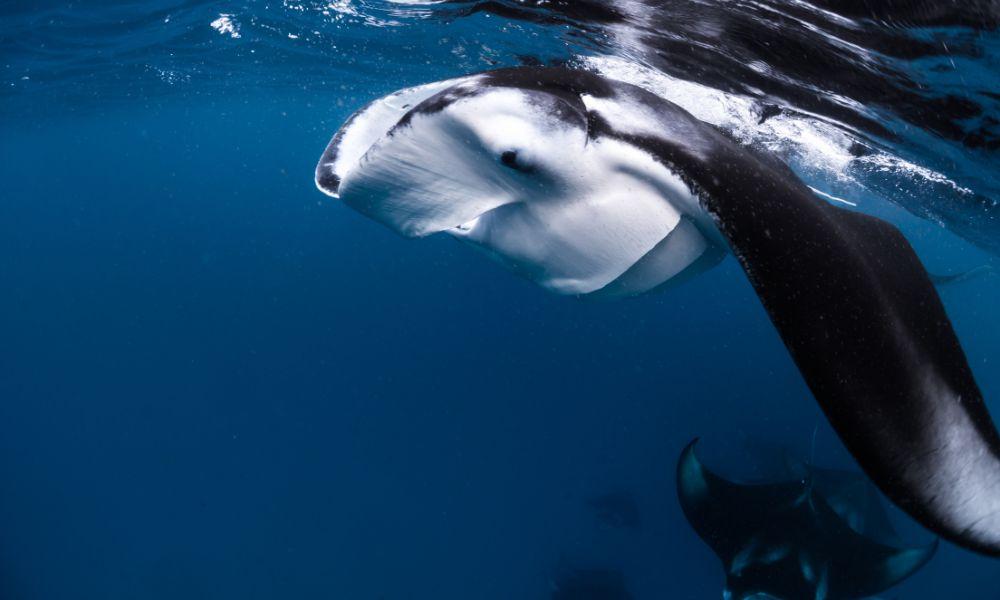
Seven liveaboard destinations are at their best in January: Raja Ampat, the central Maldives, Fuvahmulah, Palau, Socorro, Truk Lagoon and Tiger Beach. Two of them, Socorro and Tiger Beach, have almost no January boats listed, so they come with a catch. The Red Sea has a different catch: it is still good, but the water is close to its coolest and far fewer boats sail than in December.
If you are reading this with a December trip in mind, most of it carries over. The November guide covers the Maldives, the Red Sea and Raja Ampat before the holiday weeks.
Which destination for which diver
Start with what you want to see, then check the suit and the level.
| Your goal | Best pick | Why | Suit | Level |
|---|---|---|---|---|
| The most from one winter trip | Raja Ampat | Peak season, with reef sharks, mantas and macro life in water at 28–30 °C | 3 mm, or 1–2 mm where the water is warmest | Advanced Open Water and 30–50 dives |
| Mantas and reef sharks in easy water | The central Maldives | Peak: mantas, reef sharks, whale sharks and hammerheads. Boats sail all year | 3 mm, or 1–2 mm where the water is warmest | Advanced Open Water and 20+ dives |
| Mantas and clear water | Palau | Mantas in the German Channel, reef sharks at Blue Corner, 30–40 m visibility | 3 mm | Advanced Open Water, with some current experience |
| Humpback whales | Socorro | Peak: giant mantas, hammerheads and dolphins, with humpbacks from late January | 5 mm and a hood for the cool end, and ask your boat | Advanced Open Water and strong-current experience |
| Wrecks | Truk Lagoon | WWII wrecks in a sheltered lagoon, and few boats | 3 mm | Advanced Open Water, and wreck training if you want to go inside |
| Tiger sharks | Fuvahmulah or Tiger Beach | Peak conditions, but the first sailings are on 9 January (Deep South) and 26 January (Tiger Beach) | 3 mm | Fuvahmulah: Advanced Open Water, ideally with 50 dives and strong-current experience. Tiger Beach: Advanced Open Water; one boat asks for 75 logged dives |
| Sharks, and fine with cooler water | The Red Sea | Hammerheads and oceanic whitetips in the south, wrecks in the north, in 23–24 °C water | 5 mm, and bring a hood | Advanced Open Water and current experience in the south |
Each boat sets its own minimum dives, so check the boat's page too.
January at a glance
Nine places are on the table: seven rate peak and two rate good. Most sit in 27–30 °C water, and the Red Sea is at 23–24 °C. The last column counts the sailings Divebooker listed from 1 to 15 January 2027, as of 9 November 2026.
| Place | January | Water and visibility | Sailings, 1–15 January |
|---|---|---|---|
| Raja Ampat | Peak: mantas, macro life, reef sharks | 28–30 °C, 20–30 m | 45 sailings, 12 sold out |
| Central Maldives | Peak: mantas, reef sharks, whale sharks, hammerheads | 27–30 °C, 20–30 m | 73 across the Maldives, 26 sold out |
| Fuvahmulah | Peak: tiger sharks, thresher sharks, hammerheads, whale sharks | 27–30 °C, 30–40 m | 4 Deep South sailings from 9 January, 3 sold out |
| Palau | Peak: mantas, reef sharks, wrecks | 27–30 °C, 30–40 m | 6 sailings, all sold out |
| Socorro | Peak: giant mantas, hammerheads, dolphins, humpbacks from late January | 15–30 m, no water temperature | None on Divebooker. Ask the operators |
| Truk Lagoon | Peak for wrecks | 27–30 °C, 12–24 m | 2 sailings, 1 sold out |
| Tiger Beach and Bimini | Peak: tiger sharks, plus great hammerheads at Bimini | 24–29 °C, 20–40 m | None before 26 January |
| Southern Red Sea | Good: oceanic whitetips, hammerheads, reef sharks | 23–24 °C, 20–30 m | 6 that reach the Brothers or the south, none sold out |
| Northern Red Sea | Good: wrecks, hammerheads, reef sharks | 23–24 °C, 20–30 m | 24 in the north only, 2 sold out |
What changes from December
Five of the six December peaks stay at their peak in January. The changes are at the edges:
| Direction | Place | What changes |
|---|---|---|
| Better | Central Maldives | Rated good in December and peak in January. Mantas and hammerheads both score higher |
| Better | Socorro | Rated good in December and peak in January |
| Better | Bimini (Tiger Beach) | Tiger Beach is peak in both months, but great hammerheads at Bimini peak in January and February |
| Better | Komodo | Still shoulder season, but mantas move from a good chance to the main reason to go |
| Same | Raja Ampat, Palau, Truk Lagoon, Tiger Beach | Peak in both months |
| Same | Fuvahmulah | Peak in both months. Tiger sharks stay the draw. Thresher sharks drop from the main draw to a good chance, and hammerheads and whale sharks rise from possible to a good chance |
| Same | Galápagos, Cocos Island, Similan Islands | Good in both months |
| Harder | Southern Red Sea | Peak in December, good in January. Oceanic whitetips drop from the main draw to a good chance, and the water falls from 24–25 °C to 23–24 °C |
| Harder | Northern Red Sea | Good in both months, but the water falls from 24–26 °C to 23–24 °C |
So a trip planned over Christmas can usually keep its destination and move its dates into January.
Raja Ampat: best for most divers
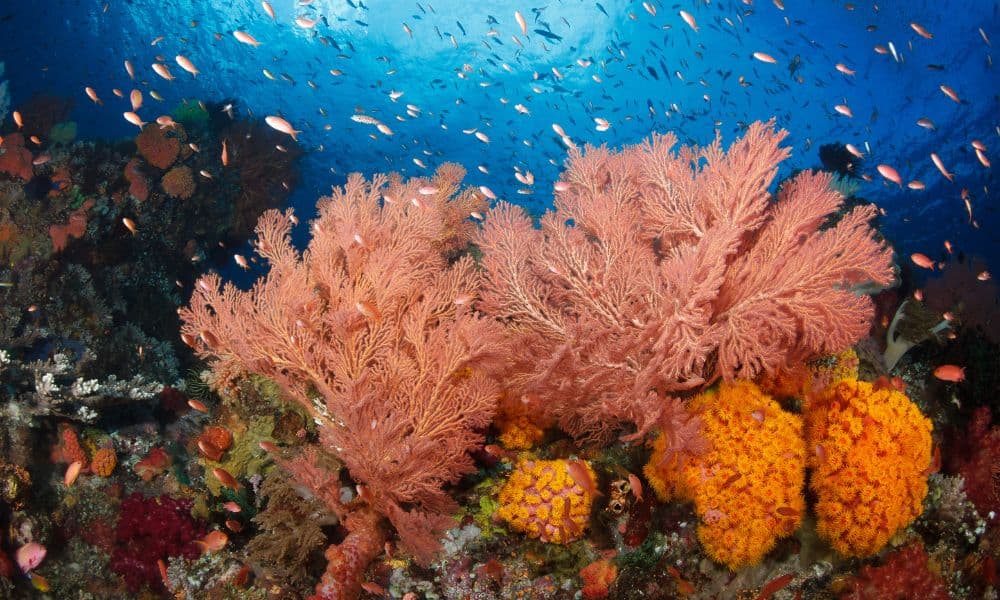
Raja Ampat is at peak season in January, as it is in December. Manta rays are at their most active at the Dampier Strait and Misool cleaning stations, reef sharks are likely, and the macro life is at its best. The water is 28–30 °C, and visibility peaks in January and February at 20–30 m.
Who it suits. Advanced Open Water divers with 30 to 50 dives. Some sites are gentle, but the pinnacles sweep with current, so give the operator your real level when you book.
The catch. Money and dates. January trips of 7 to 11 nights were listed from $2,396 to $10,450 on 9 November 2026, and 12 of the 45 sailings from 1 to 15 January were sold out. Boats at every budget are in the Raja Ampat ranking. If you would rather spend time on land, read liveaboard or resort. For the place itself, see the Raja Ampat guide.
The Maldives: central atolls at their peak, the Deep South starting
Central atolls: peak. January falls in the north-east monsoon, the dry season. Visibility is 20–30 m, the water is 27–30 °C, and mantas, reef sharks, whale sharks and hammerheads all score well. The eastern sides of the atolls are usually clearer and best for channel and thila dives. Some guides put mantas and whale sharks on the west side at this time of year, so ask your boat which side it plans for.
Hanifaru Bay is quiet from December to April, and the bay is never open to scuba. For mantas, think of the cleaning stations in other atolls. Channel dives call for Advanced Open Water and some current experience. A first liveaboard in the central atolls suits Advanced Open Water divers with 20 or more logged dives.
On 9 November 2026, 40 of the 52 Maldives boats on Divebooker had a sailing between 1 and 15 January, 73 sailings in all. Of those, 26 were sold out. Seven-night January trips were listed from $1,995 to $5,005. See the Maldives boats with January dates on Divebooker (opens Divebooker)
Deep South and Fuvahmulah: peak conditions, boats from 9 January. January is calm and clear in the south: tiger sharks are the draw, with thresher sharks, hammerheads and whale sharks all a good chance, in 27–30 °C water and 30–40 m visibility. On 9 November 2026, four Deep South trips on Divebooker left Malé between 1 and 15 January, the first two on 9 January. Three were sold out. The one with space was Emperor Explorer II's 14-night trip on 10 January, from $7,008, which lists Fuvahmulah among its dive sites and asks for 100 logged dives. Most other southern trips start from 16 January.
Not every Deep South itinerary stops at Fuvahmulah: Scubaspa Yang's 16 January trip lists Meemu and Huvadhoo but not Fuvahmulah, so check the dive sites before you book. If the boats are full, the other way in is a land-based trip, which the Fuvahmulah guide covers. You need Advanced Open Water, ideally 50 dives, and experience in strong current.
For the place itself, see the Maldives guide. The Maldives month-by-month guide covers every month, and the best Maldives liveaboards ranks the boats. The manta top 5 compares the places to see them.
Palau: mantas and reef sharks in clear water
Palau is at its peak in January. Mantas gather in the German Channel from December to March, grey reef sharks work Blue Corner, and WWII wrecks round out the dives. Visibility runs 30–40 m, among the clearest on this list, in water of 27–30 °C. Seas are calm in the dry season, about November to April.
Who it suits. Advanced Open Water divers who have some current experience.
The catch. Few boats, and they fill. On 9 November 2026, Divebooker listed six Palau liveaboards and three had sailings between 1 and 15 January, six in all, and all six were sold out. Seven-night January trips were listed from $3,845 and 10-night trips from $5,621.
Truk Lagoon: wrecks in sheltered water
Truk Lagoon is at its peak for wreck diving in January. Shelter is the lagoon's strength, the dry season has run since November, and the water is 27–30 °C. Visibility is 12–24 m and best after dry weather, which makes the wrecks the draw, not the clarity. December to April is the window we advise for a first visit.
Who it suits. Advanced Open Water divers who like wrecks. Penetrating holds and engine rooms is overhead diving, so go in only with wreck training and a guide. Some wrecks sit beyond recreational depth. The San Francisco Maru lies at about 52 m, a technical depth, so keep every dive within your certification.
The catch. On 9 November 2026 Divebooker listed only two liveaboards. Thorfinn listed 7-night trips from $2,065 on 9, 16 and 23 January, all with space. Pacific Master listed 10-night trips from $4,170 on 9 and 23 January, and both were sold out.
Socorro: humpback whales arrive
Socorro moves from good in December to peak in January. The Revillagigedo islands are a liveaboard-only trip, and the season runs from November to May. Giant mantas are the January draw, and hammerheads and dolphins are a good chance, in 15–30 m visibility. Humpback whales arrive from late January and stay until early April, A trip at the very end of the month or in February is the one that can overlap with them. An early-January trip is a mantas and hammerheads trip.
Who it suits. Advanced Open Water divers with strong-current experience. These are open-ocean dives with surge and current.
The water. We give no single January temperature for Socorro, because reports run from about 21 °C to 28 °C. Pack for the cool end: in 21–22 °C water most divers wear a 5 mm full suit and a hood. Ask your boat what it recommends.
The catch. Booking. Divebooker lists seven Socorro boats, and on 9 November 2026 none of them listed a January 2027 departure. The earliest 2027 date on any of them was 31 March, so ask the operators for January dates directly. If humpbacks are the goal, February and March are their peak, and the dates from 31 March catch the end of their season. See the Socorro boats on Divebooker (opens Divebooker)
Tiger Beach and Bimini: tiger sharks, great hammerheads
Tiger sharks stay all year, and October to March is their best stretch. Through the winter, great hammerheads gather at Bimini and peak in January and February. Expect 24–29 °C water and 20–40 m visibility, though winter weather can cost a day or two. The dives are guided and cage-free, and the tiger shark safety guide sets out the rules.
The catch. Nothing before late January was listed on 9 November 2026. Shear Water, the only boat on Divebooker with Tiger Beach dates before April, listed a 6-night Florida departure on 26 January 2027 from $4,056, and it had space. It asks for 75 logged dives. Divebooker listed two liveaboards for Grand Bahama and Tiger Beach on 9 November 2026, so ask operators about earlier dates.
The Red Sea: cool water, fewer boats
South: good. January is past the best of the southern season. The water is 23–24 °C with 20–30 m visibility, and February is a degree cooler. Oceanic whitetips are still present from January to March, and hammerheads work the offshore reefs at depth, at Brothers, Daedalus and Elphinstone. Pack a 5 mm suit and a hood. Winter wind sometimes limits offshore access, and routes change with it.
For the southern reefs we advise Advanced Open Water and some current experience: the walls drop into deep water, and nothing stops a slow drift down.
North: good, and gentler. The north offers wrecks, hammerheads and reef sharks in the same 23–24 °C water, and the winter wind matters here too, around Ras Mohammed and Tiran. The right level is Advanced Open Water, and the Thistlegorm is the headline wreck. Its holds are overhead diving, so go in only with wreck training and a guide.
The catch. Far fewer boats than in December. On 9 November 2026, Divebooker listed 30 Red Sea sailings between 1 and 15 January, against 98 in the first half of December, and 2 were sold out. Most are northern wreck and reef routes from Hurghada and Sharm El Sheikh. Six reach the Brothers or the south. Among them are Brothers, Daedalus and Elphinstone from Hurghada on 9 January, and the south and St John's from Port Ghalib on 15 January. Seven-night January trips were listed from $640 to $1,671.
For the place itself, see the Red Sea guide. To choose between north and south, read north vs south itineraries and the month-by-month guide. The top Red Sea liveaboards cover the boats.
Ready to look at boats?
Also good in January
These four rate good or shoulder this month: fine for the right diver, but not the best month of their year.
| Place | January | Water and visibility | Level |
|---|---|---|---|
| Galápagos (Darwin and Wolf) | Good: hammerheads and mantas. The warm season is under way | 24–28 °C, 10–25 m | Advanced Open Water, plus strong-current experience |
| Cocos Island | Good: hammerheads, mobula rays, mantas, reef sharks. The dry season means calmer crossings, which take about 36 hours | 26–29 °C, 30–35 m | Advanced Open Water, plus strong-current experience |
| Similan Islands | Good: open from 15 October to 15 May. Whale sharks are possible, and the odds improve from February to April | 26–30 °C, 10–30 m | Advanced Open Water, with current experience for Koh Tachai, Koh Bon and Richelieu Rock |
| Komodo | Shoulder: the wet season, with rougher seas in the north and centre. Mantas are the draw | 24–26 °C, 15–20 m | Advanced Open Water, with current experience for the northern sites |
Where not to dive in January
Each of these is off, closed or past its season. The third column gives the months to go instead.
| Place | January | When to go |
|---|---|---|
| Hanifaru Bay | Off: quiet from December to April, and scuba is never allowed in the bay | July to September |
| Banda Sea | Off: the boats have moved to Raja Ampat or Komodo | March to April and September to November |
| Nusa Penida | Shoulder: the wetter months, with variable visibility. Mantas are there all year, but the mola mola season is over | July to October for mola mola |
| Tubbataha | Closed: monsoon winds make the crossing unsafe | About mid-March to mid-June |
| The Sardine Run | Closed in January | About mid-June to late July |
| Isla Mujeres | Off: the whale shark swims do not run | About mid-May to mid-September |
| The Azores | Off: the water is 16 °C | July to September |
| Great Barrier Reef | Shoulder: the wet season, with stinger season from November | June to October |
Land-based diving in January
Not every January trip needs a liveaboard. Four shore or day-boat options:
| Place | January | Note |
|---|---|---|
| Cozumel, Mexico | Peak: easy drift diving, 24–29 °C, 24–30 m visibility | Eagle rays are most frequent from January to April. Winter northerly winds can close the port briefly |
| Aliwal Shoal, South Africa | Peak: tiger sharks, 25–27 °C | Tigers are at their best from December to March |
| Malapascua, Philippines | Good: thresher sharks at dawn, 26–30 °C | Peak thresher season runs from January to April |
| Dahab, Egypt | Shoulder: about 22–23 °C and less predictable wind | Shore dives, the Canyon and the Blue Hole. Bring a 5 mm suit |
Booking January: what is free and what it costs
On 9 November 2026 the first half of January was already filling. The January at a glance table above has the sailings from 1 to 15 January 2027 and how many were sold out. Divebooker listed those sailings on 40 of its 60 Raja Ampat boats and 18 of its 96 Red Sea boats.
Prices do not follow one pattern. The same boat and trip, early January against mid and late January (Divebooker prices, as of 9 November 2026):
| Boat and trip | Early January | Mid to late January |
|---|---|---|
| Adora, Maldives, 7 nights | 3 January: from $2,639 | 10 January: from $2,346. 24 January: from $2,698 |
| Carpe Vita, Maldives, 7 nights | 3 January: from $2,810, sold out | 10 January: from $3,260. 17 January: from $2,576 |
| Mermaid II, Raja Ampat, 8 nights | 8 January: from $4,679, sold out | 17 January: from $4,456. 26 January: from $4,456 |
| Virgo, Maldives, 7 nights | 2 January: from $3,164 | 16 January: from $3,164. 30 January: from $3,164 |
| Thorfinn, Truk Lagoon, 7 nights | 9 January: from $2,065 | 23 January: from $2,065 |
Three of the five moved with the date, and Virgo and Thorfinn charged the same on every date listed. For comparison, Adora's 27 December sailing was listed from $2,790 on 3 November 2026. If your dates are flexible, ask for the whole month rather than one week.
Many operators open their sailings a year or more ahead. Browse Raja Ampat trips on Divebooker (opens Divebooker)
What to wear
Most places on this list are warm. The cool water is in the Red Sea and Dahab, at the cool end of Socorro's range and in the Galápagos thermoclines. Most divers wear:
| Place | January water | Commonly worn |
|---|---|---|
| The Red Sea | 23–24 °C | A 5 mm full suit, and take a hood |
| Dahab | 22–23 °C | A 5 mm full suit |
| Tiger Beach | 24–29 °C | A 3 mm full suit |
| Galápagos | 24–28 °C at the surface, colder in the thermoclines | At least a 5 mm full suit, plus a hood and gloves. Some boats ask for 7 mm |
| Socorro | No single figure: reports run from about 21 °C to 28 °C | A 5 mm full suit and a hood for the cool end. Ask your boat |
| Maldives, Raja Ampat, Palau, Truk, Fuvahmulah | 27–30 °C | A 3 mm suit, or 1–2 mm where the water is warmest |
Fit and how cold you run matter more than the numbers, so ask your boat. The wetsuit temperature guide goes into detail, the Maldives wetsuit guide covers warm water, and the packing list covers the rest. If it is your first liveaboard, start with the first-time liveaboard guide and how to choose the right liveaboard. The 2026 dive season calendar shows how January fits into the rest of the year.
Questions
What is the best liveaboard destination in January?
Raja Ampat suits most divers. It is peak season, with reef sharks, mantas and macro life in water at 28–30 °C, and visibility is at its best in January and February. The central Maldives and Socorro reach their peak this month, and Palau and Truk Lagoon stay there. The first half of January was already filling on 9 November 2026, so book soon.
Is January a good month for a liveaboard?
Yes. Raja Ampat, the central Maldives, Fuvahmulah, Palau, Socorro, Truk Lagoon and Tiger Beach are all at their best. The Red Sea is good but cool, at 23–24 °C, and on 9 November 2026 many Red Sea boats listed no January sailings. The Banda Sea and Hanifaru Bay are off.
Where can I see mantas in January?
Four peak-season places rate mantas at their best: Raja Ampat, the central Maldives, Palau and Socorro. You will find them at the cleaning stations of the Dampier Strait and Misool, at the cleaning stations of other Maldives atolls, in Palau's German Channel, and as giant mantas at Socorro. Komodo's mantas are the main reason to go, though it is the wet season. Hanifaru Bay is quiet.
Where can I see whale sharks in January?
The central Maldives and Fuvahmulah both give a good chance. Similan Islands sightings are possible. Raja Ampat is not a whale shark destination in January. Hanifaru Bay is not a whale shark place in January, because the bay is quiet from December to April.
Where can I see humpback whales on a liveaboard?
Socorro, from late January to early April, with the peak in February and March. An early-January trip is a mantas and hammerheads trip. Divebooker's seven Socorro boats listed no January departures and none before 31 March on 9 November 2026, so ask the operators directly.
Where can I dive with sharks in January?
Fuvahmulah and Tiger Beach have tiger sharks, and Bimini has great hammerheads, peaking in January and February. The central Maldives has reef sharks, Palau has grey reef sharks at Blue Corner, and Socorro has hammerheads. The Red Sea has hammerheads and oceanic whitetips, and the water there is cool.
Is the Red Sea cold in January?
Cool rather than cold: 23–24 °C in both the south and the north, and February is a degree cooler. Most divers wear a 5 mm suit, and it is worth taking a hood. On deck the wind feels colder than the water, and winter wind sometimes limits offshore trips, so routes can change.
Is the Maldives good in January?
Yes, it is the peak. The dry season brings 20–30 m visibility, and mantas, reef sharks, whale sharks and hammerheads all score well in the central atolls. In the Deep South, liveaboard trips start in January, while Hanifaru Bay is quiet.
Is Raja Ampat good in January?
Yes: January is peak season. Expect reef sharks, mantas and macro life in 28–30 °C water, and visibility peaks in January and February at 20–30 m. On 9 November 2026, January trips of 7 to 11 nights were listed from $2,396 to $10,450. Plan on Advanced Open Water and 30 to 50 dives.
Which places should I skip in January?
Hanifaru Bay is best from July to September, and the Banda Sea runs in March and April and again from September to November, so both are off in January. Tubbataha is closed until about mid-March, and the Azores and Isla Mujeres are off. Nusa Penida has mantas all year, but mola mola are a July to October draw.
How far ahead should I book a January liveaboard?
Book as soon as you know your dates. Between 1 and 15 January, 26 of the 73 Maldives sailings and all 6 Palau sailings were sold out on 9 November 2026. Many operators open sailings a year or more ahead, so later January dates are listed, and on 9 November 2026 Palau was the place most likely to be full.