
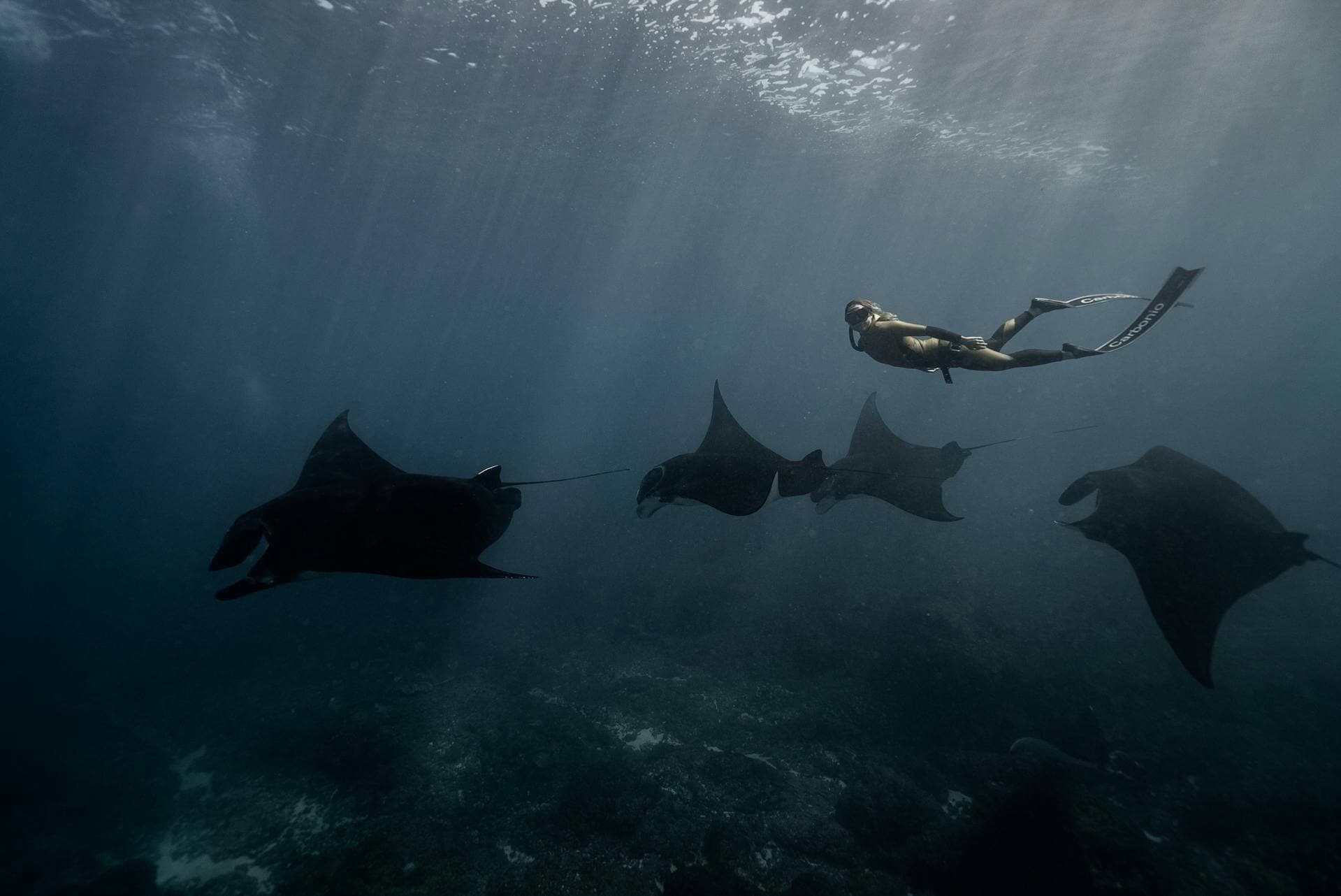
Hanifaru Bay in the Maldives is our pick for mantas, because 50 to 200 of them can feed together in one small bay at the peak. You see them snorkelling: scuba is not allowed in the bay. The other four each offer something different: Komodo has cleaning stations, the Galápagos has size, Tofo suits photographers and Kona is a night dive.
Wingspans reach 7 m, and the best months depend entirely on where you go.
| Destination | Best months | What to expect |
|---|---|---|
| Hanifaru Bay, Maldives (snorkel only) | June to November, peak July to October | 50–200+ mantas feeding together at peak; scuba is not allowed in the bay |
| Komodo, Indonesia | January to March and July to September, sources differ | Regular sightings at cleaning stations, occasional large aggregations |
| Galápagos, Ecuador | December to June, in our season records | Oceanic mantas at remote sites such as Darwin and Wolf; sightings are less predictable |
| Tofo Beach, Mozambique | October to March | Reef and oceanic mantas; sightings have declined since the 2000s |
| Kona, Hawaii | Year-round | A night dive with 3–15 mantas |
Hanifaru Bay, Maldives
Hanifaru Bay in Baa Atoll is where mantas feed on plankton-rich water from June to November, with the peak from July to October. On a good day 50–200 of them feed together, and dozens barrel-roll through the plankton in step. Only permitted operators can enter the bay, and it is snorkel-only: scuba is not allowed.
To reach these atolls, your best bet is a liveaboard. If you are weighing a boat against a resort, read Maldives liveaboard vs resort. For the rest of the country, see the Maldives.
Komodo, Indonesia
Komodo is not just about dragons. The nutrient-rich water around the islands draws both reef and oceanic mantas, and Manta Alley and the Cauldron are the sites to know. Our season records score mantas a good chance or better in every month, and highest in January to March and July to September. Sources differ on Manta Alley's peak: our own guides say July to September, while other published calendars report it best from January to March. Ask your operator which sites are working in your week.
Galápagos, Ecuador
The Galápagos has oceanic mantas that reach up to 7 m in wingspan, at remote sites such as Darwin and Wolf. Sightings are less predictable than at the other places here. Our season records score them higher from December to June than from July to November.
Tofo Beach, Mozambique
Tofo Beach is known for manta diving, with reef and oceanic mantas and seasonal aggregations. The water is warm and conditions are relaxed, which suits photographers. Our season records put the best months at October to March, and they note that sightings have declined sharply since the 2000s.
Kona, Hawaii
The Kona manta night dive is simple to describe. Divers kneel on the sand where the guide places them, with their lights, and mantas feed on the plankton the lights attract, passing close overhead. Expect 3–15 mantas, in any month of the year.
It is a night dive, so make sure you are trained for night diving first.
Planning a manta trip
Seasonality matters, so research the best months for your destination. A liveaboard gives you the flexibility to chase conditions. If you need help picking your first boat, read the first-time liveaboard guide.
Keep your distance, follow the local rules, and never chase or touch a manta.
Questions
Where is the best place to see manta rays?
Hanifaru Bay in the Maldives is our pick, from June to November with the peak from July to October, when 50–200 mantas can feed together. It is snorkel-only: scuba is not allowed in the bay. Komodo, the Galápagos, Tofo Beach and Kona each have a different season.
Can you see manta rays all year?
At Kona, yes: the night dive runs year-round with 3–15 mantas. Our season records score Komodo's mantas a good chance or better in every month, highest in January to March and July to September. Tofo is best from October to March.
Is the Kona manta dive suitable for beginners?
It is a night dive, and night diving is an extra skill, so get trained for it first. Once you are, the dive itself is simple: you kneel on the sand where the guide places you, with your lights, while the mantas feed overhead.