
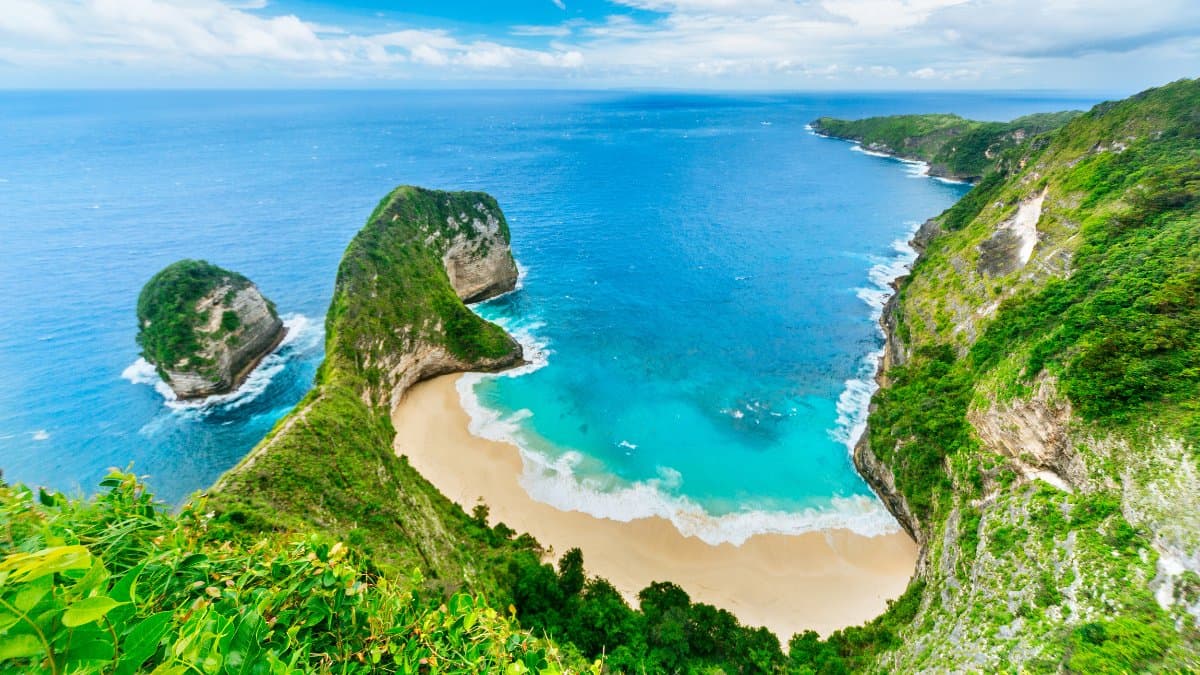
Nusa Penida gets less attention than Raja Ampat or Komodo, and that is part of why it is worth a look. It is a short boat ride from Bali, and two big encounters are possible in the same week: manta rays at a cleaning station, and mola mola, the oceanic sunfish, if you time it right and are ready for what Crystal Bay demands.
I've spent close to six months living on the Nusa islands, four on Penida itself, two on Nusa Lembongan. I know these reefs well. And I'll be honest with you: Nusa Penida doesn't get the respect it deserves from the wider dive community.
Manie Eksteen, PADI Staff Instructor
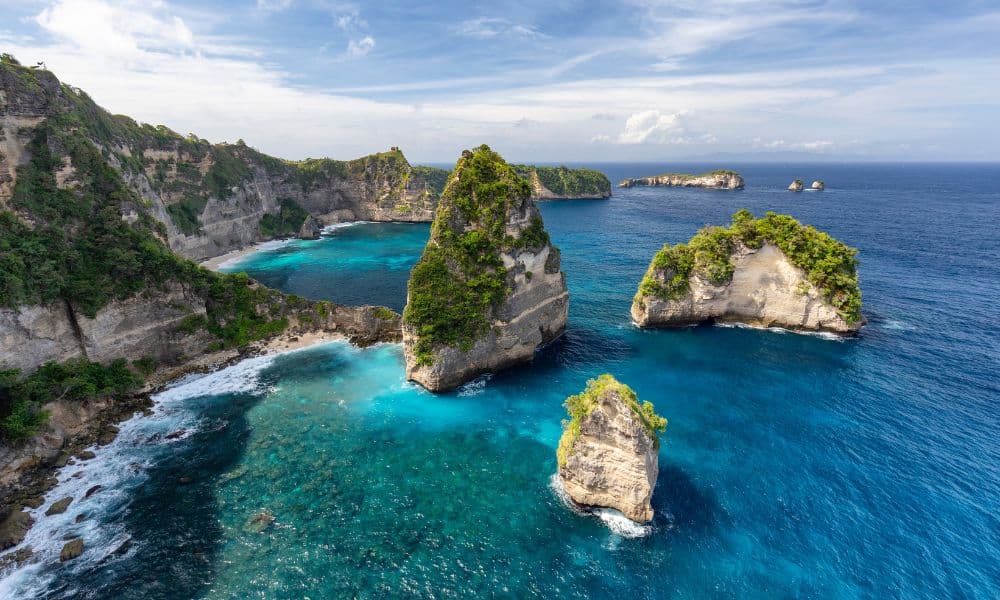
The south coast for encounters, the north coast for drifts
Both sides of the island have earned their reputation. The south coast is where the signature encounters happen: mantas at their cleaning stations, and mola mola for divers prepared to go deep into cold water. The north coast is where the drift diving is, with coral walls, strong but mostly readable currents and a lot of marine life.
Nusa Penida fits on either side of a liveaboard trip. Base yourself on the island, dive hard for 3–5 days, then fly or ferry onward. No liveaboard required, no complex logistics.
Manta Point and Manta Bay: mantas all year
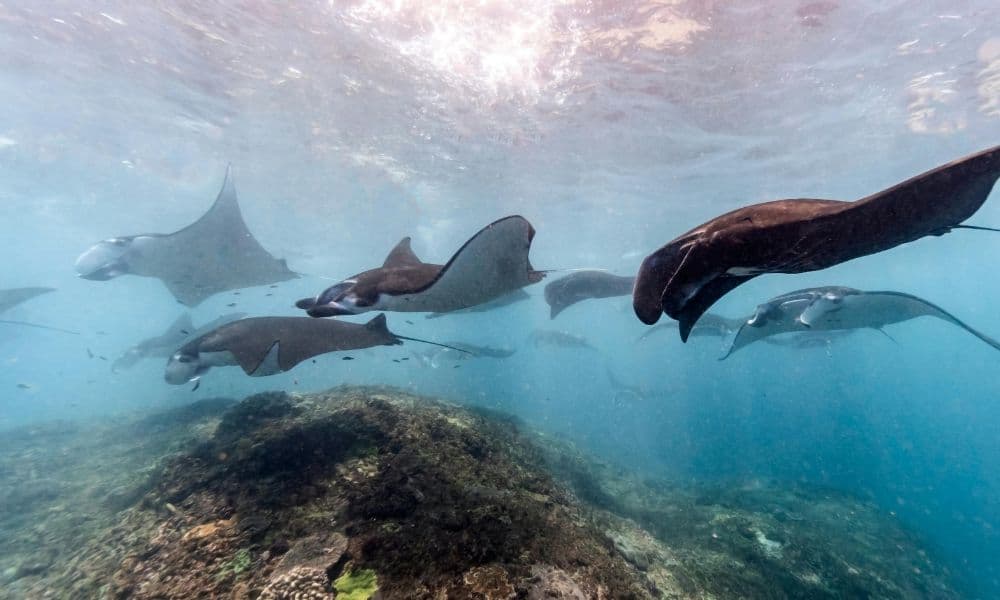
Nusa Penida's manta population is resident. Unlike manta destinations where sightings are seasonal and luck-heavy, the mantas visit the south-coast cleaning stations regularly throughout the year.
Manie will remember his first dive at Manta Point for the rest of his life. It was in September, with his wife Shannon, and they dropped in not knowing quite what to expect.
What we got was somewhere between 30 and 40 manta rays working the cleaning station simultaneously. I have the footage. When I say it stopped us both dead in the water, that's not an exaggeration.
Manie Eksteen, PADI Staff Instructor
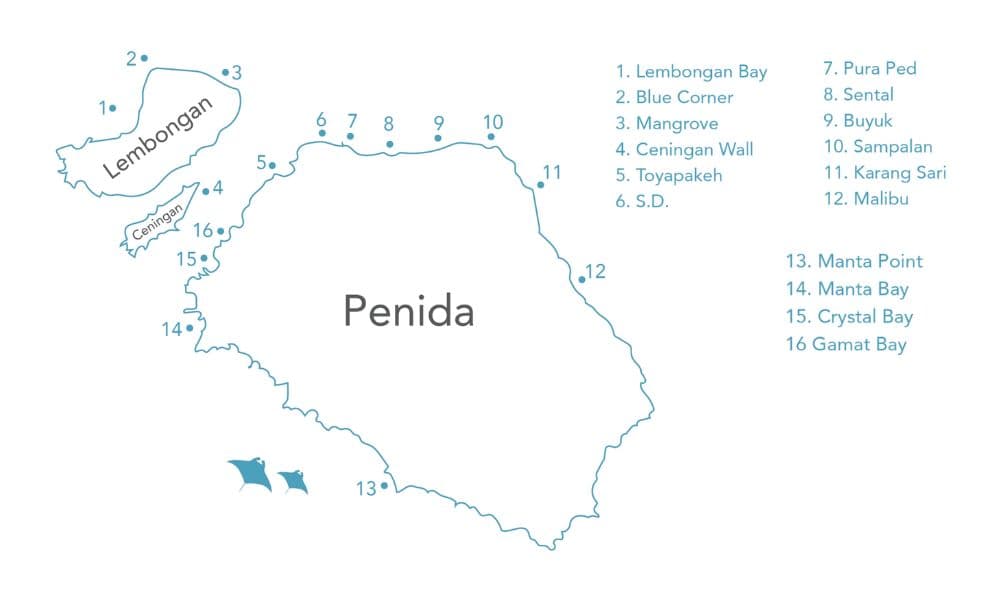
Manta Point sits on the southwest coast. The mantas gather at cleaning stations at 5–10 metres, where reef fish remove parasites, so you don't need to go deep to see them. The site can be surgy and isn't always accessible because of south swell.
Manta Bay is the more accessible of the two sites: shallower and calmer, with a sandy bottom that gives a clean line of sight to feeding rays. The mantas here tend to be slightly smaller than at Manta Point, but the encounter is excellent and considerably more beginner-friendly. If south swell closes Manta Point, your operator will likely redirect here.
Crystal Bay: mola mola, and a serious warning
Crystal Bay is where you come for mola mola between July and October. During mola season it is a deep, cold dive with serious down-current risk: 20–40 metres to reach the cleaning stations, water temperatures dropping to 18–19 °C, and down-currents that have humbled experienced divers. If you have never done a proper deep dive in strong current, this is not the place to have your first one.
Before you put mola mola on your list, get your deep diver specialty sorted first. Wear a 5 mm wetsuit at minimum. And choose your operator carefully, because at Crystal Bay that is non-negotiable. A cowboy operator who doesn't brief properly, doesn't monitor conditions, or puts inexperienced divers in the water on a bad day at that site can get people hurt. There is no sugarcoating that.
I've been face to face with these animals here, and the experience is unlike anything else in diving: a creature so alien-looking, so improbably large, that your brain takes a second to process what it's seeing.
Manie Eksteen, PADI Staff Instructor
The oceanic sunfish is the largest bony fish in the ocean, up to 3 metres long and up to 2 tonnes. Cold-water upwellings between July and October bring it to cleaning stations at depth, where it comes up from the deep blue to have parasites removed. August is generally the peak.
Sightings are not guaranteed.
North coast drifts: Toyapakeh, SD Point and PED
This is where I spent most of my time diving Nusa Penida, and honestly it's what I miss most about those reefs.
Manie Eksteen, PADI Staff Instructor
On the north coast the current can change direction five times on a single dive. It almost always runs parallel with the reef rather than down into it, as at Crystal Bay, so you drift along walls of healthy, dense coral.
- Toyapakeh is the more forgiving site: a shallower plateau that gives way to deeper water, manageable current and turtles on almost every dive. A solid place to start your day before the more demanding sites.
- SD Point has fast current and a wall packed with life.
- PED is similar: strong flow and dense marine life. It is not for beginners, but it is worth the experience level it asks for.
The drift dives in the north need good buoyancy control: try our free buoyancy lesson first.
Gamat Bay and Mangrove Point
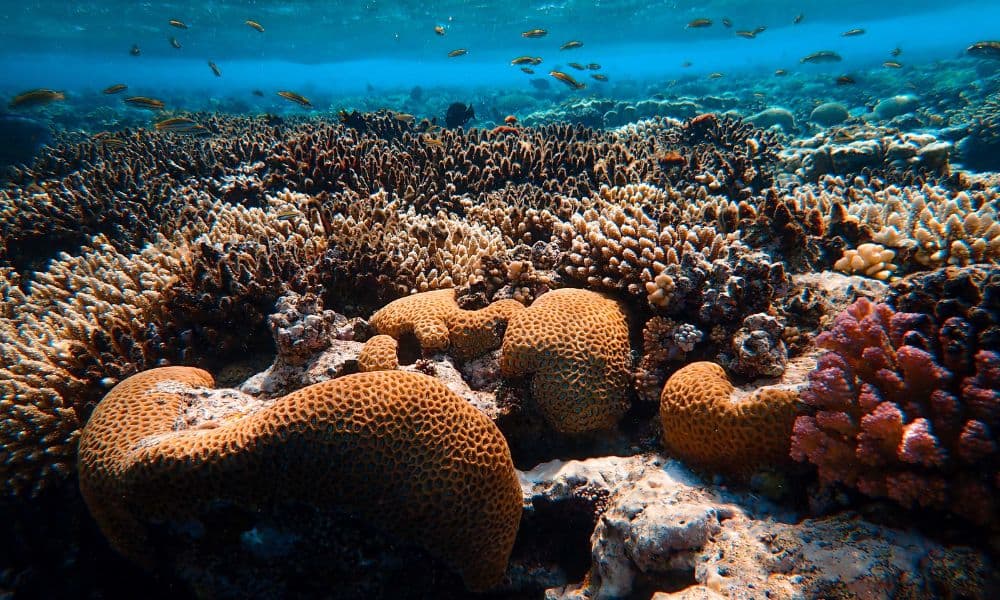
Gamat Bay rewards slowing down and looking properly, which makes it the site for macro photographers. It is sheltered, with soft corals and gorgonians, and critters (nudibranchs, ghost pipefish, unusual commensals) that most divers blow straight past on their way to the big stuff. In season it is also a secondary mola mola cleaning station.
Mangrove Point has dense coral and marine life on the right day. The catch is multidirectional currents that are unpredictable. If your operator tells you conditions aren't right for Mangrove, believe them. This is one site where you don't push it.
When to go
Mola mola peak from July to October. Mantas are reliable all year, and the dry season, April to October, gives calmer south-coast conditions and easier boat access.
| Months | Conditions | What to expect |
|---|---|---|
| July to October | Peak | Mola mola season: cold water, sharper visibility, busier sites. Come prepared for the cold and do your homework on operators |
| April to June | Good | A strong shoulder season. Conditions calming from the wet season, water warming up, mantas reliable and sites less crowded. A good choice for quality without the crowds at Crystal Bay in August |
| November to March | Shoulder | Wet season, but don't dismiss it: warmer water than mola season (26–28 °C), rain mostly in the afternoons, quieter sites and healthy marine life. The trade-off is reduced visibility some days and occasionally harder south-coast access. For north-coast drift diving the wet season is fine |
Where Nusa Penida fits in an Indonesia trip
Nusa Penida is accessible, based out of Bali, and delivers mantas and mola mola without liveaboard logistics. If you have 3–5 days either side of another Indonesia trip, or you are making Bali your base, it belongs in the plan.
| Destination | What it is for |
|---|---|
| Raja Ampat | Coral biodiversity and underwater wilderness. No serious Indonesia trip should skip it |
| Komodo | Big-animal action, with manta aggregations and drift dives |
| Banda Sea | Remoteness and pelagic action on a different scale |
| Nusa Penida | An accessible, Bali-based trip with two big encounters: mantas and mola mola |
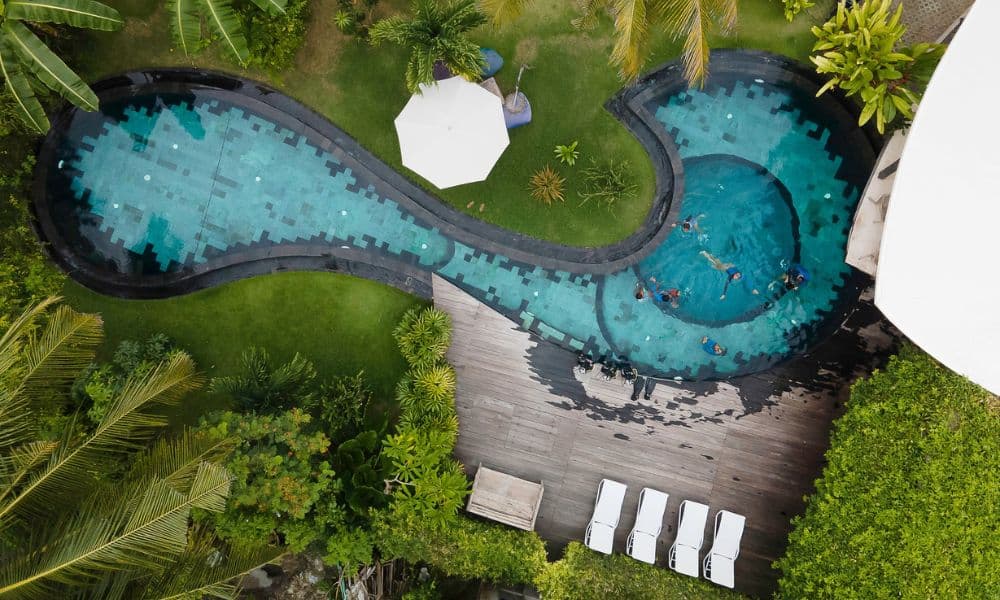
Where to dive from: Pure Dive Resort
I know Ark and the whole Pure family personally from my time on the island. So when I say Pure Dive Resort is our recommendation, that's not marketing. It's what I'd tell a friend landing in Penida tomorrow.
Manie Eksteen, PADI Staff Instructor
The right operator matters here, especially on the south coast and during mola season. You want one that takes conditions seriously, briefs its divers properly and doesn't put people in the water just to fill spots on a boat. Pure's own website lists a maximum of 4 divers per guide. Manie's published account adds that Pure matches groups by experience level and chooses sites each morning from actual conditions rather than a fixed itinerary.
Also from its website: the island's deepest training pool, its own Bauer air filling station, Nitrox and Scubapro rental gear. DIVE Magazine listed Pure fourth in its Indonesia top five at the 2021 Travel Awards (DIVE).
Diving from Pure's base puts you straight onto the north-coast reefs. Its website lists courses from Open Water to Divemaster, with drift and deep specialties. If Crystal Bay is on your list, consider doing the deep specialty with them before you attempt the mola dive. They also run a Freediving centre, Freediving Penida.
Getting there and island notes
Fly into Denpasar (DPS), Ngurah Rai International Airport in Bali. Fast boats leave Sanur Harbour daily and take about 40 minutes to Toyapakeh or Sampalan on Penida. An alternative route from Kusamba cuts the crossing to roughly 25 minutes. Book boat tickets in advance during peak season (July to September). Pure Dive Resort is between the two main harbours, a short taxi ride from either. For a boat transfer, see PenidaGo.
Nusa Penida has become much more visited in recent years. The viewpoints (Kelingking, Broken Beach, Angel's Billabong) are crowded during the day, with busloads arriving from Bali on day trips. Go early in the morning, before the mainland crowds land.
Questions
Can beginner divers dive Nusa Penida?
Some sites are accessible for Open Water certified divers: Manta Bay, Toyapakeh and Gamat Bay, with a capable guide.
Crystal Bay during mola season and the more demanding north-coast drift sites are for experienced divers only. Choose an operator who assesses conditions and matches groups by experience level. Pure Dive Resort does this well.
When is the best time to see mola mola at Nusa Penida?
Mola mola season runs from July through October, driven by cold upwellings that bring the sunfish to cleaning stations at depth. August is generally the peak, at Crystal Bay and Gamat Bay. Water temperatures drop to 18–19 °C, so bring a 5 mm wetsuit at minimum.
Get your deep diver specialty completed before you attempt the dive, and choose your operator carefully. Pure Dive Resort is the one we recommend.
Are manta rays guaranteed at Nusa Penida?
Nothing is guaranteed underwater, but Nusa Penida comes close. The resident manta population visits cleaning stations year-round, and on good days the numbers are high. In September and October there can be 30–40 rays in the water at Manta Point at once.
In November it can be hard to see one on every single dive, so it depends. Book a few days, not just one, and hope to see one. The dry season (April to October) gives calmer south-coast access and generally better conditions at the south-coast sites.
How does Nusa Penida compare with Raja Ampat or Komodo?
Raja Ampat is the choice for coral biodiversity. Komodo delivers stronger all-round big-animal action and drift dives. Nusa Penida is the accessible, Bali-based option, with mantas and mola mola and no liveaboard logistics. It fills a different slot in an Indonesia itinerary, so it is not a like-for-like comparison.