
Introduction into The Straits of Tiran.
The Straits of Tiran is one of the most strategically positioned dive areas in the northern Red Sea — and one of the most underestimated. Four named reefs stretch across the narrow passage between the Sinai Peninsula and Saudi Arabia, all accessible on a day trip from Sharm El Sheikh, all with the kind of current that concentrates marine life in a way that slack-water sites simply can’t match.
Most divers who come to Sharm know about Ras Mohammed and Thistlegorm. Fewer build a dedicated day around the Straits of Tiran. That’s a mistake.
Jackson Reef alone — the northernmost and most consistently productive of the four — delivers hammerhead sightings, pelagic encounters, and wall diving that puts it in the conversation with the best sites in the region.
This guide covers all four reefs, how to dive them, what to expect from the conditions, and how to position the Tiran day trip within a Red Sea itinerary.
Why the Straits of Tiran Matters for Red Sea Divers
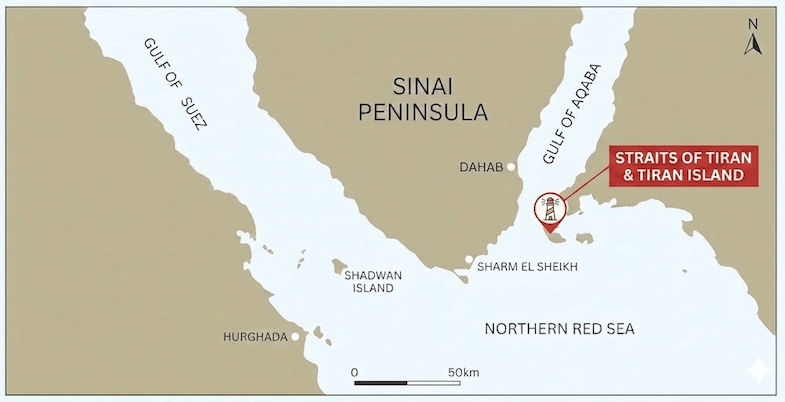
The Straits of Tiran is a narrow passage of water connecting the Gulf of Aqaba to the Red Sea proper. Because all the water flowing in and out of the Gulf of Aqaba — a deep, nutrient-rich body of water — passes through this single channel, the currents are strong, consistent, and productive. Strong current means upwellings. Upwellings mean plankton. Plankton means fish. Fish means sharks.
That’s the ecological logic behind why the Straits of Tiran consistently produces pelagic encounters when similar-looking sites elsewhere don’t. The marine life here isn’t accidental — it’s a function of the geography. For Red Sea diving, understanding that dynamic makes the Tiran reefs make sense.
The four reefs — Jackson, Woodhouse, Thomas, and Gordon — are named after officers of the British Hydrographic Office who surveyed the area in the 19th century. Each sits in slightly different current exposure and depth profile, which is why the experience of diving each one is distinct. They’re not interchangeable.
The Straits of Tiran fits into the north as one of the essential Sharm El Sheikh–based day trips.
The Four Reefs — What You're Actually Diving
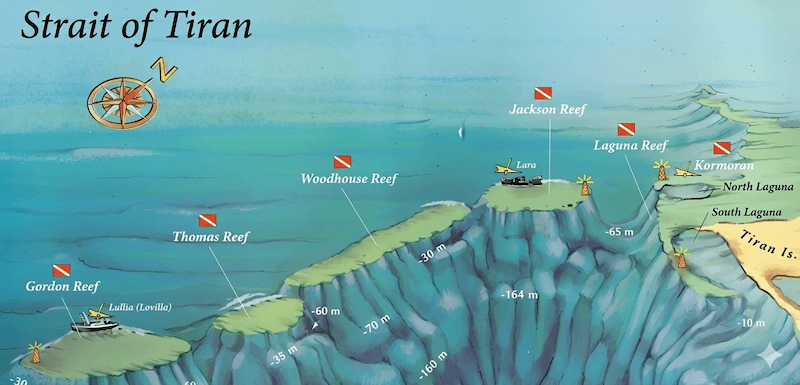
Straits of Tiran diving centres on four reefs, each with a different character. Most day trips visit two or three. Jackson is non-negotiable. After that, the operator and conditions determine the sequence.
Jackson Reef — The Headline of Tiran Straits
Jackson is the northernmost reef and the most exposed to Gulf of Aqaba current. It’s also where the hammerheads are.
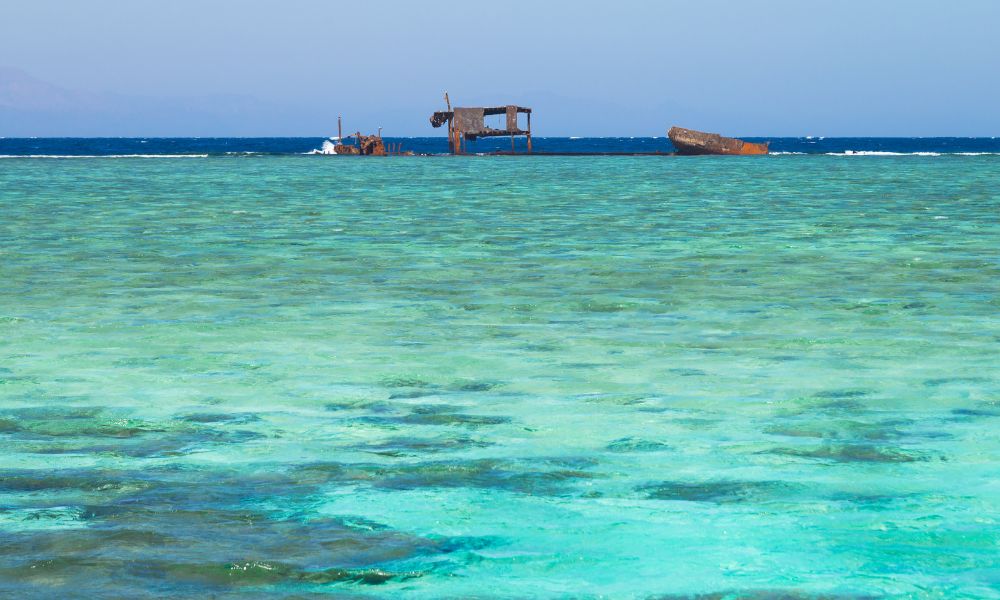
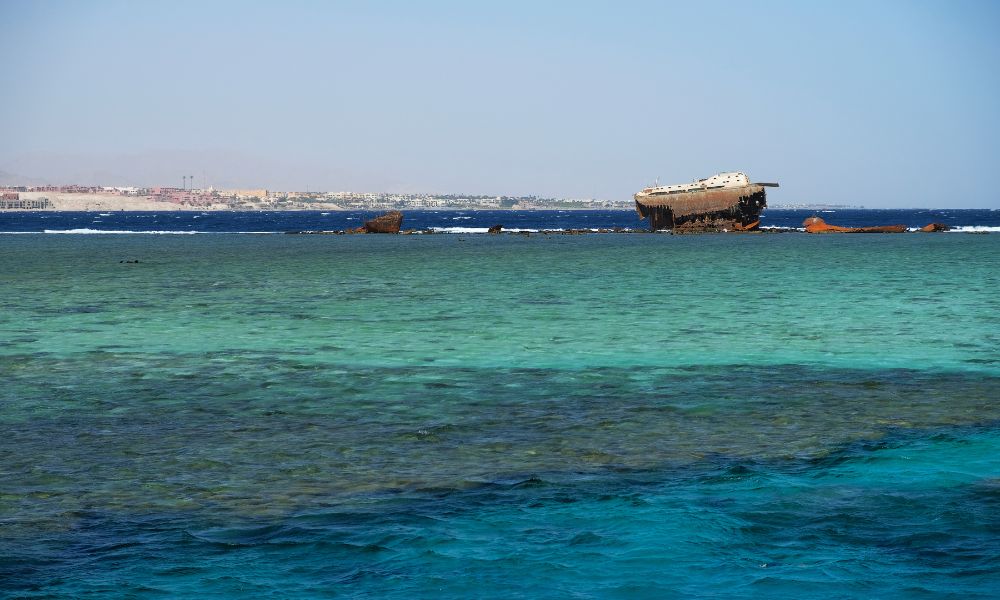
The reef rises steeply on the north face, with a wall that drops to significant depth and a surface that breaks the waterline — the wreck of the Lara, a Cypriot freighter that ran aground on the reef in 1985, sits rusting on the northern tip and is visible from the dive boat before you enter. It’s a navigation reference as much as a sight.
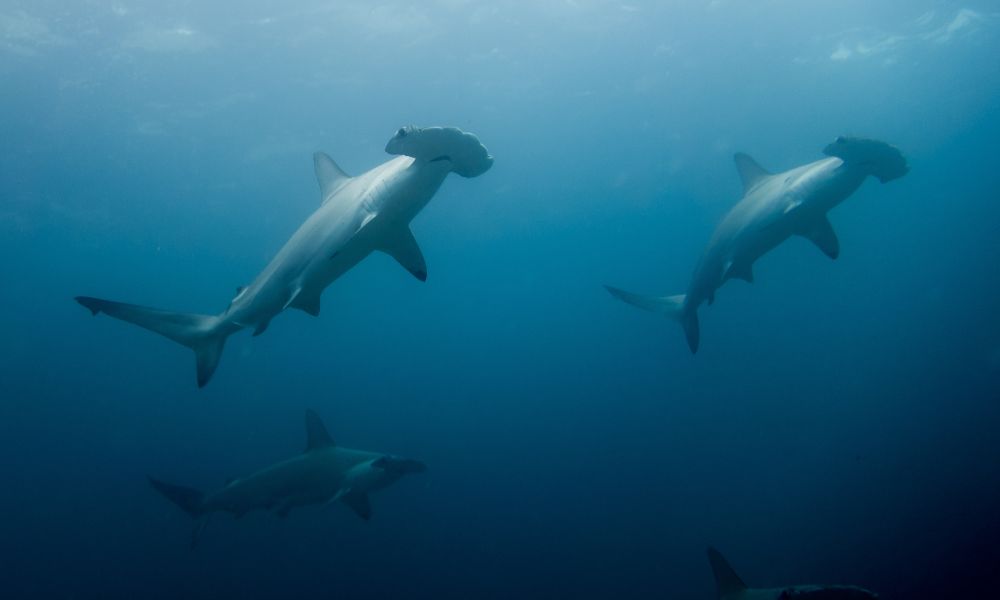
The hammerhead sightings at Jackson are most reliable in the early morning, in the blue water to the north and northeast of the reef. These are scalloped hammerheads, typically in pairs or small groups, and the encounter is drift-based — you hold your position in the current and watch the blue. Depth for the hammerhead zone runs 18–25 metres. The wall below that is worth exploring too, with substantial soft coral coverage on the northern and eastern faces.
Current at Jackson can be strong and shifts direction. Listen carefully to the briefing on current patterns before getting in. This is not the place to ignore the guide’s entry point advice.
Woodhouse Reef — The Drift
Woodhouse sits south of Jackson and runs roughly north-south. It’s primarily a drift dive along the eastern wall, with good coral coverage and an impressive fish count — large schools of barracuda, trevally, and snapper are consistent here, along with resident napoleon wrasse.
The reef is more sheltered than Jackson on its western side, which gives it more flexibility in variable conditions. It’s often the second reef on a day trip itinerary when Jackson is the opener. However, the eastern wall in current is where the action is — don’t get pushed onto the shallow western side and miss the better diving.
Thomas Reef — The Coral Wall
Thomas is the smallest of the four reefs and the most tightly structured. The walls here are among the healthiest in the Straits of Tiran — good hard coral coverage, sea fans, and consistent soft coral on the deeper sections. It’s less current-exposed than Jackson, which makes it appropriate for divers who want the reef experience without the full drift commitment.
Thomas is also where you’re most likely to encounter white-tip reef sharks resting on the sandy bottom between reef structures. Not the pelagic species of Jackson, but reliable and unhurried.
Gordon Reef Dive Site— The Wreck Addition
Gordon is the southernmost Tiran reef dive site and includes the wreck of the Louilla — a different vessel to the Jackson wreck, a Panamanian cargo ship that grounded on Gordon’s reef flat in 1981. The wreck sits in shallow water on the reef top, which makes it accessible but also sun-bleached and coral-overgrown at this point. It’s a background feature rather than the focal point.
Gordon’s walls on the eastern side offer good diving, and the reef sees less traffic than Jackson or Woodhouse because it’s the furthest from Sharm. For divers on a half-day or afternoon Tiran trip, Gordon sometimes appears as the first stop — but if you’re on a full-day itinerary, you will most likely start at Jackson and work south, if qualification allow.
The Tiran reef dive sites in Detail: Current, Entry and What to Expect
Tiran reef dive sites share one consistent characteristic — current. Not always strong, but always present, and variable in direction. The passage geometry means current patterns change with tide and wind direction, which is why experienced Tiran operators always brief site-specific conditions on the day rather than following a fixed plan.
What this means practically diving the straits of Tiran:
Entry points matter.
The guide’s chosen entry point isn’t arbitrary — it’s calculated based on current direction to drift you along the reef rather than across it or into it. Follow the entry exactly. Getting in 20 metres from the planned spot can mean a completely different dive.
SMB deployment.
Surface conditions in the passage can be choppy, particularly on the exposed northern reefs. Know how to deploy your SMB competently before this trip — not a skill to be practising at the surface in chop while the boat tries to find you.
Depth management.
Current accelerates downward on the north-facing walls. It’s easy to drift deeper than planned without noticing. Set your maximum depth before the dive and monitor it actively. The most interesting encounters at Jackson happen between 18–25 metres — there’s no need to go deeper.
Buoyancy.
Strong current rewards neutral buoyancy. Divers who drag on the bottom or flutter-kick against the direction of travel disturb sediment and disrupt the drift for everyone behind them. If your buoyancy needs work before a current dive, this is worth flagging to the operator before you book.
When to Dive Straits of Tiran
The Straits of Tiran is accessible for most of the year on day trips from Sharm El Sheikh, with conditions varying meaningfully by season.
October to February is the premium window. Hammerhead activity at Jackson peaks during this period, water temperature sits at 22–26°C, and visibility is at its seasonal best — 20–30 metres on a good day. A 5mm wetsuit is appropriate.
March to May offers excellent shoulder season diving. Conditions remain good, the hammerheads thin out but are still present, and the reef fish populations are at their most active.
June to September — warm water (28°C+), shorter wetsuits fine, but pelagic activity decreases. The reef diving at Thomas and Woodhouse remains excellent year-round; Jackson is specifically less rewarding outside the peak months if hammerheads are the reason you’re going.
For the full month-by-month breakdown of the northern Red Sea, see the best time to dive the Red Sea guide.
Getting to The Straits of Tiran: Day Trip from Sharm
The Straits of Tiran is exclusively a day trip or liveaboard destination — there’s no dive infrastructure on the reefs themselves. The vast majority of divers access the reefs on a day trip from Sharm El Sheikh, which sits approximately 50–60 kilometres south of the strait by boat.
Most Sharm operators run dedicated Tiran day trips covering two or three of the four reefs, typically departing at 7–8am and returning by late afternoon. The crossing takes roughly 45–60 minutes each way depending on vessel and sea state. Morning departure is non-negotiable — early arrival at Jackson before other boats is the difference between a quality hammerhead window and a crowded site.
The Straits of Tiran also features on north circuit liveaboard itineraries out of Sharm El Sheikh, typically combined with Ras Mohammed, Thistlegorm, and Abu Nuhas. For a dedicated Tiran visit with multiple dives per reef and early morning slots, a liveaboard is significantly better. See the Sharm El Sheikh dive guide for operator context.
Browse Red Sea liveaboards departing Sharm El Sheikh on Divebooker →
What diver Level Do You Need?
Jackson Reef specifically warrants an Advanced Open Water certification as a practical minimum — blue water drift, strong and variable current, and open water conditions exceed what Open Water training prepares you for. The hammerhead zone involves holding position in current with no visual reference below you, so being able to handle your ascent and desents are crucial.
Thomas, Woodhouse, and Gordon are more accessible. Open Water certified divers with at least 20–30 dives and some current experience can comfortably handle the calmer sections of these reefs. The key variable is current experience — dive within what you’ve done before, not what you think you can manage.
Frequently Asked Questions
Are there hammerhead sharks at the Straits of Tiran?
Yes — scalloped hammerheads are reliably sighted at Jackson Reef, the northernmost of the four reefs. The best window is October through February, on early morning dives on the north and northeast side of the reef in the blue water zone at 18–25 metres. Sightings are not guaranteed but frequent enough that serious shark divers specifically plan for Jackson.
Can you see all four reefs in one day?
In practice, most full-day Tiran trips cover two or three reefs with two to three dives. Covering all four well in a single day is a stretch — you’d be rushing each site. The better approach is to prioritise Jackson and Woodhouse on your first Tiran day trip, and add Thomas and Gordon if you return.
Is the Straits of Tiran suitable for beginners?
Thomas and Woodhouse are accessible to Open Water certified divers with some current experience. Jackson Reef is not — the conditions and open water environment require Advanced Open Water as a practical minimum. If it’s your first time diving with current, discuss the conditions with your operator before booking the Jackson dive.
What's the best reef in the Straits of Tiran?
Jackson Reef — for pelagics and hammerhead potential, it’s not close. Woodhouse is the best pure drift dive. Thomas has the healthiest coral of the four. If you can only do one, Jackson. If you’re building a two-dive day, Jackson plus Woodhouse.
Do you need a liveaboard for the Straits of Tiran?
No — day trips from Sharm El Sheikh are available year-round. However, a liveaboard gives you the early morning advantage at Jackson (before other boats arrive), more dives per reef, and the ability to combine Tiran with Ras Mohammed and Thistlegorm in a single trip. For a dedicated Tiran visit aimed at hammerheads, the liveaboard is meaningfully better.