
Introduction into Diving Abu Nuhas
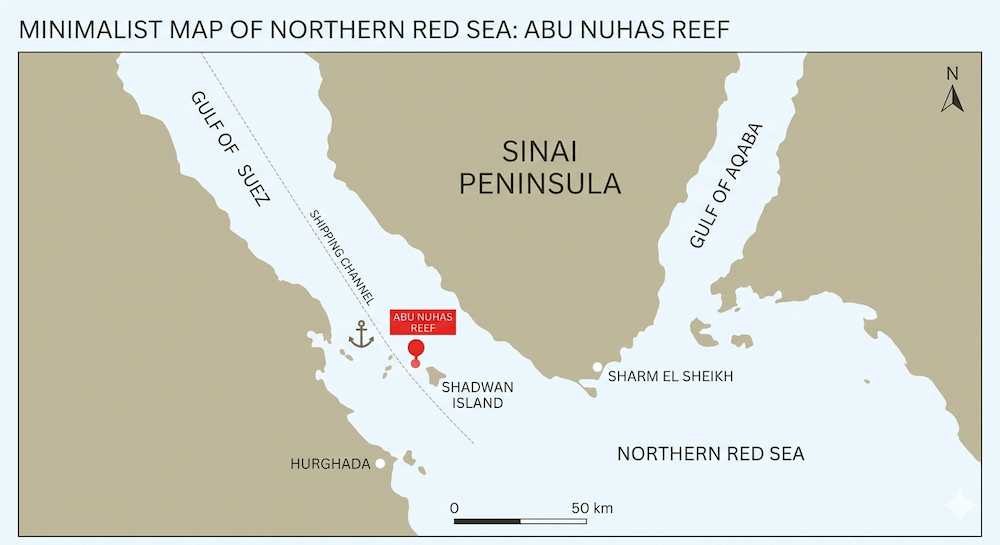
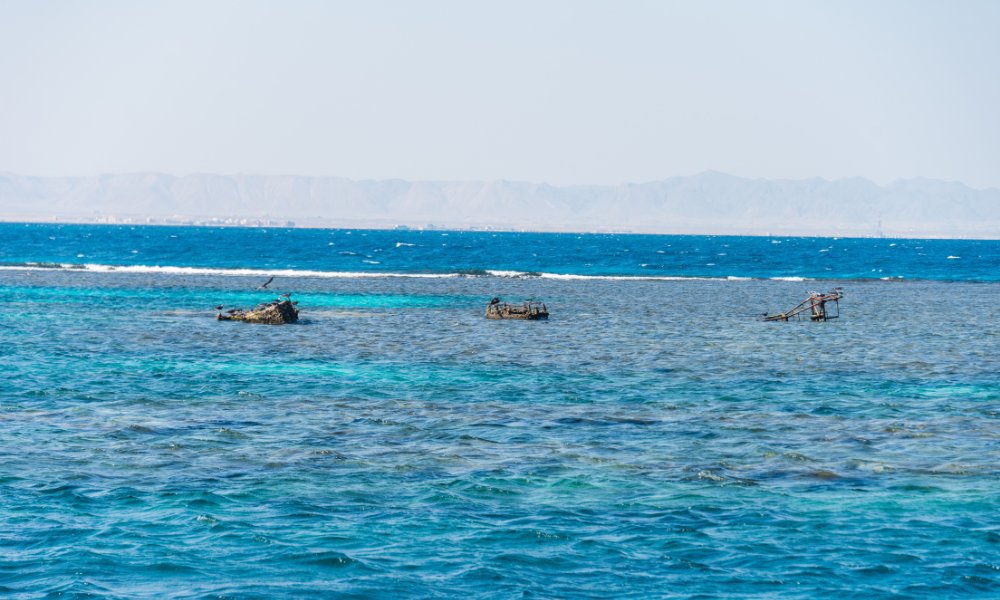
Abu Nuhas is a shallow reef in the northern Red Sea that has been sinking ships for over a century. Not metaphorically — literally. The reef sits just below the surface in the middle of the Strait of Jubal, directly in the path of vessels transiting between the Suez Canal and the southern Red Sea. Before GPS, before reliable charts, ships hit it with depressing regularity.
The result is four shipwrecks on a single reef, at recreational diving depths, in the clear, warm water of the northern Red Sea. I’ve dived Abu Nuhas multiple times on north itinerary liveaboards departing Sharm El Sheikh, and it belongs on any Red Sea wreck diver’s list alongside Thistlegorm.
The main difference from Thistlegorm: the Abu Nuhas wrecks are shallower, the corals are more established — some of these ships have been down for 140 years — and there’s less diver traffic. You can often have a wreck almost to yourself here.
Why Abu Nuhas Stands Apart from Other Wreck Sites
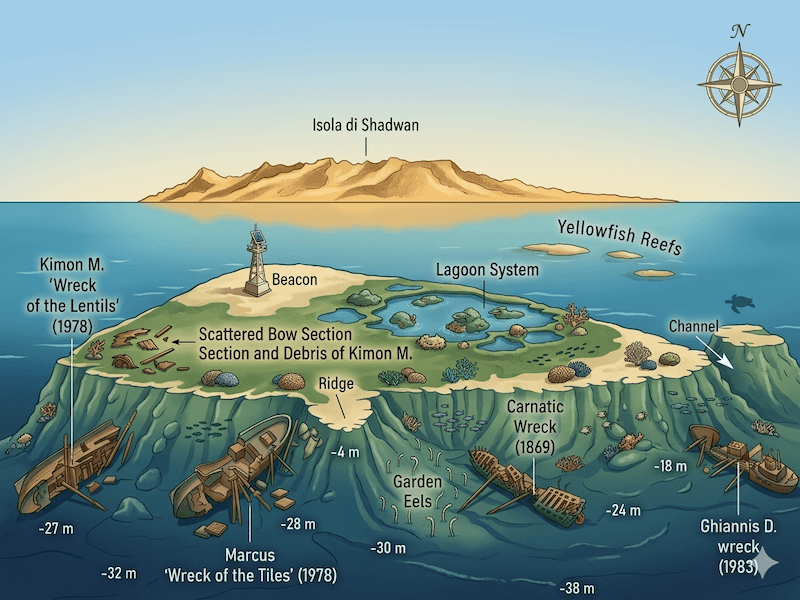
Most wreck destinations give you one wreck to dive. Sometimes two. Abu Nuhas gives you four, all within reasonable swim distance of each other, all on the same north Red Sea liveaboard itinerary.
→ Here is our full itinerary comparison for North Vs Southern Red Sea itineraries.
The wrecks are at different stages of deterioration — the Carnatic, the oldest at 150+ years, is broken up and encrusted, essentially a reef now. The Giannis D, sunk in 1983, still holds structural integrity and is penetration-ready at recreational depths. This range means you can tailor the diving to the group’s experience level and preferences.
Coral growth on the older wrecks is exceptional. The Carnatic in particular has soft corals covering every surface — the wreck itself has become an artificial reef that would give some natural reefs a run for their money.
The Four Wrecks at Abu Nuhas
Giannis D — The Headline Wreck
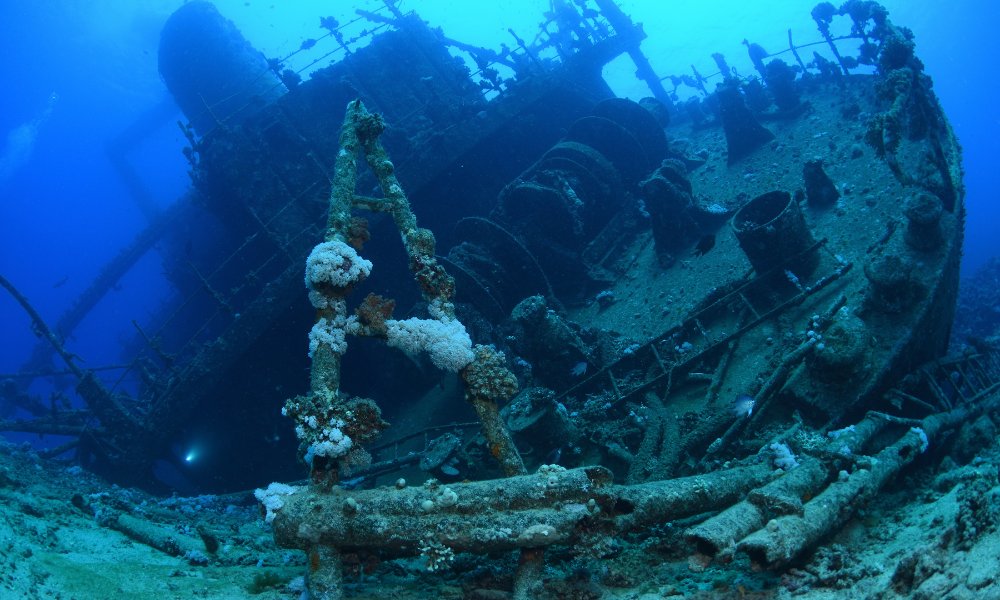
The Giannis D is the reason most divers choose to stop at Abu Nuhas, and it deserves the reputation. This 100-metre Greek cargo ship went down in 1983 carrying a cargo of timber. The timber is long gone — eaten by marine organisms — but the ship itself is remarkably intact for its age and depth.
The bow sits at around 20 metres, the stern at 27 metres, and the superstructure rises to within 6 or 7 metres of the surface. The hold is penetrable — and the penetration here is genuinely accessible for divers with some wreck experience. The cargo holds are large, with plenty of light and multiple exit points. No overhead restrictions in the main sections, though the deeper engine room requires more care.
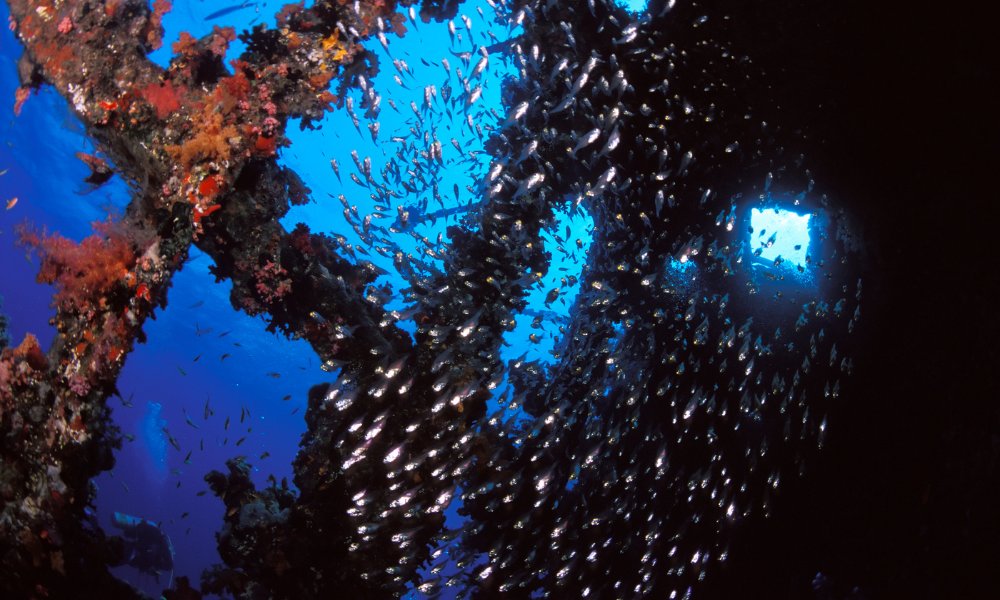
What makes the Giannis D memorable beyond its structure: the soft coral coverage is outstanding. Pink and orange sea fans cover the upper structure. Lionfish hover motionless in every dark corner. Schools of glassfish fill the holds, with trevally and jacks hunting through them while you watch.
Depth: 6–27m Experience level: Open Water for the exterior. Basic wreck experience recommended for penetration. Penetration: Yes — holds and superstructure. Engine room more advanced. Highlights: Bow section, cargo holds, superstructure soft corals, glassfish in the holds.
Chrisoula K — The Photographers’ Wreck
The Chrisoula K is a Greek grain freighter that hit the reef in 1981, often referred to as Marcus, the Wreck of tiles.
She sits slightly deeper than the Giannis D — the stern is at around 28 metres — but the real draw here is a single shot: the bow, pointing downward at roughly 45 degrees, framed against the blue water of the Red Sea with the anchor chain still in place.
If you’re travelling with an underwater camera, get to the Chrisoula K. The composition almost presents itself. On a clear day the visibility at this site is often 20 metres plus, and the bow shot is one of the most recognisable images in Red Sea diving photography.
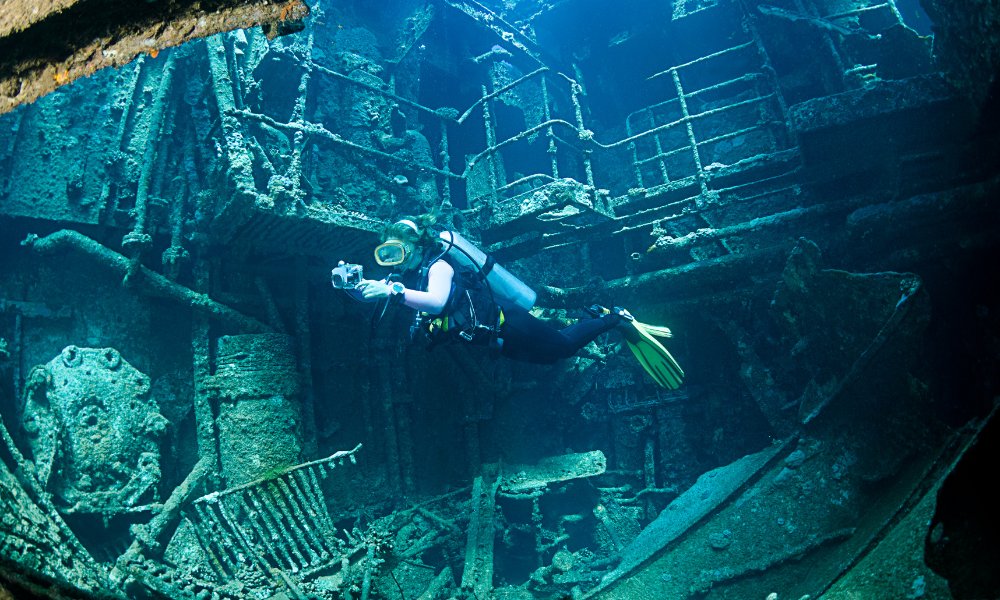
The structure is less penetrable than the Giannis D — sections have collapsed — but the exterior swim-through is excellent. Large grouper are resident here. Batfish school around the stern section consistently.
- Depth: 8–28m
- Experience level: Open Water comfortable.
- Penetration: Limited — some areas accessible, more collapsed structure than the Giannis D.
- Highlights: Iconic bow-down bow shot, grouper, batfish, anchor chain.
Carnatic wreck — 150 Years Underwater
The Carnatic is the oldest wreck at Abu Nuhas and one of the oldest diveable wrecks in the Red Sea. She was a British P&O mail and passenger steamer that went down in 1869 carrying a cargo of copper ingots and a consignment of champagne — some bottles of which were reportedly recovered intact decades later.
After 150 years on the reef, the Carnatic is broken into sections and heavily encrusted. This is not a wreck you dive for structure. You dive it for coral. The soft coral density on the Carnatic rivals anything you’ll find on a natural reef in the area — purple and orange sea fans covering every surface, with glass sponges and hard coral growth filling the gaps between them.
The copper ingots are still there, fused into the reef structure. Worth looking for — they’ve developed a distinctive blue-green patina.
- Depth: 6–27m
- Experience level: All levels.
- Penetration: No — too deteriorated for safe penetration. Exterior only.
- Highlights: Exceptional coral coverage, copper ingots, marine life density.
Kimon M — The Quiet One
The Kimon M is a Greek cement carrier that sank in 1978. It sits at the western end of the Abu Nuhas reef, slightly separated from the other three wrecks, and sees significantly less diver traffic as a result.
The structure is reasonably intact and holds are partially penetrable. The draw here is solitude more than spectacle — if the other wrecks are busy, the Kimon M is often quiet. Marine life is good, particularly around the engine room section which has become home to a large resident moray population.
Not the first choice if you’re only diving Abu Nuhas for one day, but worth including on a liveaboard that allocates more time to the site.
- Depth: 10–26m
- Experience level: Open Water comfortable.
- Penetration: Limited but possible in some sections.
- Highlights: Solitude, moray eels, resident grouper.
How to Dive Abu Nuhas
Abu Nuhas is almost exclusively dived from liveaboard, typically as part of a northern Red Sea itinerary departing Sharm El Sheikh. The reef is roughly 80km north of Sharm, near the southern entrance to the Suez Canal, making it a natural overnight passage destination.
Most north itineraries include Abu Nuhas as a one to two-night stop, giving you two to four dives across the four wrecks. The standard rotation is Giannis D and Chrisoula K on the first visit, Carnatic and optionally the Kimon M on the second.
Day trips from Hurghada are possible — Abu Nuhas is around 50km west of Hurghada — but day trip windows are tight for four wrecks. A liveaboard is the right way to do this site properly.
Browse northern Red Sea liveaboards on Divebooker — filter for north itineraries departing Sharm or Hurghada. Look for boats that specifically list Abu Nuhas on the itinerary rather than treating it as an optional add-on.
When to Dive Abu Nuhas
The northern Red Sea is diveable year-round, but conditions vary. Check our which Red Sea Liveaboards we recommend.
October to April is peak season — visibility is at its best (often 20+ metres), water temperature around 22–26°C, and conditions are most stable for overnight passages. This is the window I’d recommend for wreck diving specifically. Clear water and a torch is the combination you want for exploring the Giannis D.
May to September brings warmer water (26–29°C) and still good conditions, but visibility can be slightly reduced and wind can make the surface passages less comfortable on smaller liveaboards.
A 3mm wetsuit covers summer diving. 5mm from November through March is more comfortable, particularly for multiple dives per day at depth.
Check out our full Month to Month guide on when to dive the red sea.
Questions before Diving Abu Nuhas
How many wrecks are at Abu Nuhas?
Four: the Giannis D (1983), the Chrisoula K (1981), the Kimon M (1978), and the Carnatic (1869). All four are at recreational diving depths on the same reef, typically dived across two or three separate dives. The Giannis D and Chrisoula K are the most visited; the Carnatic is the most coral-encrusted.
Is Abu Nuhas suitable for beginner divers?
The wreck exteriors — particularly the Carnatic and Chrisoula K — are accessible to Open Water certified divers in good conditions.
For the Giannis D penetration sections, some wreck experience is beneficial. If this is your first wreck diving experience, dive with a guide and stay in ambient light throughout.
How does Abu Nuhas compare to the SS Thistlegorm?
Different experiences. Thistlegorm is larger, more dramatic in scale, and carries the fascination of a wartime cargo.
Abu Nuhas gives you four wrecks instead of one, shallower diving, less diver traffic, and more established coral growth. Most north itinerary liveaboards include both — Thistlegorm usually on night one, Abu Nuhas later in the trip.
I personally enjoyed Abu Nuhas the most. It was quiet, we had the wrecks to ourselves and the conditions were more favourable.
Do liveaboards always include Abu Nuhas?
Most northern Red Sea liveaboard itineraries include Abu Nuhas, but not all. When booking, confirm the itinerary includes it specifically. Some boats treat it as a weather-dependent stop.
Check itineraries on Divebooker before booking.
Can you dive Abu Nuhas on a day trip?
Technically yes, from Hurghada — it’s around 50km away. But a day trip only gives you time for two wrecks at most, and the transit takes a significant chunk of the day.
A liveaboard that allocates a night at the site is the right way to dive Abu Nuhas properly.