
The Full Diving Guide to Hanifaru Bay And How To Get There
There is one place in the world where you can watch 200 manta rays feeding in synchronised formation in water shallow enough to see every one of them clearly. That place is Hanifaru Bay, and nothing else in Maldives diving — or in diving generally — quite prepares you for it.
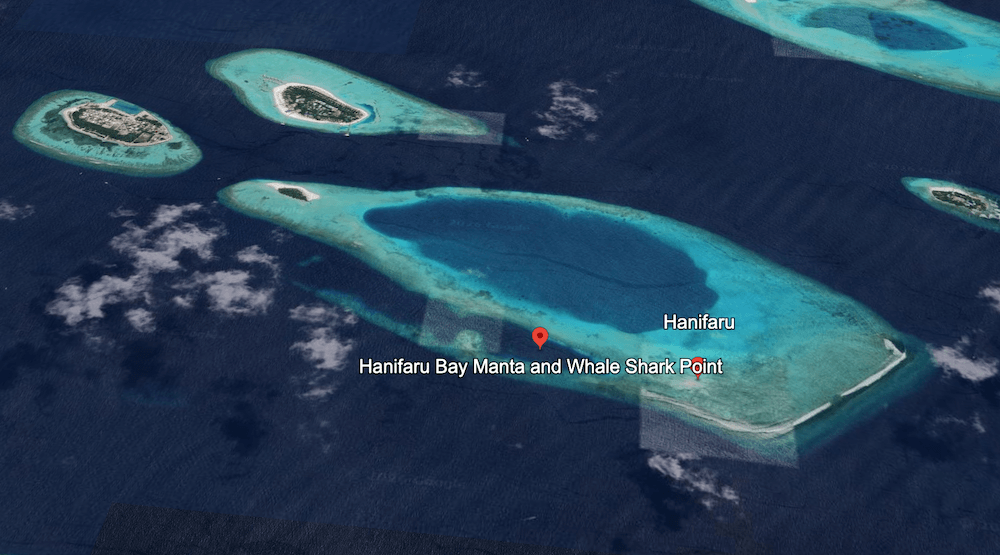
The bay itself is small. It sits inside the Baa Atoll Biosphere Reserve in the northern Maldives, a shallow lagoon-like indentation on the atoll that fills with current-driven plankton blooms when conditions align. When the plankton concentrates, the mantas follow. The aggregations at Hanifaru Bay are not random encounters — they are predictable feeding events, and on the right day at the right time of year, they are the single most dramatic wildlife spectacle available to a diver on the planet.
If manta ray diving destinations matter to you, Hanifaru belongs at the top of the list. The challenge is that it’s not a dive you can simply show up for. Access is restricted, the season is defined, and the best boats sell out months in advance.
Hanifaru Bay, Baa Atoll — Why This Place Is Different
Hanifaru Bay sits in the Baa Atoll UNESCO Biosphere Reserve, a protected marine area in the northern Maldives designated specifically for its exceptional marine biodiversity. The biosphere designation is relevant to divers for one practical reason: it controls access. Not every operator can enter Hanifaru Bay, and the Maldivian government limits the number of people in the water at any one time to minimise disturbance to the mantas.
Hanifaru bay baa atoll is the combination that makes the aggregations possible. Baa atoll geometry creates a current funnel — water pushing through the outer reef channels concentrates into the bay, carrying with it the zooplankton blooms that reef manta rays (Mobula alfredi) feed on. When this funnel effect aligns with peak plankton production during the southwest monsoon, the feeding response is dramatic. Mantas arrive in numbers, circle in formation to funnel food into their cephalic fins, and stack into the “cyclone feeding” behaviour — spiralling columns of mantas, dozens deep — that has made Hanifaru Bay famous.
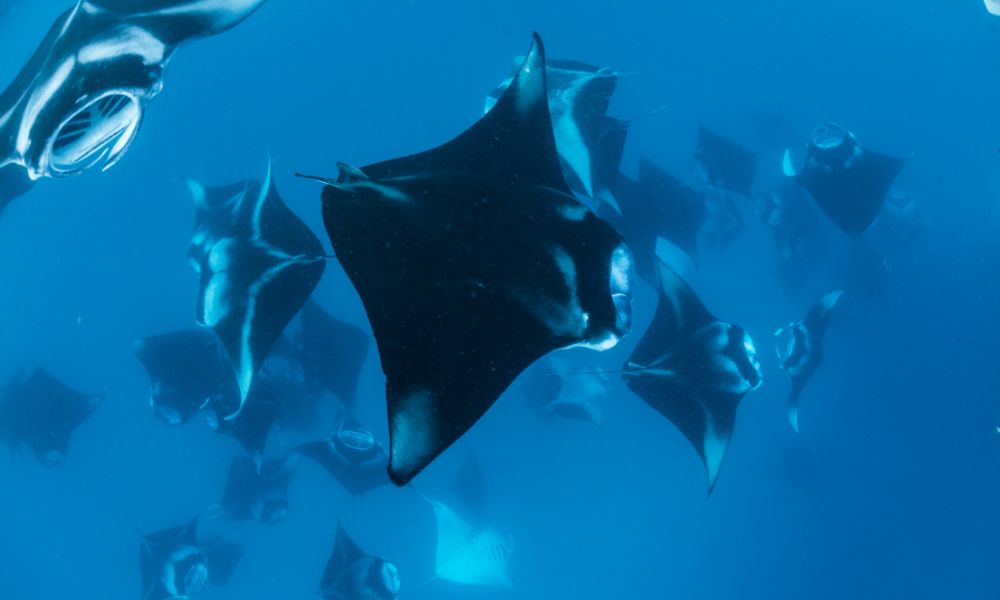
On an average visit during peak season, you can expect 20-50 mantas. On a productive day, 100-200. These are not tourist estimates — researchers from the Manta Trust have documented the aggregations consistently over years of monitoring.
The Manta Ray Aggregations at Hanifaru Bay — What You’ll Actually See
The hanifaru bay manta encounters operate on a scale that makes describing them difficult without sounding like exaggeration. The honest version: if you go at the right time, you will see more mantas in one dive than most divers see in a lifetime of manta ray encounters elsewhere.
The Feeding Behaviour
Reef manta rays feeding at Hanifaru don’t behave like the mantas at a cleaning station. They aren’t circling slowly near the reef waiting for cleaner fish. They’re actively feeding — mouths open, cephalic fins fully unfurled, moving through the water column in coordinated patterns that follow the plankton concentration.
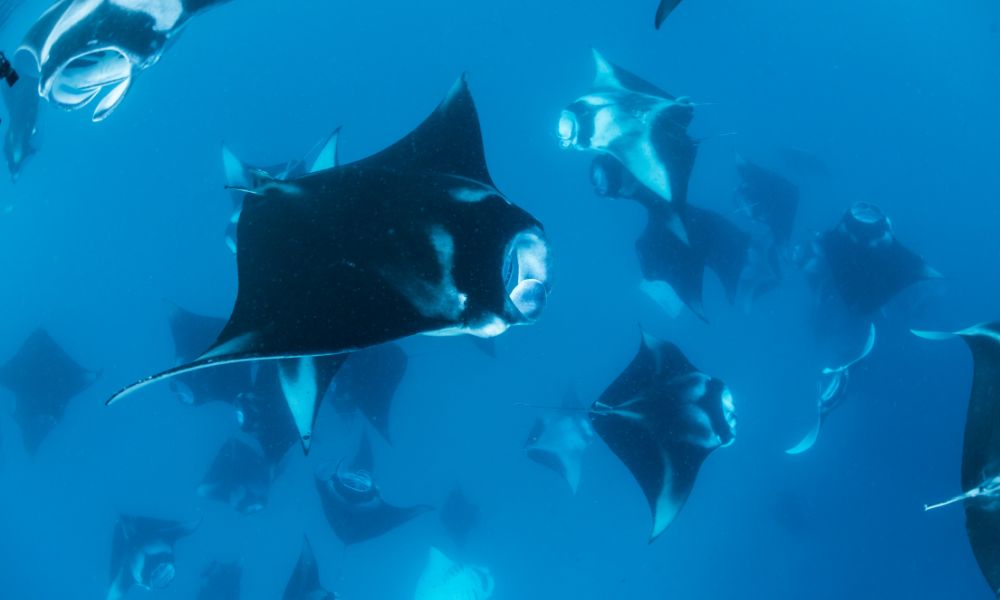
The most spectacular version of this is cyclone feeding: mantas forming a spinning column, one following the next in a tight spiral, each one rolling through the highest plankton concentration at the centre of the formation. A single cyclone can hold 20-40 mantas. When multiple cyclones form simultaneously in the same bay, the water is simply full of rays.
Snorkeling vs Diving at Hanifaru Bay
This question divides divers, and the honest answer is more nuanced than most guides acknowledge.
Snorkeling is often better for the aggregations.
The feeding activity at Hanifaru happens primarily in the upper water column — 0 to 8 metres — where the plankton concentrates. A snorkeler at the surface is directly in the feeding zone. A diver at 5-10 metres may be below the most active feeding layer on high-density days, and the bubbles from scuba equipment have been observed to disturb the feeding behaviour and disperse aggregations.
Many permitted operators now run Hanifaru primarily as a snorkeling excursion during peak aggregation conditions for exactly this reason.
Diving is better for the reef environment outside the bay.
Dive sites around Baa Atoll — Dharavandhoo Corner for hammerheads, the outer atoll walls — are where the deeper diving quality shows. A liveaboard itinerary based in Baa typically combines snorkeling at Hanifaru with diving at the surrounding reef systems.
If the aggregation is specifically what you’re there for, go in with snorkeling gear and let the mantas set the depth. If the broader atoll experience matters, a liveaboard gives you both.
The Hanifaru Bay Manta Season — When to Go
The hanifaru bay manta season runs from June to November, peaking July through October. This aligns with the southwest monsoon — the same system that produces the rougher surface conditions that most travel guides tell you to avoid. Don’t avoid it.
Southwest monsoon drives the plankton production that feeds the aggregations. Seas are rougher, particularly on exposed western faces of atolls, but the diving happens below the chop and the underwater conditions during productive plankton blooms are what attract the mantas. The trade-off in reduced visibility on high-plankton days is exactly what you want — it means the food is there, which means the mantas are there.
Month by month:
| Months | Aggregation Frequency | Notes | |
|---|---|---|---|
| 1 | June | Building | Mantas arriving, smaller aggregations |
| 2 | July | Peak | Strong and consistent |
| 3 | August | Peak | Best single month for high-count aggregations |
| 4 | September | Peak | Still strong; whale sharks active simultaneously |
| 5 | October | Tapering | Still productive; transition beginning |
| 6 | November | Closing | Variable; some aggregations still occur |
December through May, Hanifaru Bay is largely inactive for large aggregations. Cleaning station manta encounters continue across the central atolls year-round, but the Hanifaru phenomenon is seasonal.
For the full seasonal picture across the Maldives, see the best time to dive the Maldives guide.
If you time it well, you can even get in on the Whale Shark action at South Ari Atoll on the same trip, during the right season.
How to Get to Hanifaru Bay — The Access Reality
This is the section most guides skip. Getting to Hanifaru Bay requires navigating a set of logistics that are genuinely unusual for a dive destination.
Permits and Restricted Access
Hanifaru Bay sits inside a protected biosphere reserve. The Maldivian government requires all operators entering the bay to hold a valid permit, and the number of simultaneous visitors is capped. This is good for the mantas. It means that on a peak aggregation day, you will not be sharing the water with unlimited groups of tourists — the number of people in the bay at any one time is controlled.
The practical consequence: not every boat that sails through Baa Atoll can access Hanifaru. Confirm before booking that the operator holds a current Baa Atoll entry permit and specifically lists Hanifaru Bay on the itinerary.
Maldives Liveaboard vs Day Trip
Hanifaru Bay can be accessed on a day trip from Dharavandhoo Island (the nearest inhabited island with an airport in Baa Atoll) or from resort transfers in the atoll.
However, a Maldives liveaboard is significantly better for three reasons:
1.Timing. The aggregations are most intense in early morning and late afternoon when the current runs strongest. A liveaboard anchored in Baa overnight can put you in the water at dawn. Day trip visitors arrive later and leave earlier.
2.Multiple attempts. Aggregation quality varies day to day depending on current, tide, and plankton density. A liveaboard spending 2-3 days in Baa gives you multiple windows. A day trip gives you one.
3.Flexibility. If conditions aren’t producing at Hanifaru on a given day, a liveaboard guide can redirect to the outer reef dive sites. A day trip visitor has limited alternatives.
Booking Lead Times
For July–October (peak season), book a liveaboard with a confirmed Hanifaru itinerary at least 4-6 months in advance. The best boats in this window sell out completely. Last-minute availability is rare and usually reflects cancellations rather than unsold inventory.
Browse Maldives liveaboards with Baa Atoll access on Divebooker →
What Level Do You Need To Dive Hanifaru Bay?
The manta aggregation experience at Hanifaru Bay is accessible to snorkelers and Open Water certified divers. The bay is shallow — maximum 12 metres — with gentle, consistent current during feeding conditions. It is one of the more accessible marine wildlife experiences available in the Maldives.
The surrounding Baa Atoll dive sites — Dharavandhoo Corner, the outer atoll walls — require more experience. Advanced Open Water is appropriate for the channel and outer reef diving. The hammerhead encounters at Dharavandhoo Corner involve early morning blue water diving with some current. Open Water divers should stay with the shallower reef systems.
Frequently Asked Questions on Diving Hanifaru Bay
When is the best time to visit Hanifaru Bay for manta rays?
July to October, with August and September the strongest months. The southwest monsoon drives the plankton blooms that trigger the aggregations. On the best days in peak season, 100-200 mantas have been documented feeding simultaneously in the bay.
Is Hanifaru Bay better for snorkeling or diving?
Snorkeling is often better for the feeding aggregations — the mantas feed in the upper 0-8 metres and scuba bubbles can disturb the feeding behaviour and break up aggregations. For the surrounding Baa Atoll reef and channel diving, scuba is appropriate. A liveaboard itinerary typically combines snorkeling at Hanifaru with diving at the outer reef systems.
Do you need a permit to dive Hanifaru Bay?
Operators need a permit — individual divers don’t arrange this themselves. However, you should confirm that your liveaboard or day trip operator holds a valid Baa Atoll entry permit and specifically lists Hanifaru Bay access before booking. Not all Maldives boats are permitted.
How many manta rays can you see at Hanifaru Bay?
Documented aggregations range from 20-30 on a slow day to over 200 on a peak production day. The Manta Trust has recorded consistent large aggregations annually during the July-October window. Average peak season visits produce 50-100 mantas.
Can you visit Hanifaru Bay without a liveaboard?
Yes — day trips operate from Dharavandhoo Island in Baa Atoll (accessible via domestic flight from Male). However, a liveaboard gives you multiple visits, better timing (dawn access), and flexibility if conditions aren’t producing on a given day. For a dedicated Hanifaru trip, a liveaboard is meaningfully better.
How far is Hanifaru Bay from Male?
Baa Atoll is approximately 100 kilometres north of Male. Access is either by seaplane transfer (approximately 25 minutes) or domestic flight to Dharavandhoo Airport followed by a short boat transfer. Liveaboards departing Male typically reach Baa Atoll after an overnight sailing passage.