
Even more juicy information below. Hope this helps you guys out. Please share your thoughts, improvements and tag us on our social media page.
Introduction into Scuba Diving Buoyancy Tips
In this lesson, we will explore neutral buoyancy and control , providing you with actionable scuba diving buoyancy tips that will transform your diving from a physical chore into a graceful dance.
If you take the time to study this lesson and put it into action, your dive times can increase by up to 30 minutes!
Understanding how to manage your position in the water column is not just about aesthetics; it is a fundamental safety skill that protects both you and the delicate marine environment.
As you progress in your diving career, you will realize that buoyancy is the foundation upon which all other skills are built.
Whether you are aiming to capture world-class underwater photography in Raja Ampat or simply want to extend your bottom time by consuming less air, mastering your vertical position is key.
This article will break down the complex physics into manageable concepts and provide practical exercises you can use on your next trip.
From learning the nuances of lung volume to understanding how different equipment choices affect your lift, we will cover the essential knowledge required for total mastery.
By the end of this lesson, you will have a clear roadmap for feeling more in control in the water.
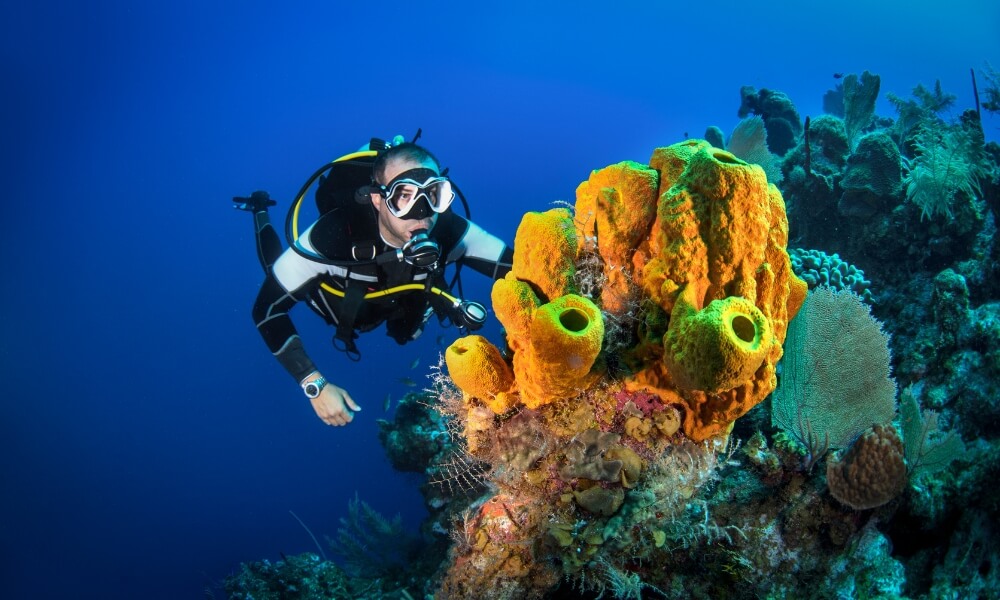
The Physics of Buoyancy
To master neutral control, one must first understand the underlying physics that govern our movement through the water. Archimedes Principle states that any object, wholly or partially immersed in a fluid, is buoyed up by a force equal to the weight of the fluid displaced by the object.
In diving terms, this means your buoyancy is a constant mathematical struggle between two forces: gravity pulling you down and the water pushing you up.
When you are neutrally buoyant, these two forces are perfectly balanced. However, several variables are constantly changing during a dive that disrupt this balance:
- Displacement: Your body, your exposure suit, and your equipment displace a specific volume of water.
- Weight: The lead on your belt, the metal of your tank, and even the air inside that tank have weight.
- Compression: As you descend, the increased pressure causes the air bubbles in your neoprene wetsuit and the air inside your Buoyancy Control Device (BCD) to compress, reducing your displacement and making you more negatively buoyant.
Understanding the role of your exposure suit is critical. For example you must realize that a 5mm suit provides significantly more positive buoyancy than a 3mm suit or a rash guard.
This additional neoprene requires MORE weights to submerge and creates more dramatic buoyancy shifts as you change depth.
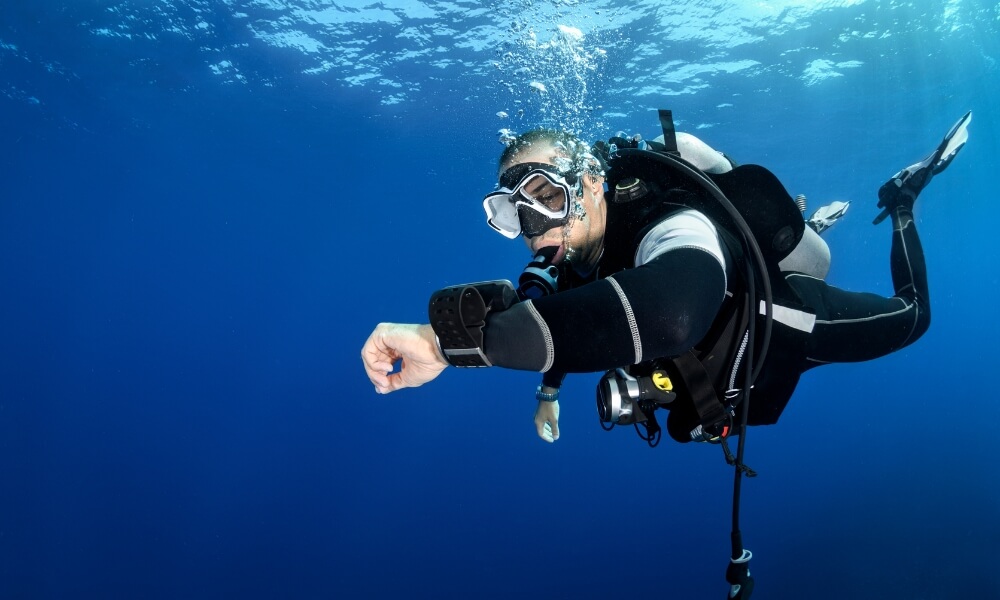
The Dynamics of Air
As you dive deeper, the air inside your BDC becomes denser and occupies less volume. This is why you feel heavier the deeper you go!
Conversely, as you ascend, that air expands. If you do not vent this expanding air, you risk an uncontrolled ascent.
Achieving perfect neutral buoyancy scuba diving requires a proactive approach to managing these volume changes before they become problematic.
Role of your lungs – your secret weapon
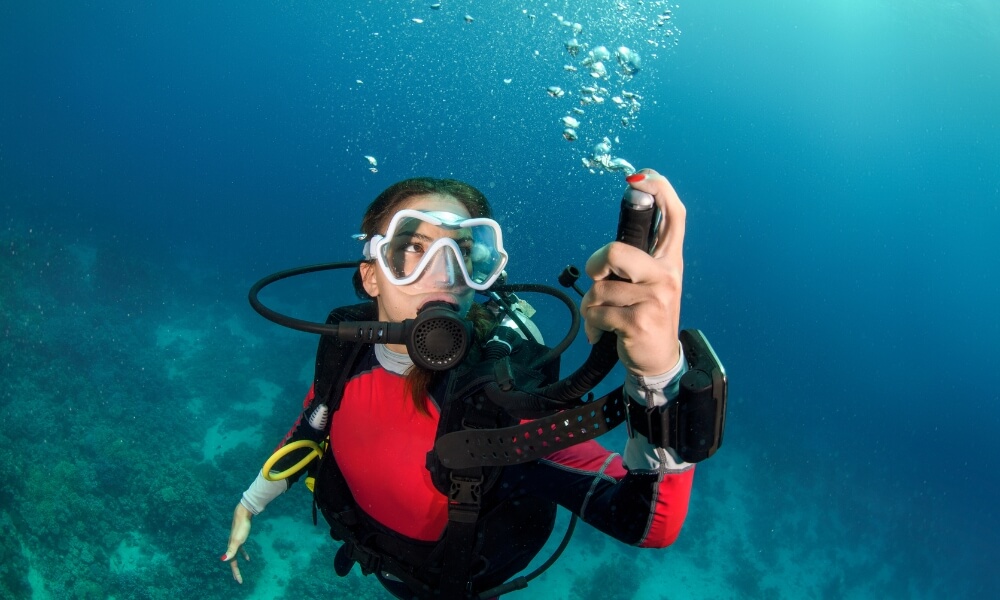
Your lungs are your most sensitive buoyancy adjustment tool, and in fact your main compensation device. Your BCD is simply there to compensate for what your lungs cannot do.
A pair of adult lungs can hold several liters of air, which provides significant lift.
Many divers make the mistake of relying solely on their BDC for every minor adjustment. In reality, the BDC is for large adjustments necessitated by depth changes, while your breathing should handle the fine-tuning.
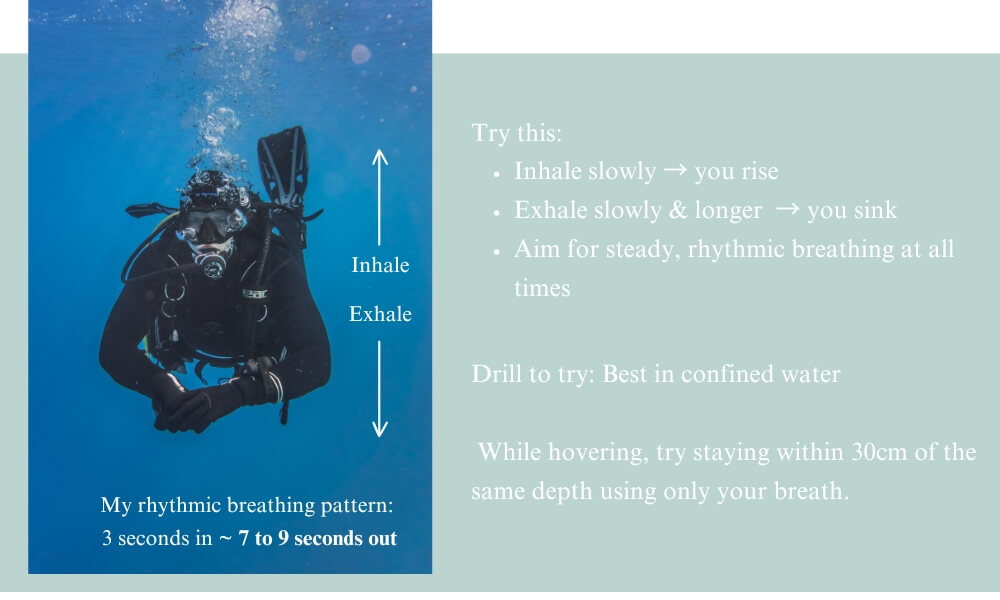
If you are slightly too heavy, a deeper inhale will lift you; if you are slightly too light, a full exhale will help you sink.
Mastering this cycle is the bridge between a beginner and an advanced diver.
Practical Scuba Diving Buoyancy Tips for Every Environment
Putting theory into practice requires a non-negotiable dive routine, especially if you are new.
The first step toward refinement is a proper weight check.
Most divers carry too much weight, which forces them to put more air in their BDC, creating a large air bubble inside the bladder, that shifts and makes stability difficult.
To conduct a proper check, follow these steps:
Do this at the surface, with full gear on.
- Take a deep breath & hold it
- Empty your BCD, while holding your breath.
- You should float at eye level while still holding the breath. This is your green light you are not too heavy.
- Exhale — you should slowly sink. This is your greenlight to say you are not underweighted.
- Adjust weight if you sink too fast or float too high
Pro Tip: Always conduct check with a low or empty cylinder for most accurate result, as the air in your cylinder dropping from full to low during a dive can drop weights by up to 2kgs!!
Scuba Trim and Weighting
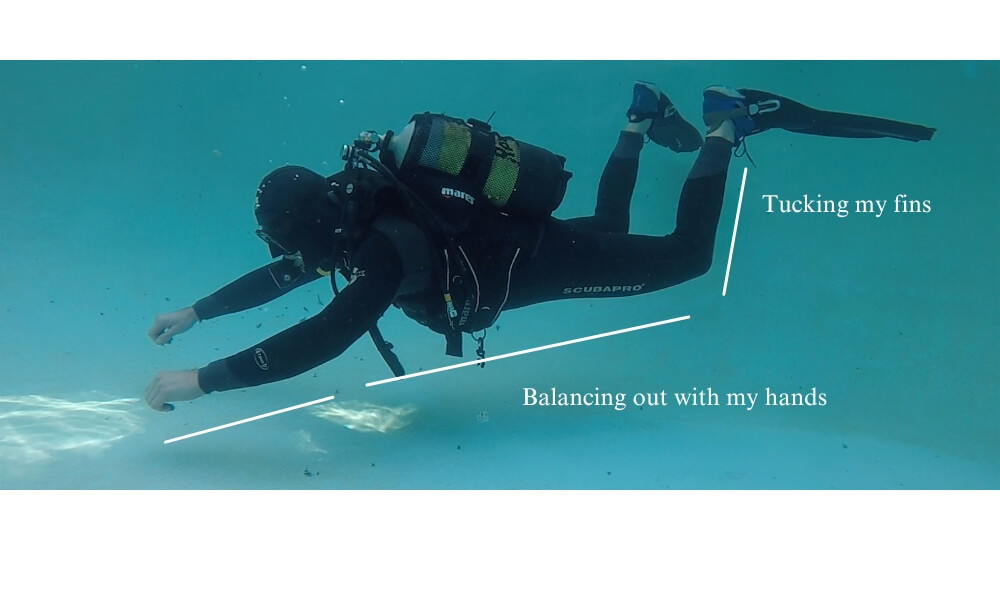
Trim refers to your physical orientation in the water. Ideally, you want to be horizontal, which reduces drag and prevents your kicks from pushing you upward.
Proper scuba trim and weighting involve more than just the total amount of lead; it involves where that lead is placed!
- If your legs are sinking, consider moving weight pockets higher up on your BDC or even onto your tank strap.
- If your legs float up, move weight toward your hips, or get ankle weights.
Achieving a flat, prone position allows you to move effortlessly through the water.
This is especially important in high-current environments like Raja Ampat, where being streamlined saves energy and gas.
Advanced Peak Performance Buoyancy Techniques
Once you have mastered the basics, you can begin implementing peak performance buoyancy techniques used by professionals.
One such technique is the hover. Practice staying perfectly still in the water column for sixty seconds using only your lungs for minor corrections.
Your hands should be still; if you find yourself sculling with your hands, you have not yet achieved neutral balance.
Another advanced skill is the ability to use different kick cycles to maintain position. In delicate environments like the SS Thistlegorm, using a frog kick instead of a flutter kick prevents you from stirring up silt or damaging the wreck.
Efficient kicking works in tandem with buoyancy to keep you exactly where you want to be.
How to Stop Floating Up While Diving
One of the most common frustrations for progressing divers is the “runaway” ascent.
Learning how to stop floating up while diving is a matter of anticipation and being aware.
As you begin to move shallower, or going over a big pinnacle, the air in your BCD expands.
And if your head is below your body, the air normally floats into your butt.
You must get your head above your body in a slightly more vertical position (head up, feet down) and vent small amounts of air frequently during your ascent rather than waiting until you feel pulled toward the surface.
Constantly fighting your buoyancy whether it is due to skill level, being underweight or overweight can increase anxiety during a dive and in some cases even lead to a panic.
If you want to learn more, check out our full guide: Scuba Diving Panic: What to Do, How to Help AND how to Prevent It!
Scuba Weight Integration Tips
Modern BCDs often feature integrated weight systems rather than or in addition to traditional belts.
Some useful scuba diving buoyancy weight integration tips include:
- Distribute weight evenly between left and right sides to avoid rolling.
- Use trim pockets on the back of the BCD for distribution ONLY and floaty aluminium tanks. Avoid adding on steel cylinders.
- Always check that your weight pockets are fully clicked in and secure before giant-striding into the water during your predive safety check.
By refining these small details, you transition from someone who simply survives a dive to someone who glides through the water with the grace of the marine life you came to see, whether you are exploring the Red Sea or the remote corners of the world.
Conclusion on how to master your buoyancy.
Mastering neutral control is a lifelong journey that distinguishes truly skilled divers from the rest of the pack.
By internalizing the physics of displacement, perfecting your trim, and utilizing these scuba diving buoyancy tips, you will find that your air consumption improves, your fatigue decreases, and your overall enjoyment of the underwater world skyrockets.
Remember that every new equipment configuration or environment—whether you are diving a thick 7mm suit in cold water or a light shorty in The Maldives—requires a slight recalibration of your weighting.
Practice regularly in confined waters, stay mindful of your breathing, and never stop refining your technique.
With patience and focus, you will soon achieve the effortless weightlessness that makes scuba diving such a transformative experience.