
Introduction into Daedalus reef.
There are three reefs that serious Red Sea divers build their south circuit around. Brothers Islands gets the most attention. Elphinstone gets the drift divers. Daedalus reef sits furthest offshore, receives the least boat traffic, and is consistently described by the divers who’ve been there as the most intimate shark diving in the Egyptian Red Sea.
That word — intimate — is the one that keeps coming up. At Brothers, on a good day, you’ll share an oceanic whitetip encounter with multiple dive groups, bubbles everywhere, cameras everywhere. At Daedalus, the same species, the same encounter, but fewer divers and a different atmosphere. The sharks aren’t any more or less present — they’re just less accustomed to spectacle.
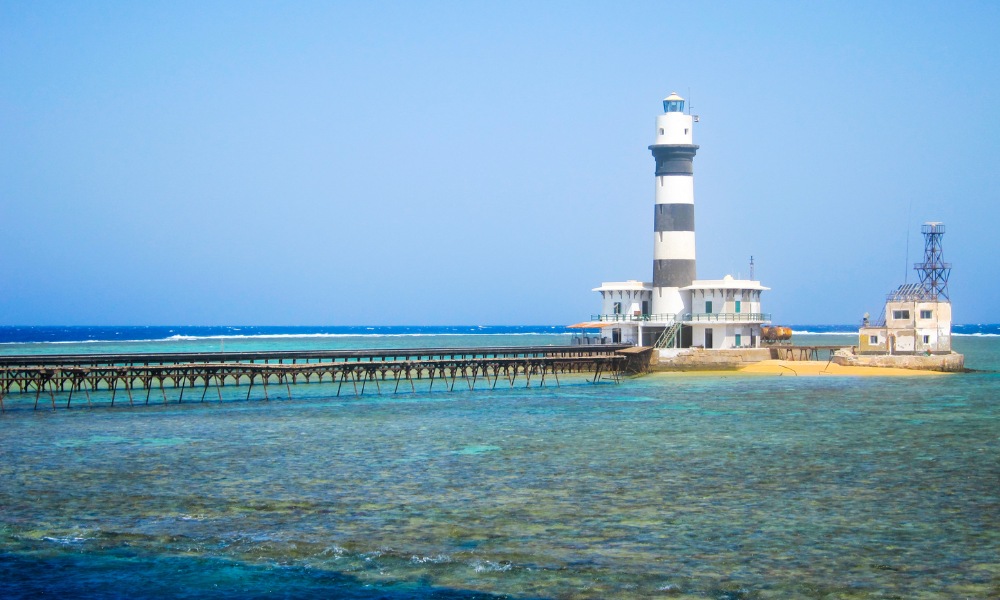
The lighthouse that sits on the small island at the reef’s surface is one of those genuinely unexpected sights in diving — a manned Egyptian lighthouse on a tiny coral platform in the middle of the open Red Sea, hours from the nearest coast. You see it from the liveaboard before you ever get in the water and it sets the tone for the whole dive.
Where Daedalus Reef Is and Why It’s Different
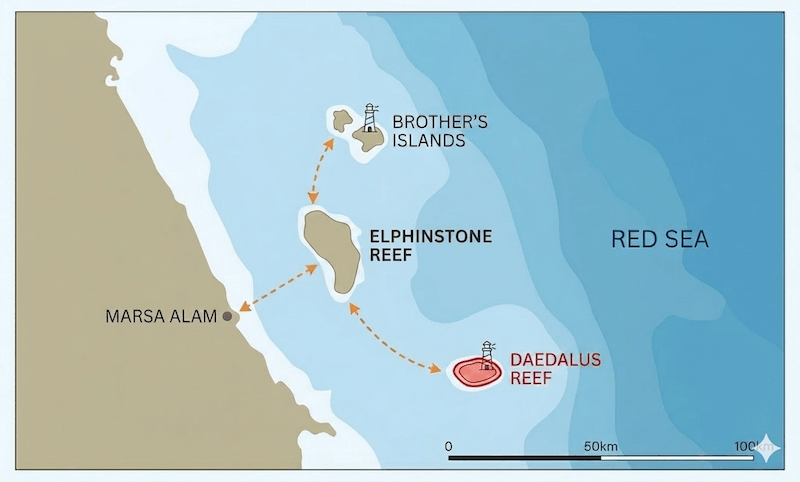
Daedalus Reef (also called Abu Kizan) sits approximately 80 kilometres east of Marsa Alam, well offshore in open water. It’s a small oval reef — around 500 metres long — rising steeply from deep water on all sides. There’s no lagoon, no shallow mooring area, no gentle slope. The walls drop immediately and dramatically, which is both what makes it spectacular and what makes it demanding.
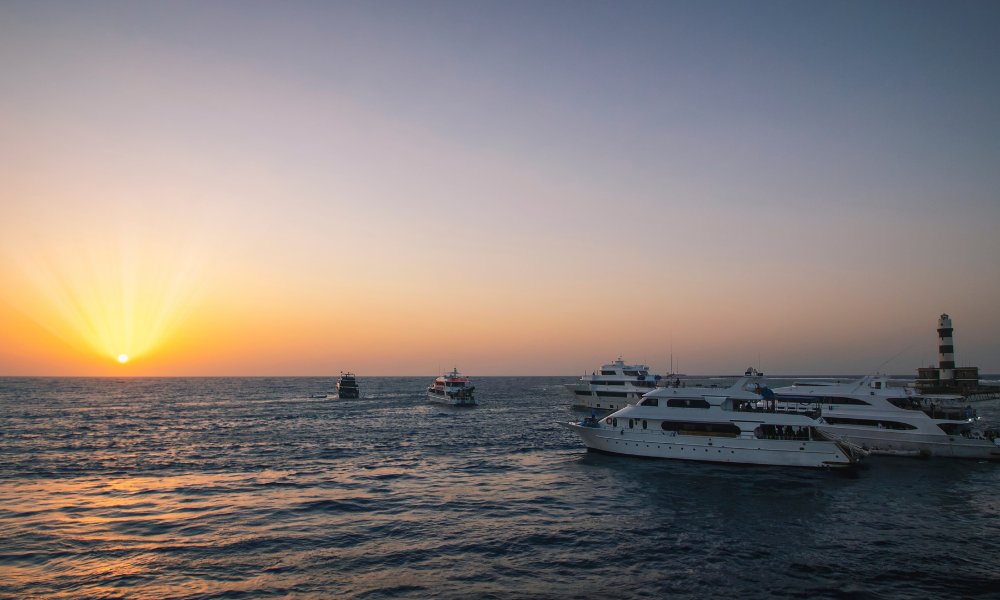
The isolation is the defining characteristic. Unlike Brothers Islands, which sits within reach of a longer day trip from Hurghada in good conditions, Daedalus requires a genuine offshore crossing — typically 3–4 hours from the nearest port. This filters the boats that come here. You don’t get the cluster of day trip operators that show up at the headline sites. Most of the boats at Daedalus are serious south circuit liveaboards with experienced groups on board.
That filtering effect changes the diving. Fewer boats, fewer divers in the water at once, and a site that sees less traffic overall means the marine life is less conditioned to large groups. The shark encounters — particularly the oceanic whitetips — tend to be more prolonged and less performative.
Diving Daedalus Reef: What to Expect
The Lighthouse Island at Daedalus Reef
The small manned lighthouse on the reef’s surface is something that photographs don’t fully prepare you for. A working Egyptian lighthouse in the middle of the open Red Sea, surrounded by nothing but water in every direction, staffed by lighthouse keepers who live on the platform. From the liveaboard deck it looks almost impossible — a building that has no right to exist where it does.
The lighthouse keepers occasionally interact with visiting liveaboards. The sight of it at sunset, with the reef below and the open sea around it, is one of those Red Sea moments that stays with you.
The Sharks
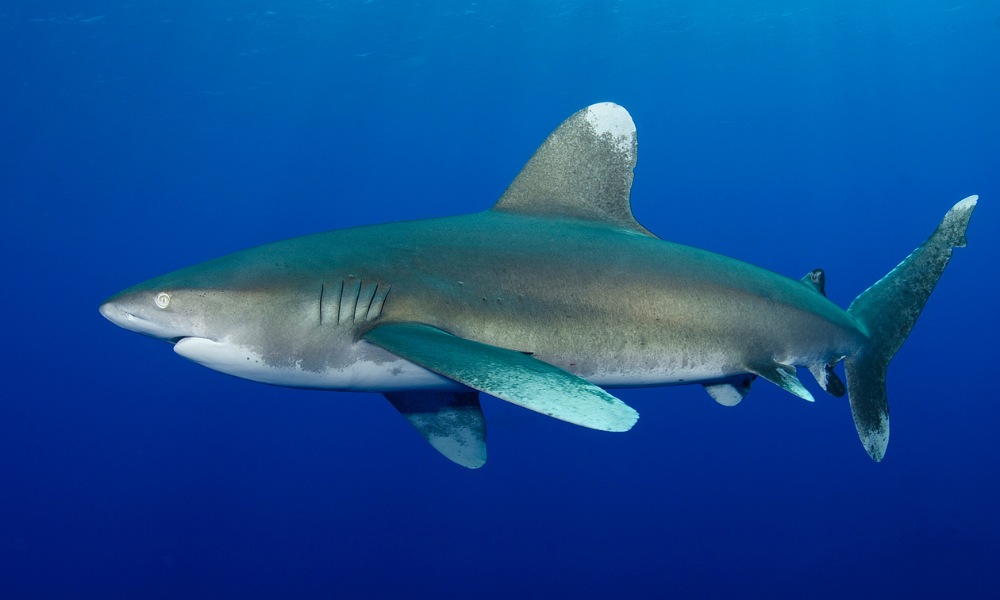
Oceanic whitetips are the species that defines Daedalus from October through February. The same Carcharhinus longimanus that patrols Brothers and Elphinstone in this season — slow, investigative, direct — but encountered in a setting with less human traffic.
At Daedalus the whitetip encounters tend to unfold differently. With fewer groups in the water, the sharks aren’t running a rotation between clusters of divers. An encounter here can last a full dive rather than a few minutes. Hold position, stay calm, let the shark determine how close it wants to get. The correct response to a whitetip approach is stillness, not retreat.
Hammerheads are Daedalus’s other headline species. Early morning dives off the north and south tips — particularly on an incoming current — are when schooling behaviour has been documented. The same pattern as Brothers Islands: dawn dive, north tip, patience. It doesn’t happen on every trip, but the sighting frequency at Daedalus in peak season is high enough that experienced operators build their morning dive schedule around it.
The Walls
Daedalus reef Red Sea walls are world-class. The reef drops from the surface to beyond recreational diving limits on all sides, with soft coral coverage on the upper sections and open blue below. The north and south plateaus are where most divers spend their time — both offer extended horizontal drift along the wall, with the open ocean on one side and the coral structure on the other.
Visibility here is consistently among the best in the southern Red Sea — 25 to 30+ metres on a good day, with the offshore position and deep water contributing to cleaner, clearer conditions than inshore sites. The combination of healthy coral wall, open blue water, and the knowledge that anything could emerge from the deep makes each drift dive feel alive in a way that’s hard to describe until you’ve experienced it.
Important Thing To Note Before Diving With The Oceanics
I cannot recommend a well reviewed operator here, especially when diving with Oceanic White Tip sharks.
No point in lying to you guys, there has been multiple incidents and most of the time due to diver and guide error.
These sharks are super inquisitive and due to them being one of the top open ocean predators, they are curios and optimistic.
So it is important to understand good shark etiquette. Stay in a close group, especially if you leave the reef/wreck and head into open water and close to the surface. Anything flashy, erratic arm movements, skin reflecting from sun can all pull them in closer for a look.
Being with an operator and guide who understands and stresses shark etiquette is important to ensure a safe and memorable experience seeing these whitetips out in the open.
Daedalus reef vs Brothers Islands
The question experienced divers ask is not which one to dive — it’s which one to dive first, and what to expect from each.
Brothers Islands
is more dramatic. Two small islands with exceptional walls, the Numidia and Aida wrecks, and the most intense oceanic whitetip encounters in the south Red Sea.
More boats, more diver traffic, more organised chaos at the headline sites. Still genuinely world-class.
Daedalus Reef
is more remote and — for many divers — ultimately more rewarding. Less boat traffic means less crowd management underwater. The shark encounters are more intimate. The lighthouse island is a sight you won’t see anywhere else. The walls match Brothers for quality.
My honest answer: if you’re doing a south circuit, you will most likely do both. Every reputable south itinerary includes them as part of the Golden Triangle alongside Elphinstone.
An operator selling you a south trip that only hits two of the three is leaving the best of the circuit on the table.
→ See the Brothers Islands guide and Elphinstone guide for the full Golden Triangle picture.
When to Dive Daedalus Reef
October to February is the premier window. Oceanic whitetips present, water temperature 22–26°C, visibility at its seasonal best, and the hammerhead window open. This is when you plan a Daedalus trip specifically for the sharks.
March to May — whitetips tapering off, conditions still excellent, hammerheads can still be sighted. Good reef diving throughout.
June to September — warm water, solid coral diving, but the pelagic activity that defines Daedalus thins significantly. Not the season to come specifically for sharks.
The water temperature at peak season (October–December) sits around 24–26°C — a 5mm wetsuit is appropriate for multiple-dive days.
If you want to full Month To Month guide, check out Best Time to Dive the Red Sea: A Month-by-Month Guide
Experience Level
Daedalus reef is an advanced site. The honest minimum:
- Advanced Open Water certification — depth profiles, open water navigation, and buoyancy all come into play
- 30–50+ dives, including some current experience — blue water drift with no visual reference below you is not the place to learn
- Composure around large sharks — an oceanic whitetip approaching you directly is a different experience from anything in a pool or a calm reef dive. You need to be genuinely calm, not just theoretically calm
Divers who meet these thresholds will have some of the best diving of their lives here. Divers who don’t will have a stressful experience from which they’ll come back saying Daedalus reef wasn’t that special.
Make sure to master you buoyancy prior to going on this trip, in our full Buoyancy Lesson guide.
How to Get To Daedalus Reef
Daedalus reef is liveaboard-only. No day trips. The reef is too far offshore and the conditions too variable for a day trip operation to run reliably.
South circuit liveaboards departing from Hurghada or Port Ghalib cover Daedalus as part of the Golden Triangle itinerary — Brothers, Elphinstone, and Daedalus in a single 7-night trip. This is the only sensible way to dive it.
Browse south Red Sea liveaboards on Divebooker →
Filter specifically for boats that list all three Golden Triangle sites on the itinerary.
If a “south itinerary” only includes two of the three, ask why.
Frequently Asked Questions
Are there really hammerhead sharks at Daedalus Reef?
Yes — scalloped hammerheads are sighted regularly at Daedalus from October through February, with schooling behaviour documented at the north and south tips on early morning dives with incoming current. The sighting is not guaranteed on every dive, but the frequency in peak season is high enough that serious shark divers specifically target Daedalus.
How does Daedalus compare to Brothers Islands for sharks?
Both sites have oceanic whitetips from October through February. Brothers is more consistently productive for whitetip encounters and has the additional draw of the Numidia and Aida wrecks. Daedalus offers a more intimate encounter experience due to lower boat traffic — fewer divers in the water means longer, calmer interactions with the sharks. Experienced divers generally rate them equally; the character of the encounter is different rather than the quality.
Is Daedalus Reef dangerous to dive?
Daedalus is an advanced site with real conditions — offshore location, strong current potential, deep walls, and large sharks. It is not dangerous if you dive within your training, follow your guide’s briefing, and have appropriate experience. The risks are current-related for underprepared divers and complacency-related for experienced ones. It is not a site for Open Water divers on their first liveaboard.
What is the lighthouse at Daedalus Reef?
Daedalus Reef has a manned Egyptian lighthouse on the small island at its surface — one of the most remote lighthouses in the world. It’s been operating since the 19th century and is staffed by keepers who live on the platform. It’s visible from the liveaboard before you dive and is widely considered one of the most memorable sights on the entire south Red Sea circuit.
What is the best time of year for Daedalus Reef?
October through February for the full experience — oceanic whitetips, hammerhead potential, and the best visibility of the year. November and December are the most consistently productive months for pelagic encounters across the south circuit.